By Panizza Allmark and Jon Stratton
In January, over the course of three days, Bruce Springsteen wrote, recorded and released the political protest song Streets of Minneapolis.
The song’s release was a matter of urgency and reflects Springsteen’s fury towards the Minneapolis immigration enforcement operation from the United States Department of Homeland Security with around 2000 Immigration and Customs Enforcement (ICE) officers and agents.
Last month, Renée Good and Alex Pretti were killed by ICE in separate incidents. In his lyrics, Springsteen names them as a memorial tribute, “citizens (who) stood for justice”. He refers to ICE as “King Trump’s private army”.
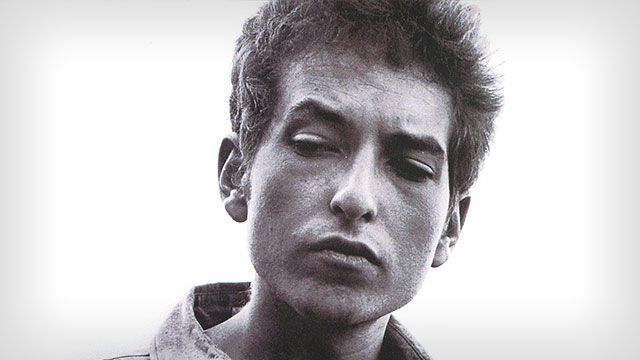
Springsteen marches in the footsteps of protest songs from legendary artists such as Woody Guthrie and Bob Dylan who raised their lyrical voices in a direct response against injustice.
The Dust Bowl migrants
On January 30 Tom Morello, the guitarist with social activist rock band Rage Against the Machine, held a benefit concert to support the families of the Minneapolis ICE shooting victims.
Morello described it as “a concert of solidarity and resistance to defend Minnesota” and against “the rising tide of the state of terror”.
Springsteen was a surprise guest artist. In addition to performing Streets of Minneapolis he played his 1995 song, The Ghost of Tom Joad.
Tom Joad is a character in John Steinbeck’s 1939 novel The Grapes of Wrath, about the Dust Bowl migrants from Oklahoma. During the Great Depression, the Dust Bowl migrants left Oklahoma and travelled west, forced off the land by drought and the intensive farming methods. Springsteen’s song describes “the new world order” where homelessness, policing and inequality prevail.
Woody Guthrie also sang about Tom Joad on his 1940 album Dust Bowl Ballads. Guthrie travelled south to California with migrants who scraped a living working in others’ fields and picking fruit in others’ orchards.
Tom Joad is a working class man who stands up to authority through the call for collective action. Guthrie’s two songs about the character featured on Guthrie’s first and most successful recording, bring national attention to the plight of the Dust Bowl farmers.
Guthrie emblazoned on his guitars the slogan “This machine kills fascists”.
The civil rights movement
When Robert Zimmerman left his parental home in Hibbing, Minnesota, to reinvent himself in New York as Bob Dylan, he achieved his desire to meet Guthrie.
One of Dylan’s very early compositions was The Death Of Emmett Till, which he performed for a Congress on Racial Equality benefit concert in 1962. It didn’t appear on an album until the compilation album Broadside Ballads, Vol.6, in 1972, under his pseudonym Blind Boy Grunt.
Emmett Till was a 14-year-old Black boy who was brutally murdered in 1955 by two white brothers in Mississippi. His murder, and their acquittal by an all white jury, caused public outrage, and became a catalyst of the Civil Rights Movement. Emmett Till has been memorialised in many songs, but Dylan’s focus, with an accusation in the lyrics that the jury “helped the brothers”, is the most well-known tribute.
Dylan went on to write many songs for the civil rights movement and anti-war songs such as Blowin’ In The Wind, Masters of War and A Hard Rain’s Gonna Fall, all on his second album, The Freewheelin’ Bob Dylan (1963).
The Vietnam War
In 1970, Neil Young composed Ohio about the murder by Ohio National Guard of four protesters against the Vietnam War on the campus of Kent State University. The song was recorded by Crosby, Stills, Nash and Young but the studio version only appeared on the 1974 compilation, So Far.
The activist rock song became an anthem of the anti-Vietnam War movement. Young’s horror toward the killing of protestors motivated him to write and record the song quickly, with a rush to release it.
The song got radio play, but was banned by some stations for its anti-war sentiments. Within three weeks of the shooting, it reached number 14 on the Billboard charts. The opening lyrics, “Tin soldiers and Nixon coming, we’re finally on our own”, remarks on a heightened state of alert for ordinary people.
Trump’s America
The title of Lucinda Williams’ first overtly political album, 2025’s World’s Gone Wrong, echoes Dylan’s 1993 album, World Gone Wrong.
Music magazine Uncut called it a “compelling, compassionate, state of the nation address”.
The album focuses on the destruction of civil society in Trump’s America. Something’s Gotta Give is a song of anger and disillusionment with America. Black Tears connects present day America to its long history of injustice with the lyrics “400 years is long enough, How long will (Black tears) rain down?”.
Jesse Welles’ song Join ICE is a satirical recruitment song, adopting the tone of a recruitment pitch to expose the abuse of power “If you’re lackin’ control and authority, come with me and hunt down minorities,” he sings.
Popular music, especially in America, has always been bound up with political commentary.
But it hasn’t always been on the side of the oppressed. Written and sung by Staff Sergeant Barry Sadler, The Ballad Of The Green Berets, supporting the United States Army Special Forces in Vietnam, was number one on the Billboard singles charts for five weeks in 1966.
Can a Trump acolyte manage a similar feat about ICE?
Panizza Allmark is a Professor of Visual & Cultural Studies at Edith Cowan University and Jon Stratton is an Adjunct Professor in the School of Humanities at Adelaide University. This article was first published by The Conversation.