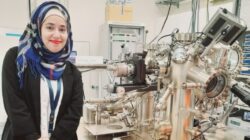
A leader in the field of biotech and advanced therapeutics is joining QIMR Berghofer as the new General Manager of Q-Gen Cell Therapeutics.
Dr Balaji Somasundaram will
Exercise can save your heart beating an extra 11,500 beats each day, potentially adding years to your life.
A team from St Vincent’s Institute of Medical Research and
Treatment looks to reverse asthma-related lung damage
A process to repair lungs damaged by asthma is being developed by researchers in the United Kingdom.
Dr Tara Sutherland, from the University of Aberdeen, said a study
Almost 90 percent of Australian employees acknowledge burnout as a workplace issue, with most looking for employers to offer more support.
A new poll commissioned by
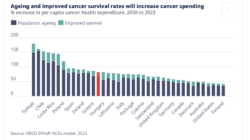
The cost of cancer per person on the health system is expected to grow 67 percent by 2050 if there are no changes to how many people get and survive cancer in each age
Quantum machine learning makes a leap into the real world
One of the first projects in Australia to use quantum machine learning in a non-quantum industry aims to improve food security and student wellbeing.
Not-for-profit Food
Vital VAD information missing from aged care homes
The vast majority of Australia’s residential aged care facilities do not provide residents with suitable information on Voluntary Assisting Dying (VAD) as required by
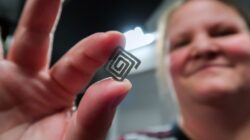
A 3D-printed diamond–titanium device, that generates its own power, has the potential to overcome the need for batteries in medical implants.
Developed by RMIT
The Federal Government is rolling out a calculator for GPs to measure the impact of introducing more bulk billing in their practices.
Federal Health Minister Mark Butler