By Guardian Childcare and Education
When children play, it might look like simple fun, but in reality, they are building the foundations for lifelong learning.
At high-quality early learning centres, play is carefully planned and purposefully supported by qualified Educators and Teachers.
Known as play-based learning, this approach helps children develop social, emotional, physical and cognitive skills, while also nurturing curiosity, confidence and creativity.
What Is Play-Based Learning?
Play-based learning is an educational approach that builds on children’s natural curiosity and interests. Instead of rushing children from one activity to the next, play-based environments allow for uninterrupted time to explore, experiment, imagine and problem-solve.
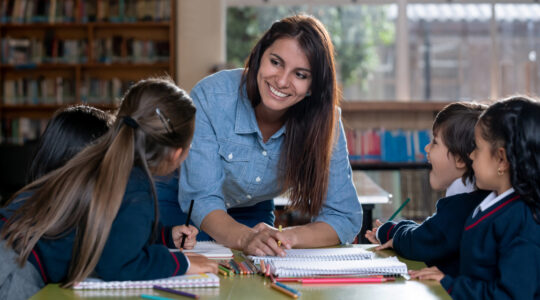
Educators carefully observe children during play and intentionally extend their learning, introducing new ideas, asking thoughtful questions and providing open-ended materials that can be used in many different ways.
Why Is Play-Based Learning Important?
Play-based learning supports whole-child development, helping children grow in ways that feel natural, joyful and meaningful.
Children are more motivated to learn when experiences are:
- Relevant to their interests
- Open-ended and flexible
- Child-led, with Educator guidance
This approach also supports the development of:
- Emotional regulation
- Communication and language skills
- Creativity and imagination
- Early numeracy and literacy
- Problem-solving and critical thinking
What Are Children Learning Through Play?
Through play-based experiences, children develop multiple skills at the same time, including:
- Cooperation and teamwork
- Planning and collaborating with peers
- Expressing ideas through construction, art and movement
- Understanding cause and effect
- Mathematical concepts such as measurement, shapes and spatial awareness
- Problem-solving through trial and error
These are the same foundational skills children will draw on throughout school and life.
The Seven Key Areas of Learning
At Guardian, to help families understand their child’s development, learning is often grouped into seven key areas that reflect how children grow and learn holistically.
- I Am Me: Building identity, confidence and emotional wellbeing. Children feel safe, valued and supported to be independent.
- A Good Friend: Developing social skills such as sharing, negotiating, problem-solving and collaboration.
- A Reader: Building early literacy through storytelling, rhyme, rhythm and playful language experiences.
- A Writer: Developing fine motor skills, drawing and mark-making to support early writing.
- A Counter: Learning numeracy concepts like grouping, sorting and counting through hands-on exploration.
- A Mover: Supporting physical development, coordination, health and well-being.
- A Great Thinker: Encouraging curiosity, experimentation, critical thinking and resilience.
The To BE Me Program: An Example of Quality Early Learning
A strong early learning program brings play-based learning to life through intentional teaching, thoughtful environments and meaningful relationships.
Guardian Childcare’s exclusive To BE Me is a comprehensive early learning program designed to support children at every age and stage.
To BE Me provides clear Learning and Development Pathways that guide Educators in planning experiences tailored to each child’s interests, strengths and development.
It brings together curriculum, environments, daily rhythms and interactions to create a consistent, high-quality learning experience.
The program supports families by making learning visible, with regular updates and tools that help parents understand their child’s progress and celebrate milestones along the way.
Supporting Every Age and Stage of Development
Children’s learning needs change rapidly in the early years. Quality early learning programs are designed to support each age and stage, from babies through to school readiness.
- Babies learn through secure, responsive relationships and predictable care routines.
- Toddlers learn through movement, sensory exploration and joyful social play.
- Preschool and Kindergarten-aged children build independence, confidence and early academic skills as well as develop a strong sense of identity, empathy and responsibility within a community.
Preparing Children for School and Life
Play-based learning is a powerful way to give children a flying start to school. Through play, children develop the skills they need to succeed in a classroom environment, without pressure or stress.
These include:
- Independence and self-regulation
- Listening and communication skills
- Confidence to ask questions and share ideas
- Friendship skills and teamwork
- A genuine love of learning
This article was created by professional early learning educators at Guardian Childcare and Education. For more information on Guardian, or to book a tour of a centre, click here