By Andre Casson
How do we create gentlemen of honour in an increasingly dishonourable world? That’s a question I often ask myself in my role as Headmaster of Brisbane Boys’ College and as a parent of two children, including a son.
Today, many boys feel lost – and given the current state of the world and the sheer volume of external influences they are subjected to daily, it’s not hard to understand why.
Mobile phones and online realms have exposed children to a much broader range of external voices and influences, not all of them inherently healthy or productive.
While we might know what is going on at home and in the classroom, it’s simply not practical to monitor every interaction our kids are having online, particularly as they grow into teens and become increasingly independent.
One eSafety study conducted by the Federal Government in 2021 found that Australian teens were spending up to 15 hours a week online. That figure is expected to grow to 20 hours a week in 2026, prompting the government to introduce its much-discussed social media ban for under-16s.
Despite the social media ban, young boys remain vulnerable to outside influencers – some of whom are adept at exploiting an eagerness for acceptance for less-than-noble purposes.
However, I truly believe that educators and parents can play a hands-on role in helping young boys make smart choices and ultimately become gentlemen of honour.
A global outlook
Having spent more than 15 years overseas teaching and leading schools as a senior educator – first at Dulwich College Shanghai, then at the Australian International School in Singapore – I have seen the positive impact that fostering a global outlook can have in moulding well-rounded young men.
One of the things those international experiences taught me is just how much boys benefit from learning about different cultures – an educational act that encourages them to consider a world beyond their immediate surroundings.
I’ve seen first-hand that when boys spend time with others from different backgrounds, they start to appreciate those differences. Soon enough, that cultural knowledge turns into friendship, and when we’re friends with people from different backgrounds, we’re less likely to engage in that selfish mindset of: “my way is the only way.”
As educators, we have a real responsibility to guide the next generation to become compassionate and empathetic leaders of tomorrow. One of the most effective ways to do that is by encouraging young men to engage with their peers, no matter where they come from, and build an inclusive community around them.
The drive to do good
The majority of young men are decent human beings who want to go out and make a positive difference in the world. Most are driven by a desire to be seen and recognised for doing good things in their communities.
However, if the cultural framework around them is lacking and boys are being exposed to environments where there’s a vacuum of leadership, it’s easy for some of them to fall under the wrong influences and be led astray.
I’ve always been a firm believer that active boys are faster, more engaged learners and I often tell parents that if we are educating the leaders of tomorrow, we had better start by first ensuring they are good men.
One of the benefits of single-sex education, in my opinion, is that an all-boys environment allows students to experience the full spectrum of school life, whether that’s taking on a leadership role as a prefect or simply a dramatic role on stage. I have seen how boys can flourish when they are provided the opportunities to do so.
Gentlemen of honour
It was the founder of Brisbane Boys’ College, Mr Arthur Rudd, who in 1902 first developed the idea of creating gentlemen of honour – and it’s an ethos I’d like to think the school has lived up to for almost 125 years.
However, ensuring the leaders of tomorrow embody the traditions and values we hold dear doesn’t happen by accident. We have regular conversations with our students about the standards expected of them – whether they’ve just walked through the school gates, or they’re out in the community.
That doesn’t mean we always get everything right.
Yet as I’ve learned from experience, if we show boys what’s expected of them and give them an environment in which to flourish, they invariably will.
If we want fewer lost boys, we should start by showing them the way.
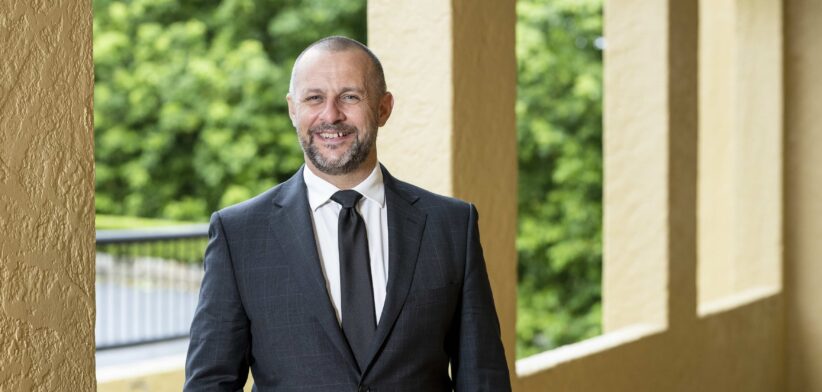
Andre Casson is Headmaster of Brisbane Boys’ College.