By Emma Beckman
The GST on exercise physiology – an emerging and misunderstood field when the tax was introduced in 2000 – creates an unlevel playing field in allied health, penalising Australians who require prescribed exercise.
An ever-growing body of scientific literature built over the last 50 years has unequivocally shown the positive outcomes that exercise has on health.
And in the past three decades, the research has involved a deep interrogation of how different types of exercise can help a range of conditions from diabetes and musculoskeletal disorders through to mental illness or cancer.
Medical professionals have long understood the value of exercise, but there are persistent questions that plague health practitioners: How do I make sure my patients are safe and the exercise is effective? And how do you actually get people to do it?
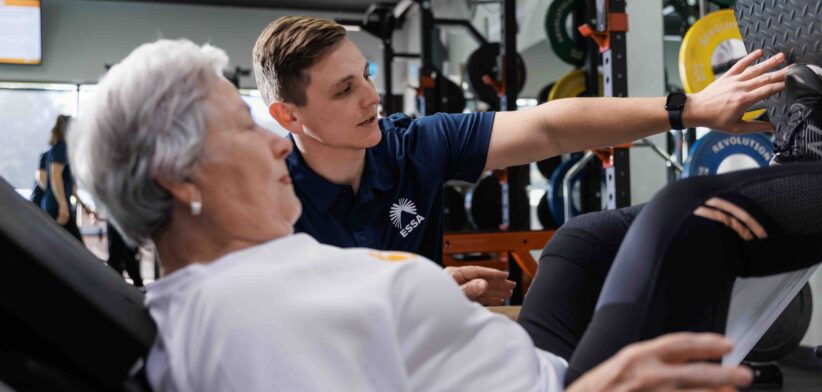
Exercise physiologists have an incredibly important role to play in our health system. As one of Australia’s fastest-growing professions delivering services to more than 240,000 Australians each week, exercise physiologists understand the science of exercise, and how its intensity, duration and progression can interact with comorbidities and medication.
It is a profession with the knowhow to improve clinical and functional outcomes, doing so with a client-centred, patient-centred underpinning of biopsychosocial science to encourage new behaviours.
This level of support and supervision is key for people with complex health needs. While short-term engagements with exercise can lead to acute benefits (something is better than nothing), it’s when you take a sustainable, progression-based perspective that you start to see the greatest health benefits, and also the best economic value for money.
As Accredited Exercise Physiologists (AEPs), we can get people active over the long term, and that’s where we start seeing a decrease in hospital admissions, an increase in independence at old age, and a decrease in comorbidity conditions as we age. All of this leads to a decrease in the burden on our hospitals and health system.
Ongoing research continues to inform the profession, driving new approaches to disease prevention, recovery and rehabilitation through targeted exercise interventions. Despite all these benefits for exercise physiology patients and the positive externalities for the health system through preventative treatment, it sits at a striking disadvantage that is holding back its potential.
Exercise physiology is denied the GST-free status enjoyed by the patients of other allied health services, which is the legacy of conversations in Canberra in 2000. Transcripts show just how poorly understood the field was at that time. One senior official from the Department of Health and Aged Care said, as she understood, some exercise physiologists did “not actually have formal qualifications”. This could not be further from the truth. The 9,800 AEPs in Australia have either a bachelor’s or master’s degree in clinical exercise physiology.
In 2006 the industry experienced its “Medicare Moment”. When exercise physiology was formally recognised by Medicare, Australia introduced a world-leading advance for the sector. We are one of the only countries in the world that’s managed to embed clinical exercise or accredited exercise physiologists in the healthcare funding frameworks, such as Medicare but also through integration into the National Disability Insurance Scheme (NDIS), Department of Veterans’ Affairs (DVA) and private health insurance, as well as state and territory Workcover and health systems.
That recognition in 2006 was a beacon for the sector globally where finally people with chronic complex conditions could be prescribed evidence-based exercise, and the standards set by Exercise & Sports Science Australia (ESSA) remain the most advanced in the world in this space. There’s no one else to look to, no example to follow. There are a lot of countries, particularly the UK, that are really fighting for the recognition that we’ve had.
In Australia we have a tendency to look to the rest of the world for guidance, with policy guided by the experience of other governments and industries elsewhere. But with regard to exercise physiology, we are the case study and that should be a source of pride. It is now so well established that we see exercise physiologists embedded across our healthcare services, sporting organisations and research settings.
Our field is growing fast but there is so much more room to grow. One need only look at a paper published in the Australian Journal of General Practice in 2024, which found 85 per cent of Australian adults were insufficiently active, with such inactivity being a major contributor to multiple chronic disease from arthritis to cardiovascular disease. Almost a quarter of a million Australians are now seeing an AEP each week and it is pleasing to see this progress, but I am concerned that cost-of-living pressures combined with the outdated GST settings are discouraging others from accessing the service, particularly vulnerable populations like older Australians and people living with disabilities for whom exercise physiology can have life-changing effects.
When the tax was introduced, then-Treasurer Peter Costello said exercise physiology would become GST-free if it was by an approved practitioner and the service was “generally accepted in the medical profession as being necessary for the appropriate treatment”. As a sector we’ve comprehensively ticked those boxes – the medical profession is increasingly referring patients to exercise physiologists and we have the most advanced accreditation system in the world for our practitioners. It’s time that was taken into account for the benefit of all Australians with complex health issues.
ESSA is calling for the Minister for Health, the Honourable Mark Butler MP, to table a determination in parliament to add exercise physiology to the list of GST-exempt health services. To support this effort, everyday Australians can sign a petition at axetax.com.au.
Dr Emma Beckman is Chair of Exercise and Sports Science Australia (ESSA).