By Matt McDonald
Australia’s Minister for Climate Change and Energy, Chris Bowen, is about to embark on his most significant diplomatic challenge.
For the next two weeks, Bowen takes on the role of “president of negotiations” at the United Nations climate summit, COP31, in Turkey, also called Türkiye.
Bowen is regarded as a strong negotiator, held in high esteem by close observers of the COP process. As well as legislating Australia’s emissions targets, Bowen had policy wins on vehicle emissions standards and renewable energy funding.
However, in Turkey he faces his biggest challenge yet. Australia’s significant contribution to climate change as a fossil fuel exporter hangs over its negotiating team. This is especially the case if Australia wants to showcase its “partnership with the Pacific”, a region acutely vulnerable to climate change.
Bowen will also need to balance competing goals: working with host Turkey in an unprecedented power-sharing arrangement, while acting as chief negotiator.
How did we get here?
At last year’s conference in the Brazilian city of Belém, an impasse between Australia and Turkey over who would host was broken with a compromise deal. Turkey would host the 2026 climate summit, and Australia would shape the agenda and co-host an earlier Pacific pre-COP meeting in the Pacific to discuss the threat of climate change to small island nations.
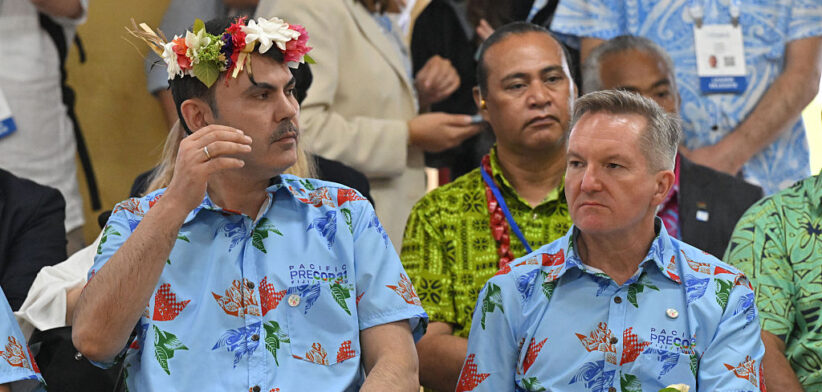
These talks in Fiji and Tuvalu in early October faced criticism over the low turnout of world leaders. But Bowen defended the meetings, pointing out these preparatory events do not usually involve leaders. It was still a major diplomatic win for the region, he said.
Australia says its presidency will give it “exclusive authority” to shape global climate decisions. But Australian negotiators could struggle to simultaneously work effectively with Turkey, represent Pacific concerns, secure international agreement and advance Australian interests. The latter, linked to profits from fossil fuel exports, likely includes a gradual, rather than immediate plan, to phase out fossil fuels.
Pulling off this balancing act will be no mean feat.
What’s on the agenda for COP31?
This year’s summit is being referred to as an “implementation COP”, with a focus on practical initiatives to turn existing commitments into tangible action.
A key goal of COP31 is boosting global electrification. Turkey and Australia will try to secure support for the goal of “35 by 35”, meaning 35% of consumer energy should come from electricity, rather than fossil fuels, by 2035. The rationale for this goal is that it’s easier to generate electricity from renewable sources.
Other goals include halving the growth of waste the world generates, and cutting energy intensity in the building sector. While worthy aims, some environmental groups have been critical of the limited ambition of the agenda given the scale of the climate challenge.
What are Australia’s priorities?
Bowen has indicated he’s keen to push wealthy countries to commit more climate funding. He has singled out the need to increase funding for small island countries to address climate damage and disruption.
At the pre-COP he reaffirmed the importance of the Paris goal of keeping warming to 1.5°C, even while acknowledging “overshoot” was likely.
These commitments align with Pacific concerns. And they arguably reflect Bowen’s eagerness to make good on his claim that Pacific interests will be advanced by Australia as president of negotiations.
A skeptical view
A skeptical view of Australia’s position is that it reflects strategic concerns about the Pacific.
This particularly applies to China, which has been increasingly engaged in the region. Canberra is concerned Beijing will gain a military and strategic foothold in a region close to Australia’s territory.
Australia’s embrace of Pacific climate leadership could therefore be viewed as a means of contesting China’s regional influence. Some experts say advancing Australia’s strategic concerns in the Pacific might require leadership on the issue most important to the region: climate change.
It’s certainly politically easier for Bowen and Australia to play a prominent role in international negotiations than block any new fossil fuel projects at home.
A diplomatic tightrope
Last year, Australia belatedly joined 80 countries as a signatory to the Belém agreement, a voluntary agreement made at COP30 in Brazil, to accelerate the phase-out of coal, oil and gas. Oil-producing countries such as Russia and Saudi Arabia opposed any mention of fossil fuels in the COP30 final statement.
But along with Turkey, which imports significant volumes of Australian coal, Australia has resisted calls to put a timeline for ending fossil fuels on the COP31 agenda.
For the Albanese government, the Paris Agreement “loophole” – which means only emissions produced in Australia (not overseas) count towards our climate targets – has helped it bypass the toxic politics of climate change at home.
Australia can say we’re progressing towards ambitious emissions reduction targets at home. But it can also enjoy the financial benefits from fossil fuel exports that produce close to 5 percent of global emissions.
Whether Bowen is genuinely pushed on this issue in Turkey and how he responds will be crucial to watch next week.
Matt McDonald is a Professor of International Relations, The University of Queensland. This article was first published by The Conversation