By Shane Rodgers
Everything is about to change. Work. Life. Everything.
We can all feel it rising like a storm. Artificial intelligence, once the province of science fiction, is now moving into our homes and workplaces at astonishing speed.
Suddenly we all have access to Generative AI tools with extraordinary powers to summarise, advise, organise and create.
We can buy humanoid robots that go well behind the vacuum cleaners and mowers that we thought were impressive enough. Heck, we are watching them do running races (and not always running into walls).
Bill Gates warned this week that there is “no plan to ease the entry into the AI era”. The risks are severe and we could be headed for massive economic upheaval.
As a “Late Boomer” born in the 1960s, my early life traversed the computer era, followed by the digital era, and now the AI era. It feels like the last 50 years have been building to this point.
After a lifetime of watching and trying to make sense of change, this is my AI checklist for the human race.
- Review every job
Like the computer and digital age, AI will completely obliterate some jobs, and create new ones. But the big game is how every job will change – from now. Using Gen AI well can massively increase productivity. There are enormous risks, and enormous opportunities. Every worker and every organisation should be reviewing every role now. If you are not in front of this, within a short time you won’t be in the game.
- Totally rethink the education system
The education system – schools, higher education – the works – has become 40 percent obsolete almost overnight. The structured nature of study allows AI to help so much with assessment tasks and marking that the whole process can happen without a human learning anything (or even being involved).
It is more than having software to catch AI ‘cheating’. Learning processes and content, and workforce qualifications, need to be vastly different in the Age of AI. We need to learn. But we need to learn differently – and learn new things.
- Rethink what humans will do
There has been lots of focus on what AI will take away. We will sort that. The bigger question is what humans will do when anything that AI can do better (which is a lot of things that have created work over the past 200 years) will ultimately be done by AI.
Humans will never be idle. We have done the process work because there was no alternative. Now we need to face a big, profound question about who we are and what we do best – and what we want the human future to look like.
- Rebuild pathways for young people
AI is already taking graduate jobs. The tasks it does best are the ones typically done by people with little experience.
Corporations are not charities. If they can do it cheaper with AI, most will. Over time, this will create big skill gaps and further alienate young people from the traditional mainstream and big social problems could emerge from this.
This is a big problem coming at us quickly. We need deep national planning to maintain pathways from youth to real jobs.
- Create a new leisure economy
We were told in the 1970s that computers would bring a new era of leisure. They did the opposite. They created so many more things to do that our eight hours of “play” a day disappeared. The Age of AI is different. Robots and AI tools can do so many things that we previously had to do ourselves – particularly home chores. A restructured work world, combined with a strong human drive for shorter working weeks, is already growing the leisure economy. What do we want that to look like?
- Make more things – really efficiently
Most countries of the world, Australia included, lost most of their manufacturing industries because they could not compete with low labour cost countries and automation was too expensive.
Automation is now cheaper and better. Over the next 10 years the labour cost issue will become less important. Successful manufacturing countries will be the ones that use automation best. Counties that have a strong national plan for this will dominate the next 100 years.
- Factor robot ‘friends’ into homes and care
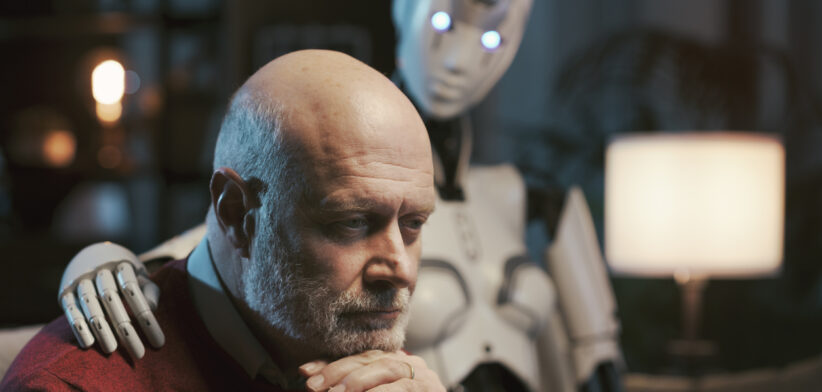
Aging populations and falling birth rates are creating the conditions for a future aged care crisis. Japan and China, among others, are working hard on the robot companion market to help care for older people. We need to be planning for this.
One in four people are living alone and might ultimately want a robot to talk to. Even now, people are chatting to online bots, or even their ChatGPT program, to discuss their days.
Robotic technology is already being used in the health system. But humanoid robots will clearly be a big presence in the decades ahead.
What are the parameters for this? We can already buy these robots. But are we ready?
- Treat the AI security threat the same as nuclear
There is an assumption that most big wars have been avoided because of the nuclear deterrent. This is no doubt true. But there has also been a reluctance by governments to send their young people off to war (thankfully).
It seems obvious that we are already on the verge of AI conflicts in which the ‘troops’ are all robots and drones. This changes everything – in a scary way.
The world needs to be negotiating a safer future now. This may be the biggest risk to civilisation over the next 50 years.
- Prepare to disconnect – and reconnect
We already have a massive social problem from the “always on” tech culture and addiction to smart phones. As AI and robotics are further integrated into our lives, humans will also need to disconnect from it and re-establish the genuine social connections that are vital to our health and wellbeing.
Finding a running creek and a place to chat with friends will become an increasingly important part of our lives. Disconnection time will be one of the big social drivers of the next decade.
- Prepare for casualties
We know that humans are resilient and will adapt to change. But not everybody. In every tech era of the past 50 years there have been whole groups who never really recovered.
We know that will happen again in the Age of AI, and we have a fair idea who they will be. How can we help the displaced quickly find a place in the new economy? Who is working on that.?
Shane Rodgers is a former COO of the Australian Industry Group and author of Worknado – Reimaginging the way you work to live. He is the Managing Editor of newsreel.com.au