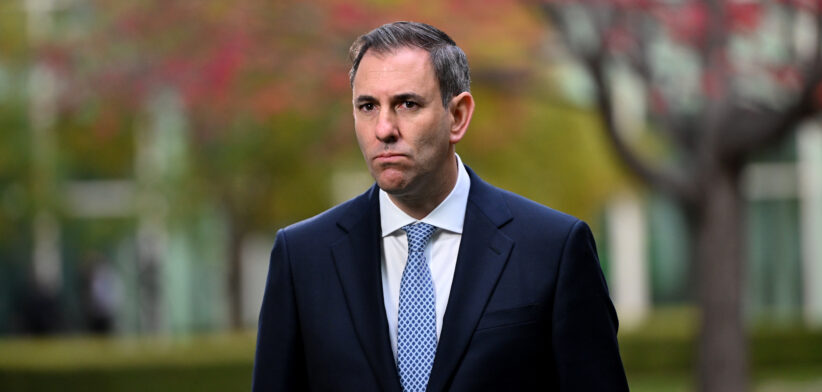
The Federal Government has released its 2026-27 budget, complete with changes to Capital Gains Tax and Negative Gearing and cuts to the NDIS.
Below is a summary of the main announcements in what Treasurer Jim Chalmers described as the most important and ambitious Budget in decades.
“Important because the world is throwing a lot at us – and this Budget is about helping Australia deal with these challenges,” he said.
“And ambitious because we have so much going for us – and this Budget is about Australia seizing those opportunities.”
The Government says the budget has five main aims:
- Getting through the global oil shock and building resilience
- Taking pressure off people where possible
- Making the economy more productive to lift living standards over time
- Reforming the tax system for workers, businesses and future generations – including a new tax cut for every working Australian taxpayer
- Making the budget stronger, more sustainable, and helping to take the pressure off inflation by saving more than we spend.
Global and domestic outlook
Oil prices
Treasury’s central forecast assumes oil stays around $100 per barrel until the end of next month and then $80 by the end of June next year. On that assumption, it would still be above its pre‑conflict price in 12 months.
Global growth
Treasury now expects global growth to slow from 3.5 percent last year to 3 percent this year.
Inflation
Treasury is forecasting inflation to peak around 5 percent in the middle of the year. Treasury has also presented a more severe scenario where the oil price peaks at $200 and takes three years to fall back down. Under that scenario unemployment would spike to pre‑pandemic levels and inflation would peak above 7 percent.
Economic growth
Australia’s growth is expected to be half a percentage point lower next financial year at 1.75 percent.
Employment
Employment is still growing and unemployment is expected to stay around the “mid 4s”.
Wages
Nominal wages growth is expected to remain above 3 percent and annual real wage growth is forecast to return from next year, after growing for eight of the last nine quarters.
Budget deficit
The budget deficit next financial year is forecast to fall $2.8 billion year on year to $31.5 billion.
Gross debt
Gross debt will be $982 billion at the end of this financial year.
Capital Gains and Negative Gearing
- Negative gearing for residential property to be limited to new builds from July next year.
- Replacement of the 50 percent capital gains tax discount with inflation‑adjusted indexation.
- New builds will retain the option to use the 50 percent discount.
- A minimum 30 percent tax rate on capital gains from July next year, and on discretionary trusts from July the year after.
Responding to the oil shock
The Budget includes a $14.8 billion plan to secure more fuel, strengthen supply chains, build resilience, and take the sting out of prices.
Its centrepiece is a $10 billion investment in immediate fuel supplies and a permanent Australian Fuel Security Reserve to secure fuels and fertiliser.
Other measures include:
- Targeted support for electric vehicles, building more charging stations, and heavy vehicle reform.
- A $1.1 billion Cleaner Fuels Program, backed with reforms to the low carbon liquid fuels market to support demand.
- Reserving 20 percent of gas exports for Australian users so there is more supply at lower prices.
Tax cuts
- 3 million workers will be entitled to a new $250 Working Australians Tax Offset.
- It will begin from the second half of 2027 and be paid each year, ongoing and automatically in tax returns.
- The government says various tax changes will benefit the average worker by up to $2816 in 2028.
Medicines and healthcare
- An extra $25 billion for public hospitals.
- $5.9 billion to list more medicines on the Pharmaceutical Benefits Scheme. This includes cutting the cost of treatment for cystic fibrosis.
- $1.8 billion over the next four years for Medicare Urgent Care Clinics.
Housing investment
- An extra $2 billion in the power, roads and drains needed for new housing developments, which will help build around 65,000 new homes over the next decade.
- Extension of the ban on foreign investors buying existing homes
Boosting productivity
- Removal of around 600 more tariffs to reduce trade barriers, as well as expanding our Trusted Trader program and streamlining biosecurity for fertiliser imports.
- A Single National Market through National Competition Policy reforms.
- A “tell us once” approach to dealing with government so people don’t have to keep submitting the same information.
- Speed up of approvals so businesses can “quickly move from an investment decision to shovels in the ground”.
Spending cuts
- The budget contains $63.8 billion in “savings”.
- NDIS will be cut by $37.8 billion across the forward estimates.
- Real spending growth averages 1.5 percent for the eight years to June 2030.
- The Government says this is the lowest average growth rate in any eight‑year period for almost three and a half decades and less than half the 30‑year average.
Care programs
- $3 billion to deliver more beds, more packages and better aged care for older Australians.
- $2 billion for the Thriving Kids program and a $3 billion provision for other foundational supports outside the NDIS.
- $2.2 billion to strengthen Services Australia and ensure Australians receive safe, secure and reliable services quickly and easily.
National security and defence
- An additional $53 billion over the next decade in defence and regional security.
- $800 million for veterans as part of our response to the Royal Commission into Defence and Veteran Suicide.
- Adoption of all recommendations from the Royal Commission on Antisemitism and Social Cohesion’s Interim Report and fast‑tracking of tougher gun laws through the National Cabinet.
- $600 million for a new Counter‑Terrorism Online Centre.