By Susan Schwartz
Most teachers say they do not know how to prevent AI-related student plagiarism and are worried about the future impact on education, according to a new report.
The news comes as new AI education program Corella is to be rolled out in Queensland state schools next month.
A study by education consultancy Learning First surveyed more than 4000 NSW teachers and school leaders across government, Catholic and independent schools.
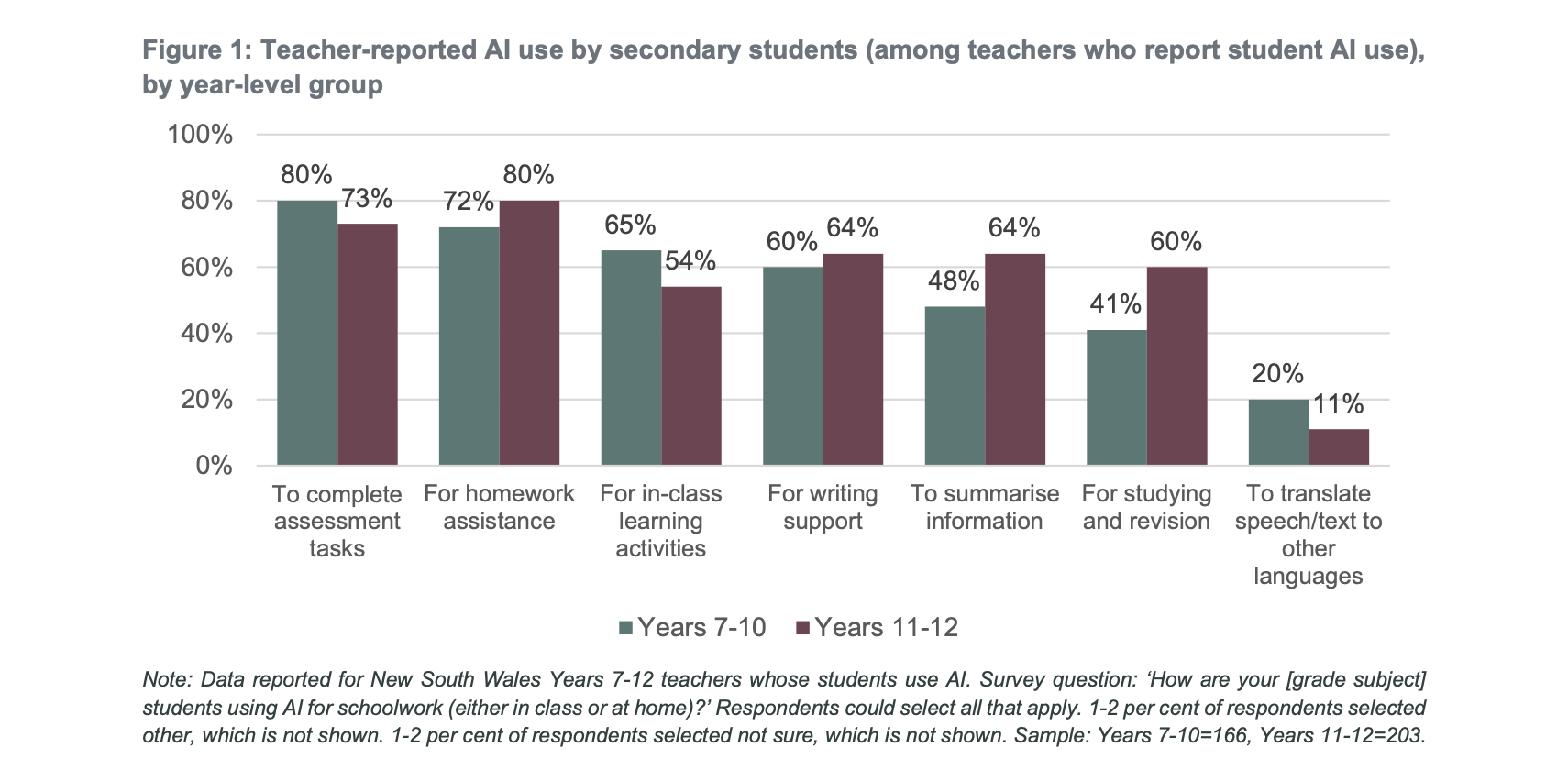
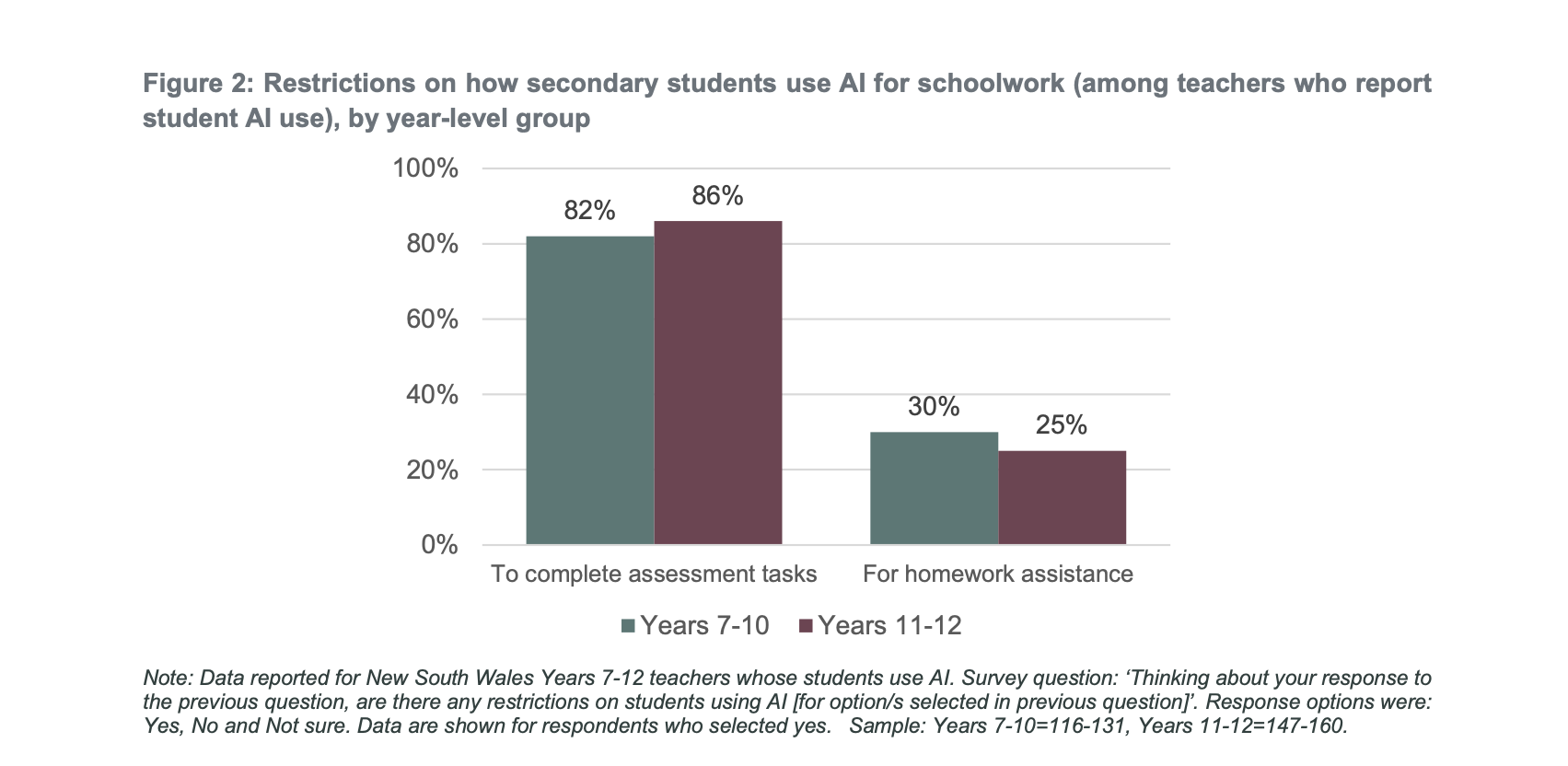
Half of secondary teachers reported their students used AI for schoolwork. Of these teachers, about three-quarters said students used it to complete assessments – despite more than 80 percent who said students faced restrictions on using AI for this purpose.
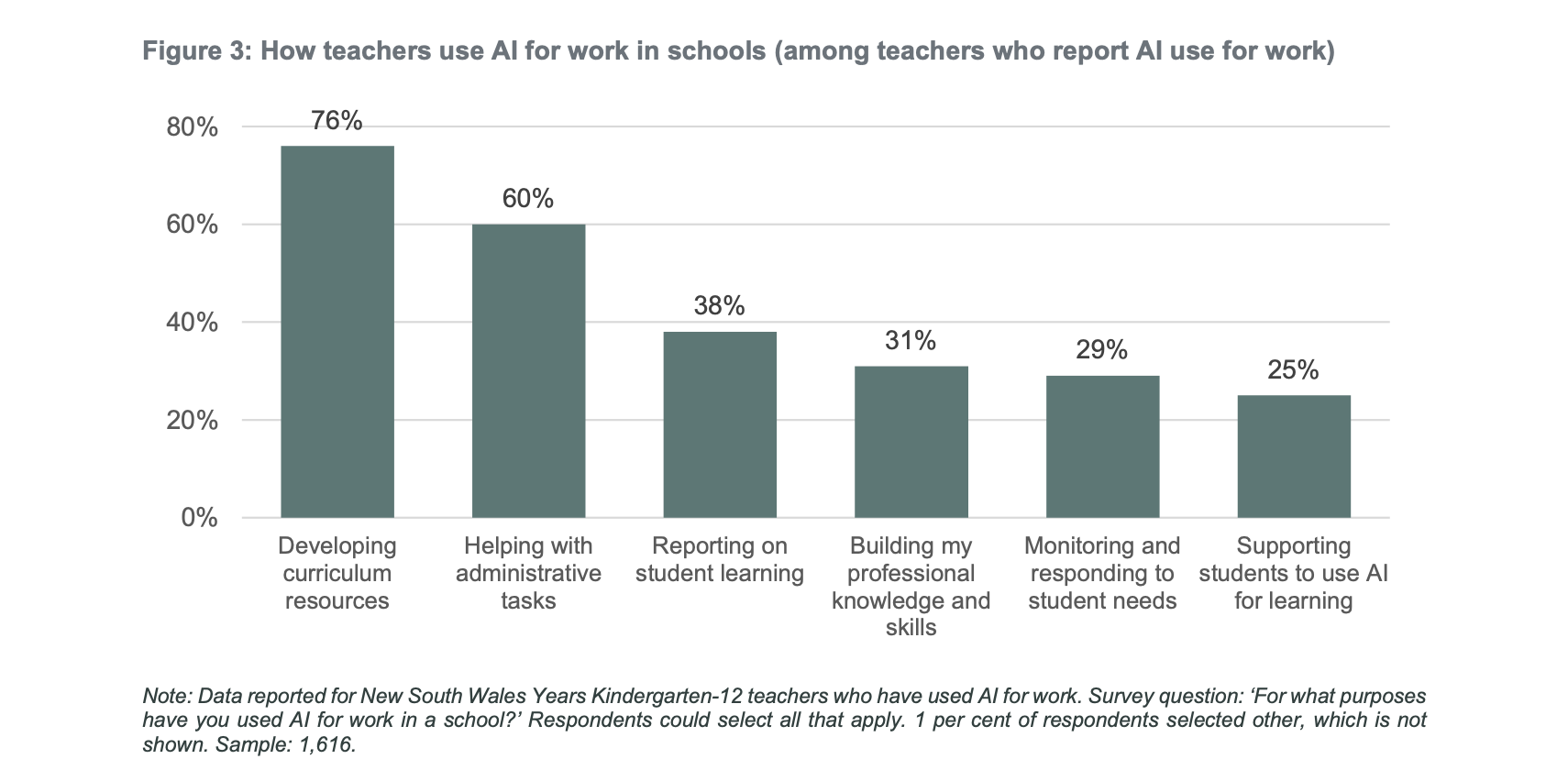
Three-quarters of teachers and school leaders have used AI for work, and about three-quarters have used AI to develop curriculum resources. The report said doing this could harm effective teaching because the tools were not trained to produce content that reflected how students learn best.
The report, which was co-authored by Learning First CEO Dr Ben Jensen, said many teachers could not tell how often or in what ways their students were using AI.
“It’s likely that student AI use is even more widespread and less visible than currently understood,” the report said.
It said the pressure to put AI into schools and classrooms had persuaded governments to commit billions of dollars. But evidence of positive return on investment was scant, and technology use in schools was now being restricted globally, as understanding of the negative impacts of overuse grew.
“Despite the promises of technology companies and advocates of 21st century change, independent evidence of positive impact on student learning is hard to find, while research showing the negative impact of AI on student learning is growing,” the report said.
“AI advocates typically frame risk to education as on the horizon, a future problem that can be managed if planned for now.
“But that perception is both misplaced and dangerous.
“New evidence from teachers and school leaders shows that AI is already being used in schools in a variety of ways, and that the ‘risks’ of AI to education are no longer problems that might come to pass in the future, but realities that schools are dealing with today.”
Secondary teachers in the report expressed concern that students were outsourcing their cognitive load or “handing over the thinking itself to AI.”
“They’re losing the value of learning itself as a journey…I think it (students’ thinking) is being dwarfed and snuffed,” one teacher said.
“This gap between students’ observed output and learning has been called a ‘performance paradox’, and means that great caution is required when interpreting the results of studies that claim AI has a positive effect on student outcomes,” the report said.
“The Brookings Institution has described the growing sophistication of AI tools as ‘an existential danger to learning itself’.
“As a tendency to outsource reduces students’ knowledge of a topic, their ability to learn will be increasingly compromised since they lack the necessary prior knowledge needed to make sense of new information.”
Dr Jensen said that schools needed to maintain effective learning and integrity in their assessments – which meant heavily restricting AI in student work.
The report called for coordinated leadership at every level of the education system to consider their options and address the dangers and potential benefits of AI.
It also urged changes to assessment and student evaluation so that confidence in the education system was not undermined.
Meanwhile, Queensland state schools will be able to access Corella which has been designed for teachers to use AI for lesson planning and workload management.
According to a Queensland Government statement, the program will “reduce red tape for teachers by 25 percent.”
“Students will also benefit from using the secure AI platform, which supports their development in an increasingly digital world, by allowing them to brainstorm, check, draft, revise, research, and summarise information,” the statement said.
Woree State High School Principal Maurice Andrejic said the tool had been transformative for both students and teachers during their trial.
“Our Year 9 Digital Technologies students have used Corella to learn coding and develop games, helping them to take ownership of their learning while inspiring creativity and building essential 21st-century skills,” Mr Andrejic said in a statement.
“Corella has reduced the time our teachers spend on administrative tasks, lesson planning and creating assessments, giving them more time to focus on teaching.”
To access the report, click here.