Two Brisbane Catholic Education schools have developed post-school pathways that give students alternatives to university that are aligned with workforce demand.
Students at St Columban’s College, Caboolture are offered a broad range of subjects and strong vocational and training (VET) programs.
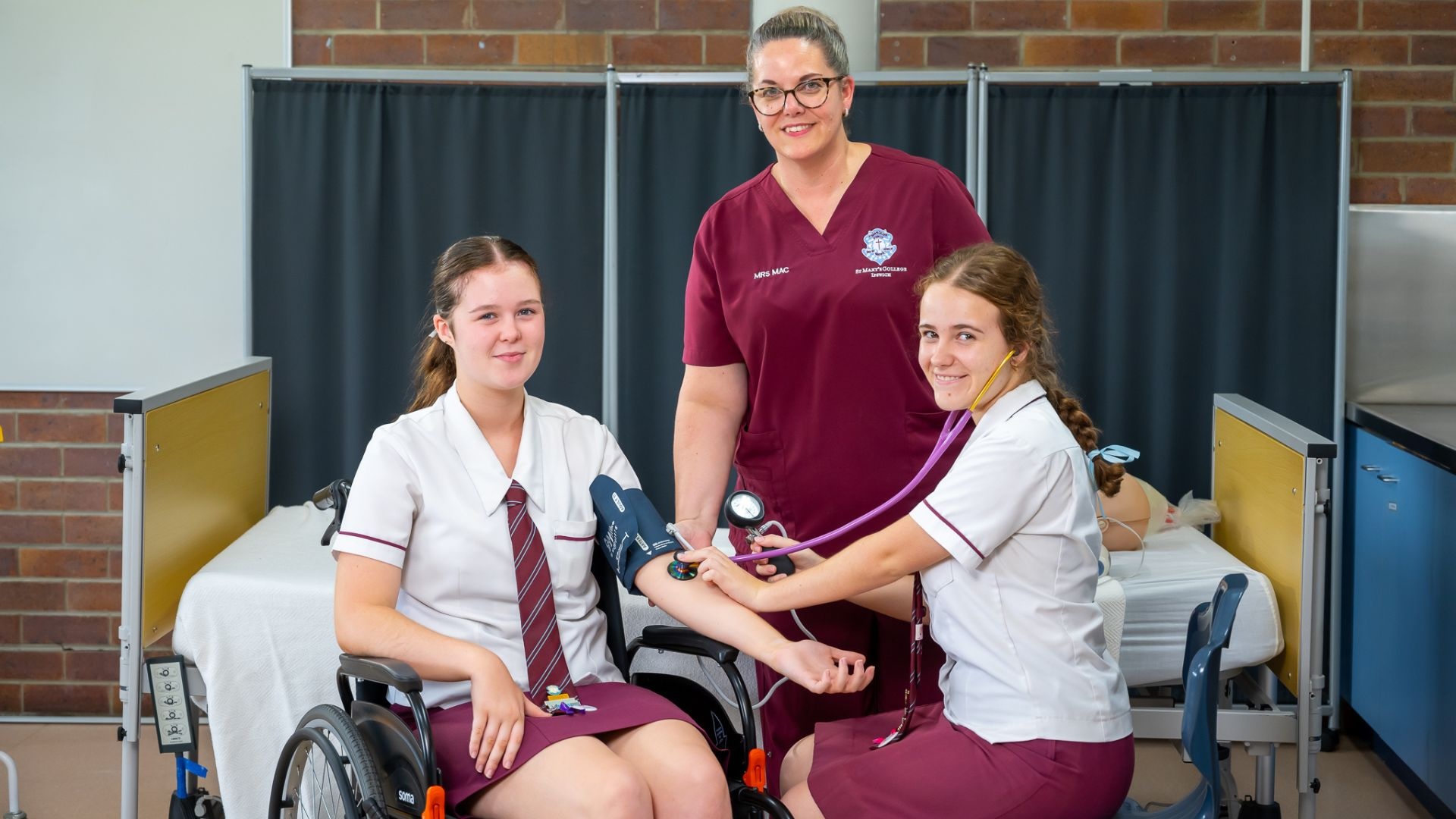
And St Mary’s College, Ipswich can access a unique Assistant in Nursing (AIN) specialised program, as well as Certificate II and III in Health Services.
St Columban’s College, Caboolture students under-take subjects spanning general, applied and vocational pathways.
Assistant Principal Learning and Teaching Amanda Schimke said the College’s approach ensured students could tailor their learning to match their aspirations beyond school.
“Offering these types of pathways at school allows us to provide a safe space for students to be able to explore their options and work out if that is really what they want to do post-school,” Ms Schimke said.
There are a wide-range of certificates – from hair, beauty and make-up in the College’s salon facilities, to construction and engineering programs delivered through the Celtic Centre.
Students are given authentic, hands-on learning experiences in real-world settings.
Health has emerged as one of the College’s fastest-growing and most in-demand areas.
“In the last few years, we’ve seen an absolute boom in Health, and it’s now one of the biggest qualifications offered at the College,” Ms Schimke said.
“Each year, around 90 students complete Health at a Year 10 level, which gives them the opportunity to explore whether it’s the pathway they want to pursue in Years 11 and 12.”
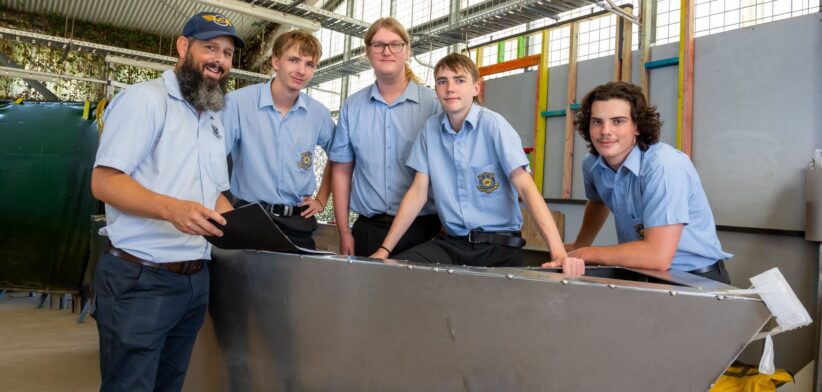
For Year 12 student Archie Herron, enrolling in Certificate II Engineering helped turn a long-standing interest into a clear post-school plan.
“In previous years I’d see older students building boats or race cars, and it really sparked an interest,” Archie said.
“As soon as I did my SET plan in Year 11, I knew exactly what I wanted to do.”
Through the course, Archie has developed practical skills in welding, problem-solving, and teamwork, while gaining a realistic understanding of what an apprenticeship entails.
“You don’t leave school knowing nothing,” he said.
“It really gives you a sense of what it’s going to be like when you start your apprenticeship.”
For Year 11 student Amelia Mitchell, the College’s hair and beauty pathway has been equally transformative. Beginning with certificates in hair in Year 10, Amelia is now working towards a Certificate III in Make-up, gaining both creative and business-ready skills.
“Make-up became a really beautiful space for me to explore who I am,” Amelia said.
“You learn so much, not just about beauty and make-up, but about people, empathy and how to communicate.”
Principal Michael Connolly said St Columban’s College deliberately designed its offerings around industry trends, labour market data and future workforce needs.
“Some of the big areas we focus on are aviation, health, fitness and hospitality, all areas of significant need in Australia,” Mr Connolly said.
“By the time today’s students reach Year 12, many jobs will look very different or may not even exist yet.
“So, it’s about helping them build the skills they’ll need to adapt, grow and be the best they can be.”
Students at St Mary’s College, Ipswich are gaining a head start in one of Australia’s most in-demand industries through the school’s AIN and Health programs.
The school’s Program Leader for Studies, Melanie McAndrew said while many secondary schools offered vocational certificates in health, St Mary’s was unique because it offered a specialised AIN pathway and strong industry focus.
With more than 20 years’ experience in nursing before transitioning to education, Mrs McAndrew said her clinical background allowed students to benefit from real-world expertise and industry connections.
“A number of our graduates are now working locally, which is incredibly exciting,” Mrs McAndrew said.
“They finished school and went straight into the workforce, working with West Moreton Health, St Andrew’s Hospital, Mater hospitals and a range of residential aged-care facilities.”
The program was introduced in 2023, with the first cohort graduating in 2024, and it has already delivered strong outcomes for students and the local community.
For Year 12 student Addison Costello, the program has confirmed a long-held ambition to work in healthcare.
“I took up the certificate because I’ve always wanted to do something in the healthcare field,” Addison said.
“I’m working towards a dual degree in paramedicine and nursing, and doing this qualification means I can get into a hospital environment earlier and gain more experience.”
Addison said the course had also given students a strong sense of purpose and belonging.
“I’ve always wanted to help people and be that person who can say, ‘you’re going to be okay, I’m here to help,” she said.
“I just want to make sure people are able to get the assistance they need.”
The AIN specialisation is delivered as a nationally recognised nano-qualification, providing students with additional clinical skills beyond the standard certificate requirements.
Mrs McAndrew said practical learning was embedded into everyday classroom experiences, with students regularly practicing essential healthcare skills.
“Our Year 12 students might start their class by doing hand hygiene, taking observations, bandaging a snake bite, or practicing CPR and defibrillation,” she said.
“These are skills we practice every single day.”
Students also complete modules covering patient transport, dementia and delirium care, and other specialised clinical competencies required across healthcare settings.
Demand for the program continues to grow, reflecting strong student interest in healthcare pathways.