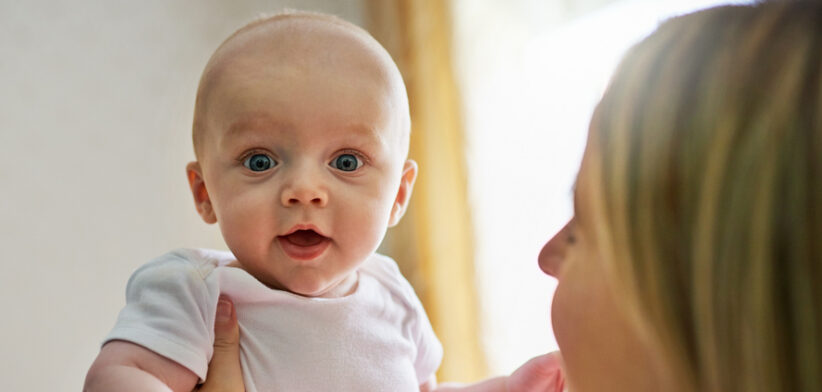
Babies are communicating with us from birth.
They are making their needs, thinking and learning visible through play, verbal and non-verbal interactions, through observing the world and through social engagement with each other and people around them.
Guardian Childcare and Education National Baby Ambassador Simone Myskiw says babies are incredibly intelligent – natural investigators who are constantly testing ideas and watching the behaviour of people and other babies around them.
In an interview with Newreel, she said many families worried about putting their babies into childcare and early learning, but there were significant benefits from babies being able to observe, mimic and learn alongside their peers.
“When you think about what’s happening with a baby, they’re experiencing everything for the first time,” she said.
“For example, a baby sitting in a highchair and throwing their cup off repeatedly might seem unimportant.
“But that’s actually a really strong form of development around schematic play and understanding what happens when something disappears from sight.”
Simone said the apparently simple game was helping babies understand object permanence – that something continued to exist even when they could no longer see it.
That understanding could later help with separation anxiety as babies began to recognise that just because a parent disappeared from sight did not mean they were gone permanently.
What is the right pace of development?
Guardian’s To BE Me age and stage learning program, introduced last year, supports educators to recognise and record this type of development and give families greater insight into what and how their baby is learning.
“That sense of reassurance is really important,” Simone said.
“At home, especially for first-time parents, you often don’t know things like – is my baby rolling over at the right age? Is this normal? Should I be worried?”
Being part of a ‘baby community’
Simone, who has a research Masters’ Degree in identifying the language of children’s rights in early childhood settings, said being part of a community of babies, families and educators could make understanding development less isolating for parents.
It also gives further insights for educators to see babies observing and learning from their peers.
“An educator can reassure you to not worry that your baby isn’t rolling yet,” she said.
“Some babies roll at four months, some at nine months. But we can already see your baby watching another child and mimicking their movements, and that’s a wonderful development.
“Peer-to-peer learning is incredibly important and powerful, even at a very young age.”
The Baby Circle program
Guardian is now extending that idea of connection to families through trials of its Baby Circle program.
Baby Circle is a free four-week program for babies aged under one and their parents or carers, bringing the same small group of local families together at the same time each week.
Rather than being a childcare drop-off, parents stay with their babies for the hour-long sessions, which are designed around making friends, reading, playing and talking.
A Guardian Baby Ambassador leads each session with activities including songs, stories and treasure baskets, with the activities deliberately chosen so families can easily repeat them at home.
The aim is to provide a relaxed and familiar environment in which babies can interact while parents meet other families going through the same stage of life.
Understanding a baby’s learning
For Simone, that community is an important part of helping parents better understand the enormous amount of learning taking place during a baby’s earliest months.
Guardian has also introduced specialist training for educators working with babies, including modules covering food and eating, understanding how babies learn, communicating that learning to families and schematic play.
Simone said watching that development unfold could be enormously rewarding for both educators and families.
“It is so incredible to see their learning and ideas in action,” she said.
Guardian Childcare and Education’s broader baby program includes specially trained Baby Ambassadors, Baby’s First Food Passport, SafetyPlus and the Baby Circle initiative.
For more information on Guardian Childcare and Education’s baby program visit The Conversation.