By Shane Rodgers
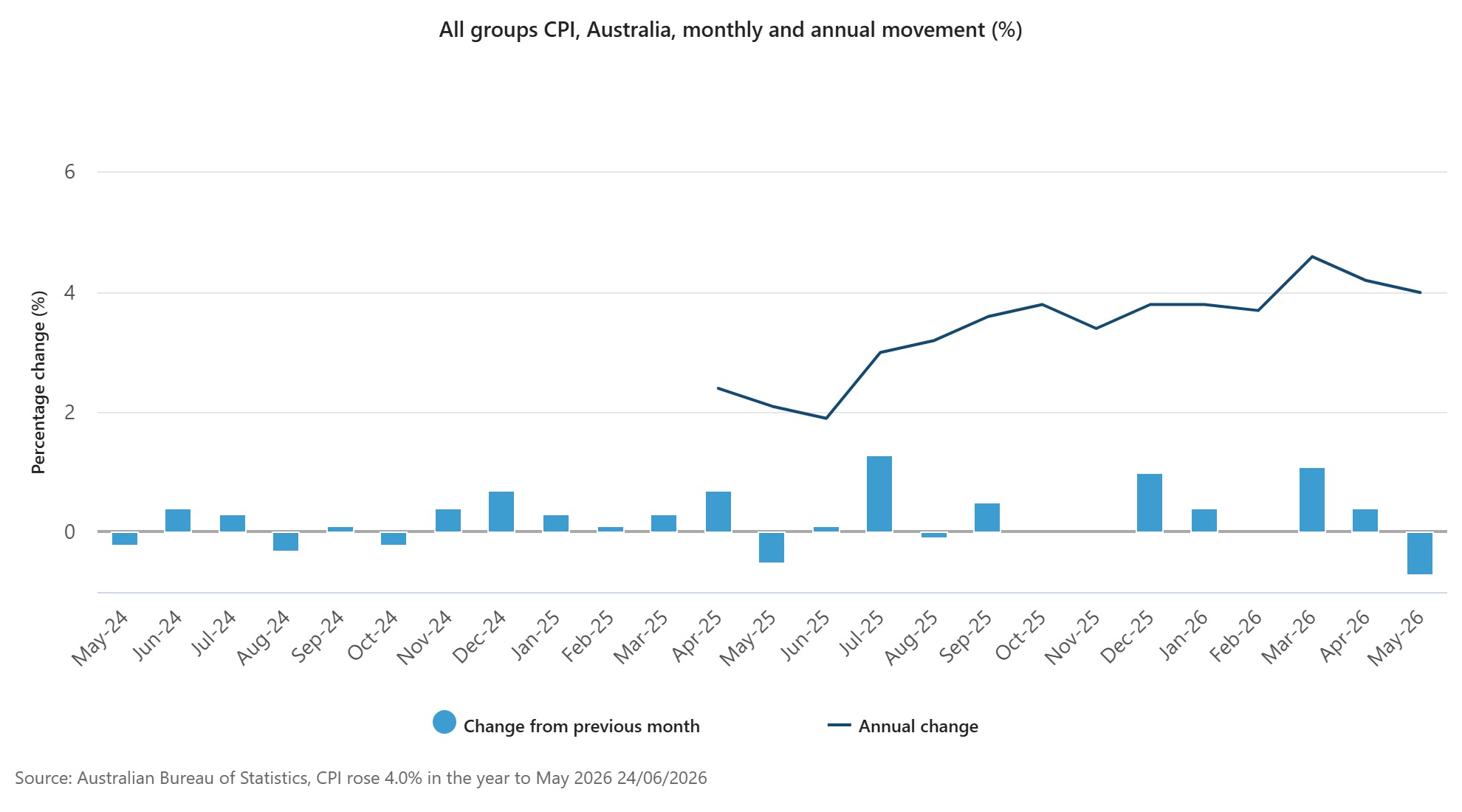
The Consumer Price Index (CPI) was at a stubborn 4 percent in the year to May, giving regulators little guidance on whether it is energised or retreating under an economic battering.
The seasonally-adjusted inflation number, released by the ABS today, was down from the 4.2 percent April figure, but not enough to confirm a downward trend.
At the same time, the CPI is showing less inclination to hit the five percent that Treasurer Jim Chalmers warned was possible at the height of the Iran war.
The CPI remains well outside the Reserve Bank’s two to three percent target zone.
Last week the bank kept interest rate movements on hold pending further trend data.
The latest number is unlikely to help. At the moment the inflation number looks like a cockroach running all over a bench that the Reserve is struggling to whack with a swatter.
The largest contributor to annual inflation in May was housing, which rose by 6.5 percent.
This was followed by a 3.3 percent rise in food and non-alcoholic beverages and a 3.3 per cent rise in transport.
Housing and transport costs are heavily influenced by supply issues and increased fuel prices so it is doubtful further interest rate hikes will heavily impact these figures.
Other datasets appear to show that households are already pulling back discretionary spending, which is the main dial that mortgage rates can influence.
The most recent unemployment figures also suggest a slight weakening in the labour market.
With the erratic items stripped out, “trimmed” annual inflation in May was 3.6 percent, up from 3.4 percent in April 2026.
Electricity costs are 21.1 percent higher than 12 months ago as Commonwealth and State government rebates that reduced electricity costs for households are no longer in place.
Food inflation was driven by higher prices for meals out and takeaway, which rose by 4.0 percent in the 12 months to May.
“Price growth for transport eased from what we saw in April, rising 3.3 percent in annual terms, down from a 6.6 percent rise in the 12 months to April 2026,” the ABS said.
“On a monthly basis, automotive fuel prices fell 11.9 percent in May, after falling by 7.0 percent in April.
“These monthly falls include the impacts of the halving of the fuel excise on 1 April and lower world oil prices in recent weeks.”
The fuel excise is scheduled to be put back to the full rate in July.
The full ABS dataset is here