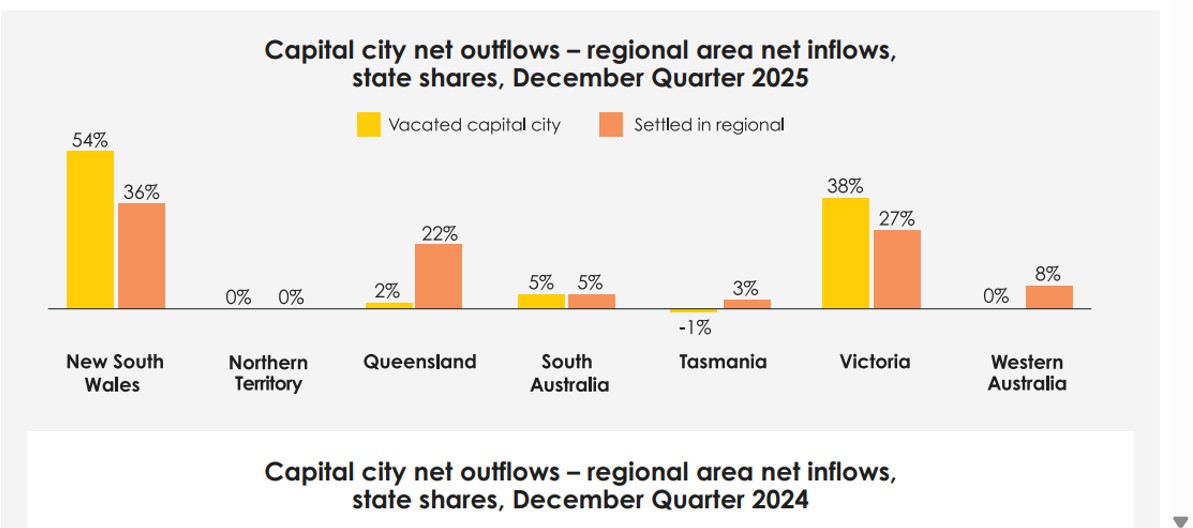
Brisbane had a net outflow of people to the regions in 2025, with many believed to be chasing jobs and housing affordability.
Across Australia, three times more people moved from capital cities to regions than from regions to the major centres during the year.
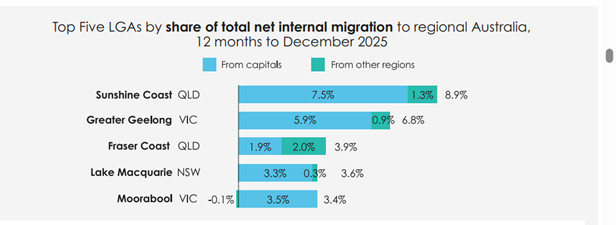
Figures released today also show that Queensland’s Sunshine Coast is the most popular destination for people vacating the capitals.
Around 7.5 percent of all capital city internal migration in Australia in 2025 went to the Sunshine Coast.
The Regional Movers Index (RMI) showed Australia’s top five regional destinations for net internal migration (including from other non-capital city regions) were the Sunshine Coast (8.9 percent), Greater Geelong (6.8 percent), the Fraser Coast (3.9), Lake Macquarie (3.6) and Moorabool (3.4).
The index is compiled jointly by the CommBank and the Regional Australia Institute (RAI).
RAI CEO Liz Ritchie said regional movers in 2025 were looking further afield, leading to greater diversity in the top destinations for movers.
“We are seeing residents of Brisbane and Perth seek out the regions in greater numbers, a trend which is gaining momentum,” she said
“Brisbane shifted from being a receiver of net flows to a contributor – that is, more people are now leaving Brisbane for the regions than the reverse.
“While most city leavers are from Sydney and Melbourne, the other capitals are also seeing outflows. They might be seeking housing affordability or job opportunities.”
Ms Ritchie said capital-city dwellers were still choosing traditional popular locations when they moved, but regional-to-regional movers were looking at a broader range of options.
The research report said that, despite December traditionally being a softer relocation period, the seasonal drop in capital-to-region migration last year was smaller than the previous two December quarters.
This underscored the continued momentum toward regional living.
“Capital-to-regional migration accounted for 11.6 percent of all relocations between local government areas across Australia,” the report said.
“It was the second highest share since the end of the pandemic in 2022 and outpaced movement in the opposite direction (regional-to-capitals) by 31 percent.”
Regional Tasmania, New South Wales, Victoria and Western Australia recorded the strongest annual net growth in percentage terms.
CBA Regional and Agribusiness Banking Executive General Manager Kylie Allen said the RMI findings underlined the need for investment in regional Australia.
“That shift brings real opportunity and reinforces the need for coordinated planning around housing and investment in infrastructure so regions can sustain momentum and support growing communities,” she said.
Ms Allen said CommBank data showed around a quarter of first home buyers were making their first home purchase in a regional or remote location.
“First home buyers choosing regional or remote areas can often buy a larger home at a more accessible price,” Ms Allen said.
“We’ve also seen double-digit growth in business lending fundings in regional and agribusiness over the past five years. This all adds up to stronger and growing regional economies.”
Regional Movers Index – December 2025 Quarter Report