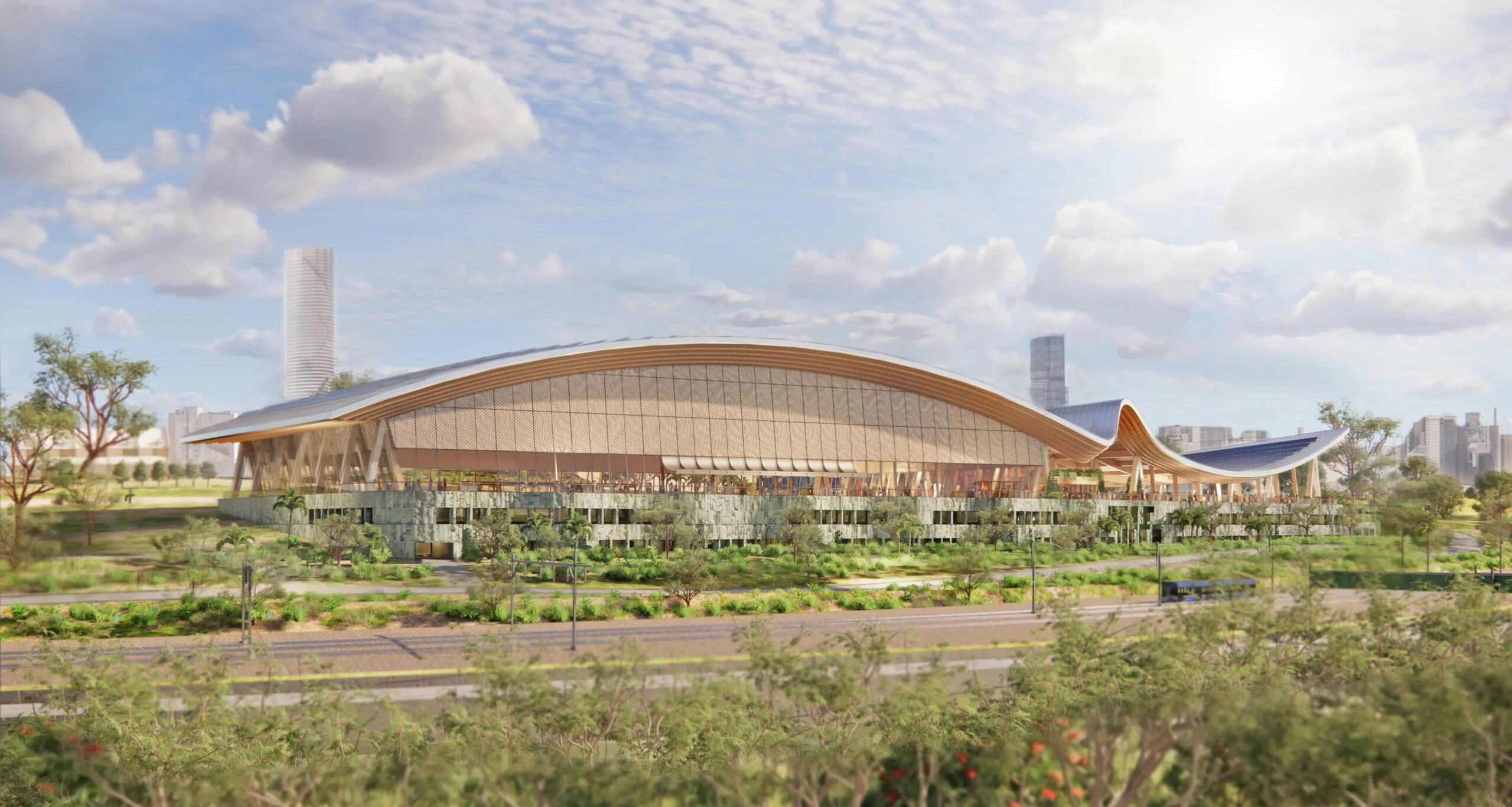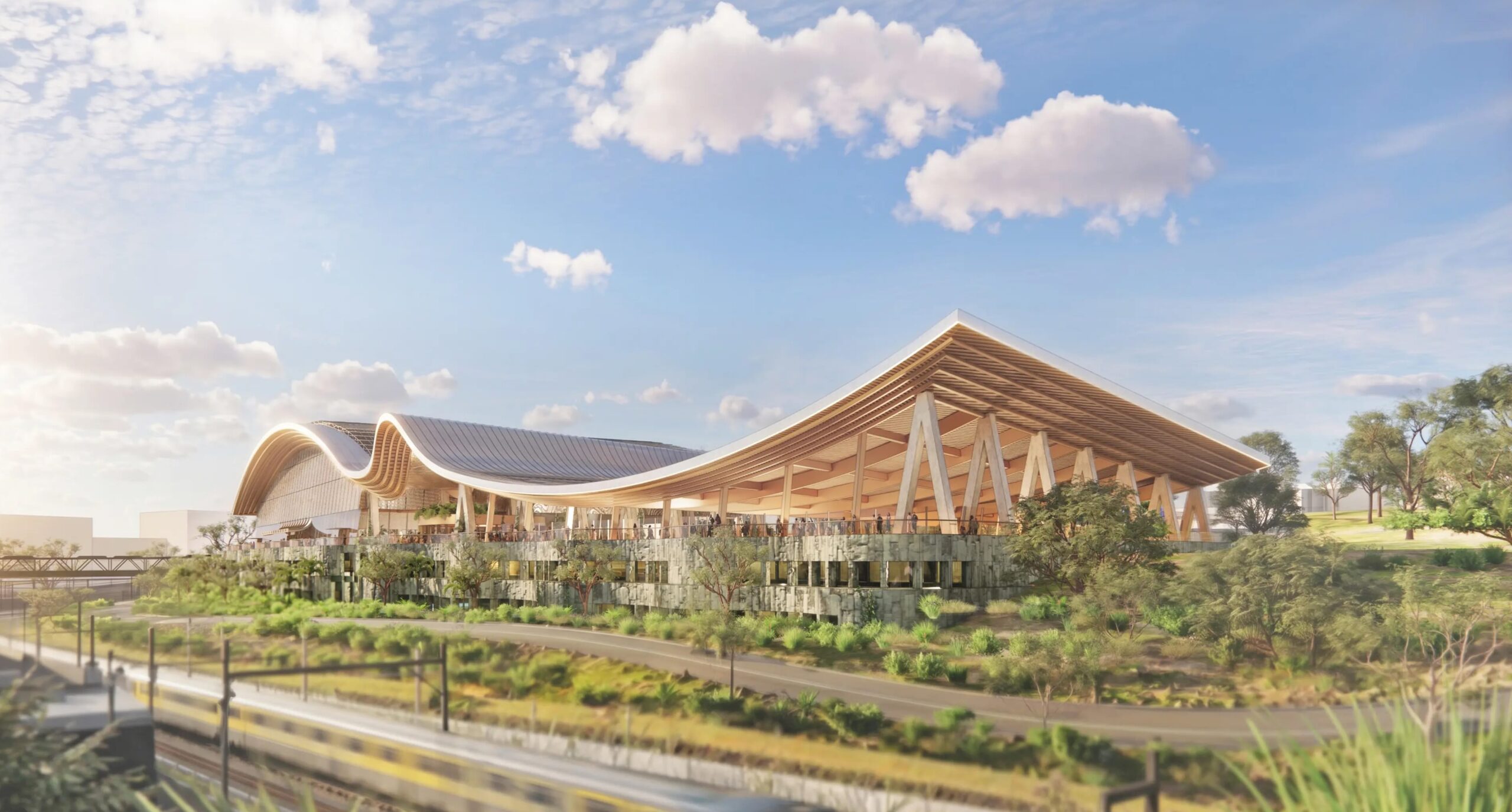
Plans for Brisbane’s new Olympics Aquatic Centre at Spring Hill have been unveiled.
National firms ARM Architecture and NH Architecture, in partnership with Queensland’s Arkhefield, will bring the National Aquatic Centre design to life for the 2032 Games.
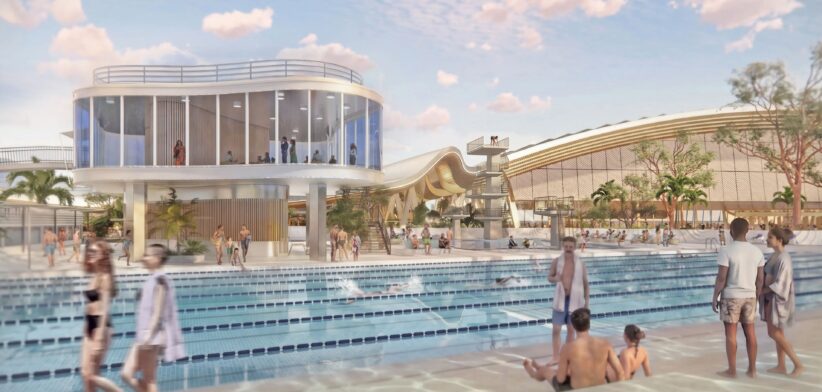
The undulating roofline reflects the movement of water and wind. Inside it will feature a main and secondary arena, each with large pools to support elite training and competitions, plus a gym and office spaces.
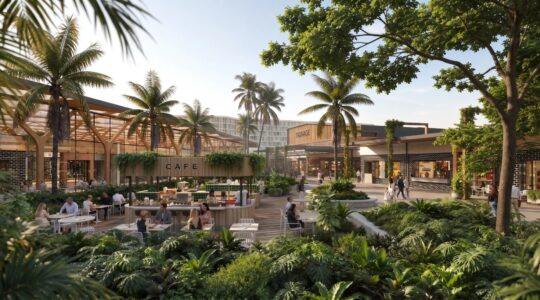
The design has been created to complement the existing outdoor pools and amenities of the heritage-listed Centenary Pool structures.
ARM Architecture Director Andrew Hayne, who is leading the architect partnership, said the design’s strong connection to water made it undeniably Queensland.
“The rippling plinth and floating roof reflect the movement of water, but the design is ultimately about place and is shaped by Brisbane’s landscape, subtropical climate and natural environment,” Mr Hayne said.
NH Architecture Director Emily Kilvington described the design as a world-class venue that connected people with nature, while delivering an exceptional Games and community experience.
“New state-of-the-art facilities show real respect for the site’s history while positioning Queensland at the forefront of aquatic sport infrastructure,” Ms Kilvington said.
Arkhefield Founding Director Andrew Gutteridge grew up swimming at the Centenary Pool and said the project would serve Queenslanders long after the 2032 Games had ended.
“Hosting the Olympics and Paralympics gives us the chance to build something truly extraordinary, a place where Queenslanders can swim, train and connect with each other for decades to come,” Mr Gutteridge said.
The partnership also includes aquatic architecture specialists Liquid Blu, the Queensland design company behind the Yeppoon Lagoon and Pavilion, Palm Beach Aquatic and Community Centre and the Gympie Aquatic Recreation Centre, among others.
The Games Independent Infrastructure Construction Authority (GIICA) is in the process of selecting the National Aquatic Centre’s builder, with four building contractors shortlisted to submit offers, which will close at the end of July, 2026.
This will be further shortlisted to two builders within weeks, allowing GIICA to move to the next phase of assessment and planning, with the final builder to be selected by early 2027.
The GIICA will take possession of the Centenary Pool on September 1, 2026, to begin early works to prepare the site for construction.
GIICA Chairman Stephen Conry, chaired the Design Evaluation Panel, said the quality of design submissions had been outstanding.
“Ultimately, it was ARM Architecture, NH Architecture and Arkhefield’s design for a Centre inspired by the movement of water, cleverly positioned into the landscape, that we felt best reflected the natural beauty of Brisbane,” Mr Conry said.
“GIICA is committed to delivering transformational infrastructure that will benefit Queenslanders for generations, and I am confident the National Aquatic Centre and new Brisbane Stadium in Victoria Park will be outstanding landmarks for our city and among our most popular public spaces.”
Swimming Australia CEO Rob Woodhouse said today represented an important milestone on the path to Brisbane 2032 and the legacy that extends well beyond the Games.
“The National Aquatic Centre will deliver long term benefits for Australia’s aquatic sports and the community as a world-leading venue capable of supporting major aquatics events and high-performance training alongside community access year-round,” Mr Woodhouse said.
Queensland Premier David Crisafulli said the new swimming centre was about delivering legacy benefits for the state.
“The Centenary Pool is a proud part of Queensland’s swimming history and as a centrepiece for the action during 2032, that history will be strengthened into the future,” he said.