By Shane Rodgers
For most people there is an Australian ‘bucket list’ of features that you need to see at least once.
It includes Uluru, the Great Barrier Reef, the Sydney Opera House, the Daintree Rainforest, and maybe the Kimberley.
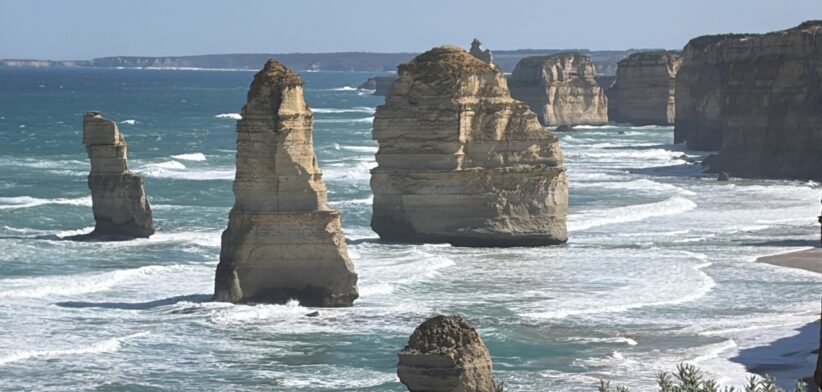
And the 12 Apostles on the Great Ocean Road in Victoria.
It took me six decades to get to the last one. So long that the 12 Apostles are now officially seven Apostles after the others succumbed to the waves that pound relentlessly from the Southern Ocean.
By some accounts there were never actually 12 – more like nine – possibly a reflection of our county’s declining NAPLAN results.
I’m not sure why it took so long to get to the “12” Apostles. But recently the circumstances were right to grab a hire car in Melbourne and head south-west, not really knowing what to expect, and hoping the remaining apostles could hold on a bit longer.
The new visitor centre
The trip coincided with an impending big milestone for the 12 Apostles area.
This month the $126m Twelve Apostles Precinct Redevelopment will unveil its flagship Visitor Centre, designed to better handle the thousands of people who descend on the area each day.
It will feature retail, dining and exhibition spaces, a rooftop observation deck with views, and a Welcome Garden celebrating Eastern Maar cultural heritage.
There is also expanded car parking, improved roads and more native landscaping.
A few surprises along the way
Setting off towards an ocean road so confident as to call itself “great” I still didn’t really know what to expect.
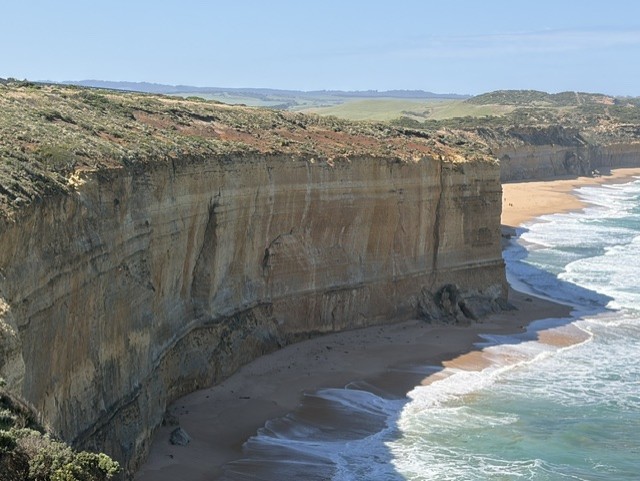
Somehow, I imagined hundreds of kilometres of winding and wind-soaked clifftop driving. It was the Great Australian Bite after all. There must be teeth marks.
The reality was quite different. There is quite a bit of magnificent sea view driving but also many kilometres of slow-turn forest driving that could trick you into thinking you were in the tropics.
The other delightful surprise was the vistas of rolling farming country straight out of a country England postcard.
Anglesea and Lorne
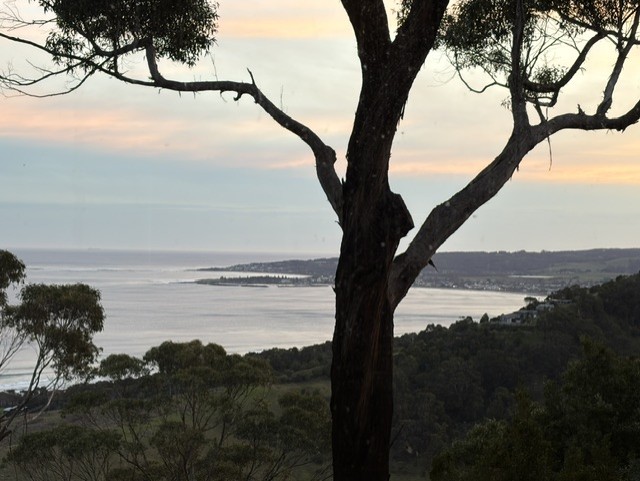
There are lots of little towns along the way. We stopped at Anglesea and Lorne.
Anglesea started life as Swampy Creek but was renamed in 1884, drawing its name from an island in North Wales.
It spent much of its life as a coal town but now is more renowned for its arts scene, surf breaks and magnificent sea vistas.
Lorne is another of the gateway towns to the Great Ocean Road, and particularly well known for the Great Otway national park waterfalls, giant ferns and ancient forest.
It also hosts the Lorne Sculpture Biennale, a two-yearly open-air sculpture exhibition on Lorne’s picturesque foreshore.
We stopped for lunch at a beachside café where we were entertained by a confident, stomping cockatoo that seemed to live well by swooping on leftovers, and may well have been one of the lobbyists and models for the Brisbane 2032 Olympics logo.
Finally, the Apostles
Using Apollo Bay (a particularly neat and picturesque coastal gem) as our base for a couple of nights, we were finally on our way to the 7/9/12 Apostles.
We barely encountered any cars or buses on the trek so it was a bit of a surprise to reach the access point and find about 2000 Asian tourists already on the lookouts. They must have found a secret way to get there.
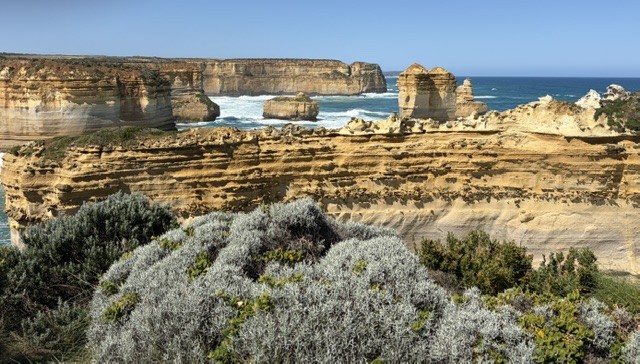
Without really knowing what to expect, the spectacle was genuinely breathtaking. Like Uluru, you suddenly could be anywhere in the world. This is a vista worth seeing.
It is like some sort of ancient world, desperately clinging to life while history and the elements work relentlessly to drag it asunder.
A few more surprises
As with Uluru, with Kata Tjuta and Kings Canyon also in the vicinity, there is plenty more to this part of the Great Ocean Road than the Apostles.
There are the Gibson Steps, a walk down a carved staircase onto the base of a 70m limestone cliff.
There is the Loch Ard Gorge (named after the 1878 Loch Ard shipwreck) just a few minutes west of the apostles, with its ancient formations rising from the sea like carved Egyptian monuments.
We almost did not continue for a few minutes more to Port Campbell. But I’m glad we did. In a run of curious and unusual places, this is one of the most intriguing.
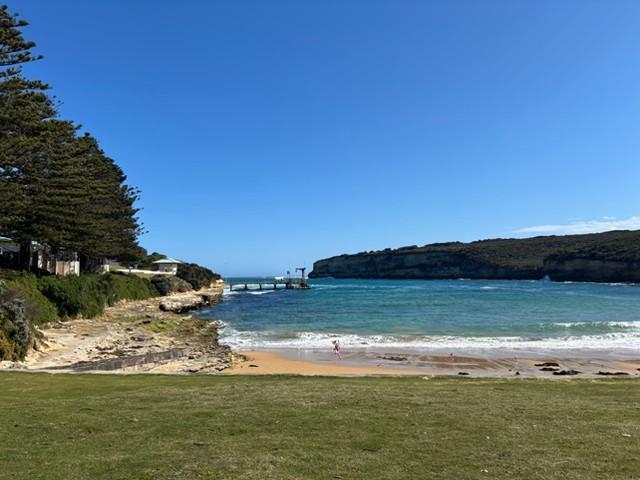
The town is built around a rectangular inlet that is naturally carved through the coastline as if manmade, culminating in a pretty beach, overseen by a grassy headland.
Unsurprisingly, the town began its life as a whaling and maritime safe harbour in an area known as the Shipwreck Coast for good reason.
The town was named after sea captain Alexander Campbell, apparently known as “the last of the buccaneers” who sheltered his ship in the bay while chasing a whale in 1843.
Only in Australia
All in all, I finished the trip wondering why I had taken so long for this amazing place to get into my trip short list.
In a life where most days barely register in your long-term memory, our three Great Ocean Days have a permanent home there.
Deep down I feel a certain Aussie pride that one of our best-known attractions is known as the 12 Apostles, even though there are not that many.
You watch the tourists doing the count, clearly perplexed at being shortchanged by nature.
As a mark of respect to the audacity of the misnomer, I am declaring the number seven an “Australian dozen”. But if the other seven disappear, we may have some explaining to do.