A new study has predicted the melting of the so-called “Doomsday” Glacier in West Antarctica will cause sea levels to rise by 30mm by 2100 – twice the previous estimate.
The University of California, Irvine and NASA’s Jet Propulsion Laboratory said this latest Thwaites Glacier research was leading to a greater sense of alarm about sea levels.
The scientific community has previously said that a 10mm sea level rise can cause around one metre of horizontal coastline retreat.
Therefore, a 30mm rise could erode up to three metres of beaches, dunes, or wetlands.
In a paper published in Nature Communications this month, the research team said a new computer model allowed the Thwaites Glacier melt to be predicted with greater accuracy.
UC Irvine professor of Earth system science Eric Rignot said scientists had documented and quantified the impacts of climate change on sensitive ice sheets for decades.
“But a mounting realization gained in recent years of what is happening on the undersides of glaciers like Thwaites is leading to an even greater sense of alarm,” he said.
“Most projections up-to-present have struggled to match the rapidity of the mass loss because of missing physics; our new model with more complete physics is able to match the record and then produces projections that are twice larger than before.
“These results predict greater risk of and exposure for coastal flooding than anticipated in the coming decades.”
Lead author Mattia Poinelli said the latest work acknowledged “a different arrangement beneath Earth’s major ocean-terminating glaciers”.
“Satellite observations demonstrate the existence of a ‘grounding zone,’ sometimes kilometers wide, where warm ocean water is reaching deep underneath the ice sheets and causing vigorous melting,” he said.
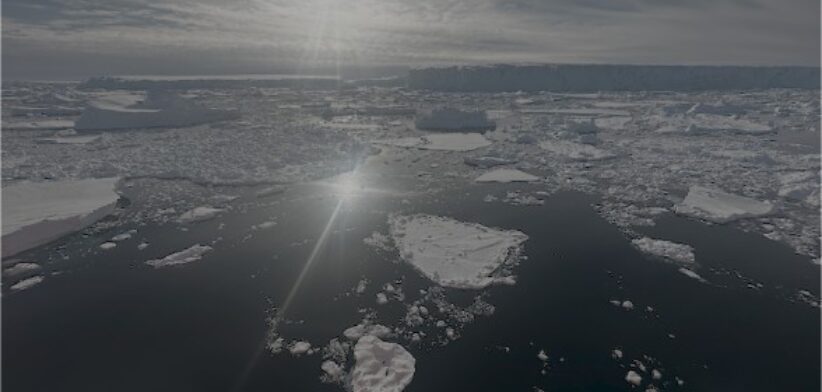
Thwaites Glacier is in the Amundsen Sea Embayment sector of West Antarctica which accounts for around one third of the mass loss from the Antarctic Ice Sheet.
In recent decades, Thwaites has undergone rapid retreat and thinning, but scientists have been struggling to reconcile ice sheet models that show slower movement with satellite observations that show substantial ice flow acceleration.
The new study data indicated that seawater penetrates several kilometers beneath grounded ice and lifts it during tidal cycles, flushing the ice with pressurised, warm seawater.
Dr Poinelli said the study showed that grounding zone processes are causing accelerated detachment of Thwaites Glacier from stabilising ridges.
This is leading to more rapid ice flow and deterioration.
More information is available here