A famous Swiss watchmaker says you never really own one of its products, instead you merely look after it for the next generation.
Port of Brisbane CEO Neil Stephens has adopted a similar mindset in running one of Australia’s most significant infrastructure assets.
“We are believers in being good ancestors,” he said. “The fact that I can sit under a tree at Fisherman Islands today because somebody planted it 30 years ago is a big deal for us.”
“Today’s leadership at the Port benefits from decisions made by previous generations and we have a responsibility to leave the same legacy for future Queenslanders.”
In an interview to mark the 50th anniversary of the Port of Brisbane, Mr Stephens says the Port is generally happy to sail under the radar because when its profile is heightened, the stakes are generally high, like when ex-TC Alfred struck the region in 2025.
“When weather shuts us down, the community see impacts within days,” he says. “You start with fuel, then food, then businesses may be impacted.
“Most of what people wear, drive or consume has come through this port. It is a responsibility we take very seriously.”
Benefitting from the decisions of the past
Mr Stephens says Queensland businesses and consumers in 2026 are reaping the benefits of the “big, brilliant decision” in the 1970s to move the Port from the city centre to Fisherman Islands.
This allowed the creation of “a capital city port that isn’t in the capital city” with plenty of room to grow.
Just like the Swiss watchmaker, the current Port custodians must think ahead, trying to keep the facility contemporary and latched to the emerging high-scale, high- tech future.
The main role of the Port
This is Mr Stephens’ first role at a port, after a long career in finance and property in the UK and Australia.
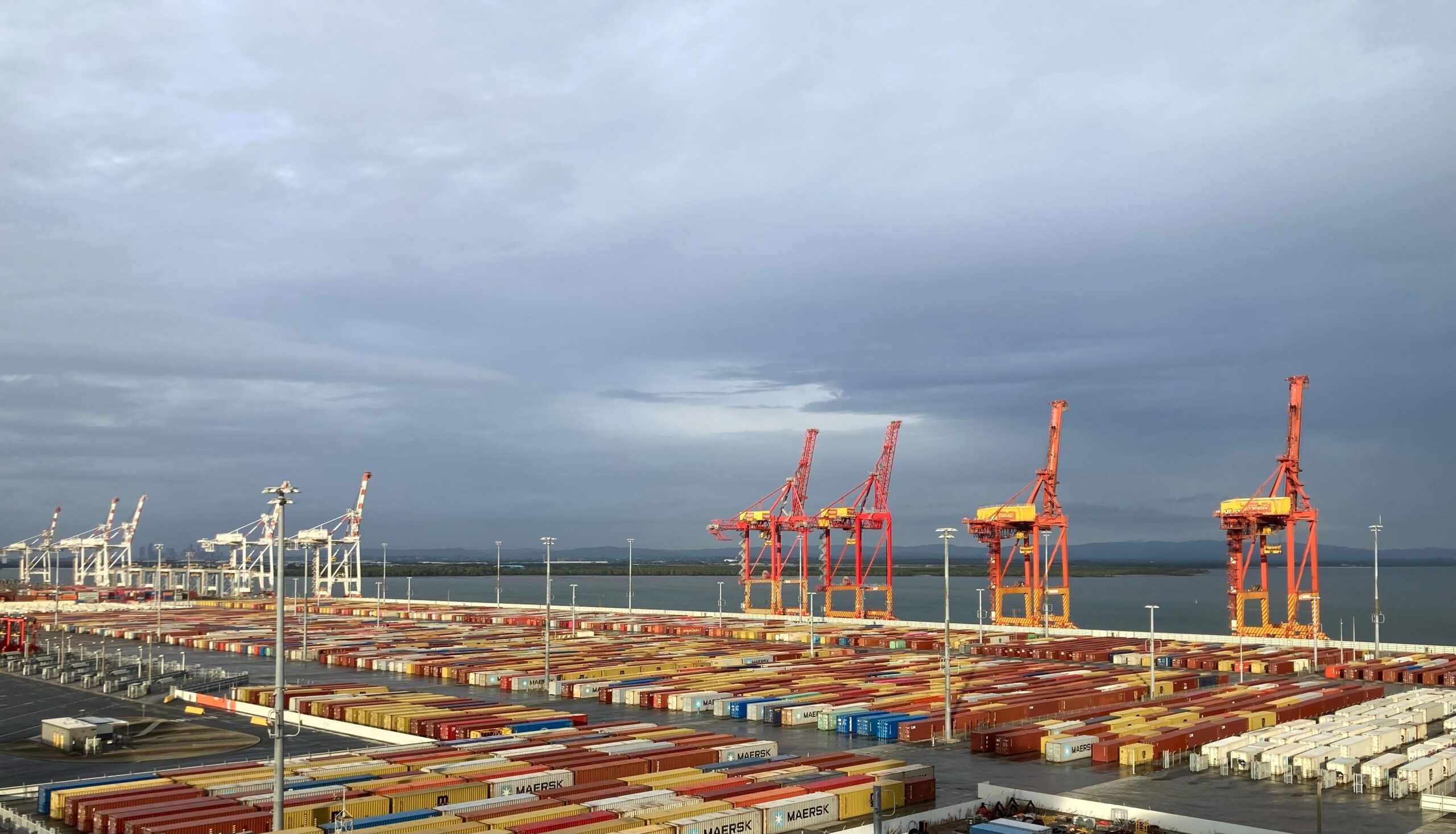
Five years down the track he has a contagious passion about the Port, seeing its role as four things:
- An import-export hub for the whole of Queensland and much of northern New South Wales.
- A major industrial property hub to support logistics and port-related activities.
- A marine services organisation that operates vessels and dredging services across Queensland.
- A cruise business that operates the Brisbane International Cruise Terminal which has had over 600 cruise ship visits since opening and over three million passenger movements.
When Mr Stephens began his role, the biggest revelations were the scale of the facility, the range of opportunities and the passion of the people who worked there.
Taking care of the environment
For a “heavy’ industrial asset dealing with so much product and equipment, there is also an underlying sense of responsibility for environmental stewardship.
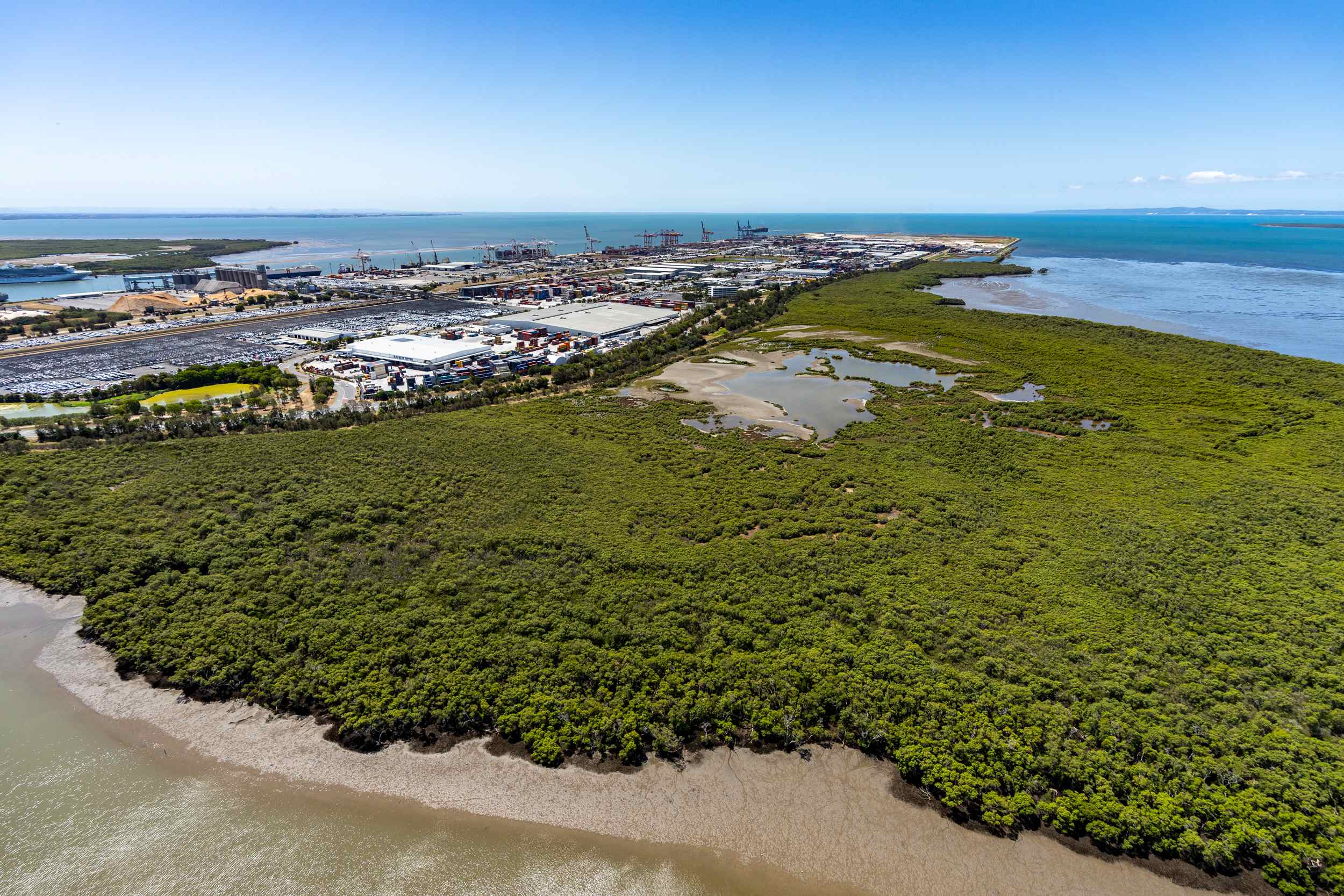
“While we undertake maintenance dredging to ensure safe passage of vessels through the channel, we also invest heavily in the local environment.
“We don’t just limit our focus to Moreton Bay. We also invest upstream, rehabilitating riverbanks so less sediment enters the Brisbane River and ultimately Moreton Bay.
“Protecting the environment we operate in is incredibly important to us.”
The daily challenges
Running Brisbane’s marine gateway is not without its challenges.
For Mr Stephens, the safety of the 10,000 people who work within the precinct each day is paramount.
Beyond that there is a constant need to adapt to changing global conditions that can include the recent fuel and fertiliser supply disruptions, global shipping uncertainty and economic fluctuations that disrupt volume.
“The Port must also balance growth with community expectations,” he says. “Our region’s population is growing and that means the amount of trade increases too. We need to grow alongside that – the challenge is bringing stakeholders along with us.”
Getting ready for larger ships
This will not get any easier, given the rising scale of both demand and ship sizes.
“The world is going bigger (with ships that are being built) because that’s where efficiency comes from,” Mr Stephens explains. “We can handle today’s ships. Tomorrow’s ships are another story.”
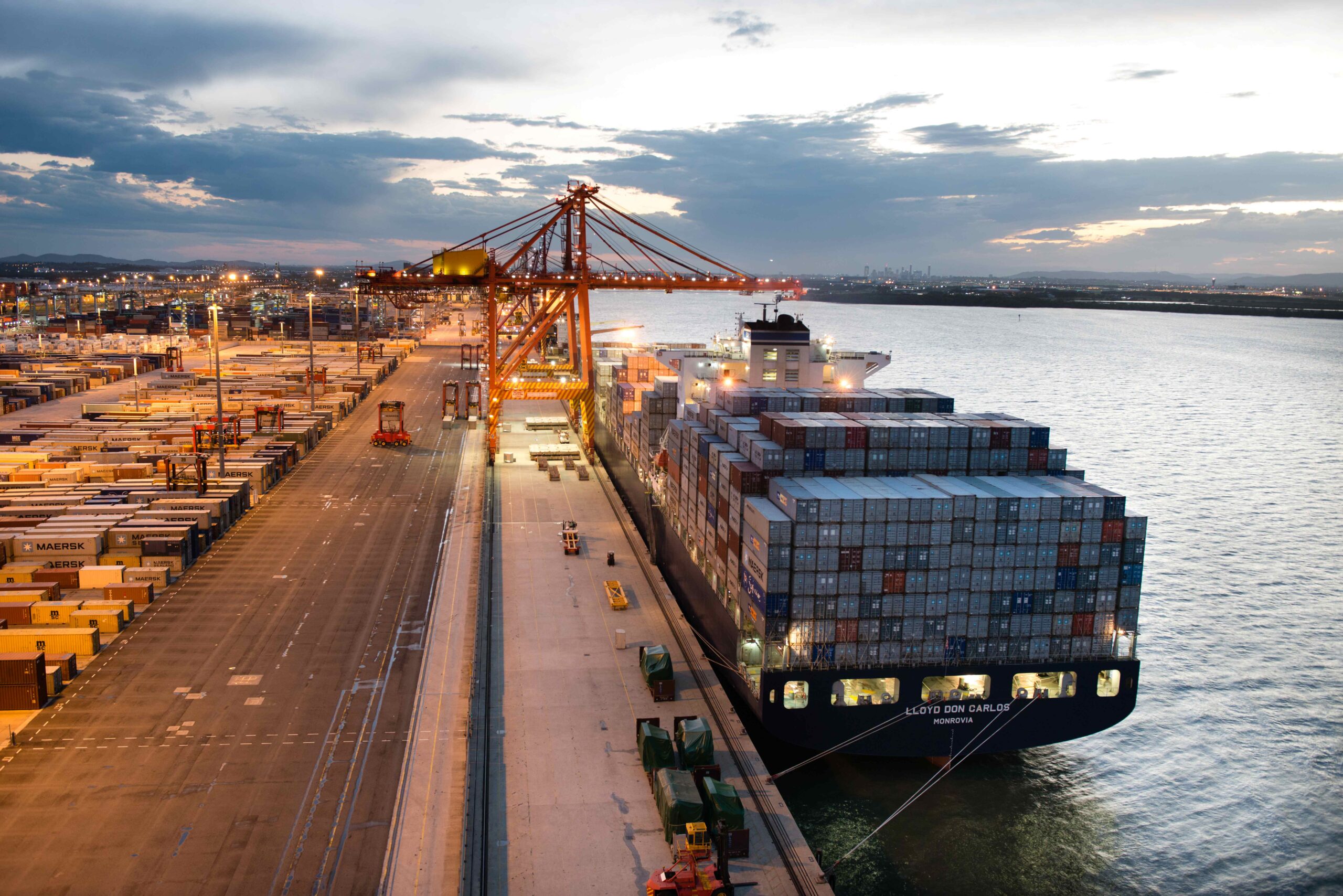
As part of its mantra to constantly think ahead, the Port is proposing a Channel Enhancement Project aimed at making part of its channel deeper, wider and straighter for the larger vessels that are coming.
To give that some context –the biggest ships currently using the Port under favourable tidal conditions carry up to 9000 containers with a typical maximum draft of about 14 metres. Future ships are expected to carry 14,000–15,000 containers.
“We need to be ready for that,” he says.
Dealing with the transport issues
Equally challenging will be transporting freight to the Port without a dedicated rail connection.
Currently the port has around 4.5–5 million truck movements annually and this is projected to grow to around 14 million annually by 2060.
“The impact on the roads owned by the various levels of government and private road operators will be huge, not to mention congestion impacts on the community,” Mr Stephens said.
“At the moment the road network is so good to the Port that there isn’t enough focus on how we can improve rail to the port. But that will have to come in the near future. A container on rail is 16 times kinder to the environment than if it goes on a truck.”
Leveraging an international cruise terminal
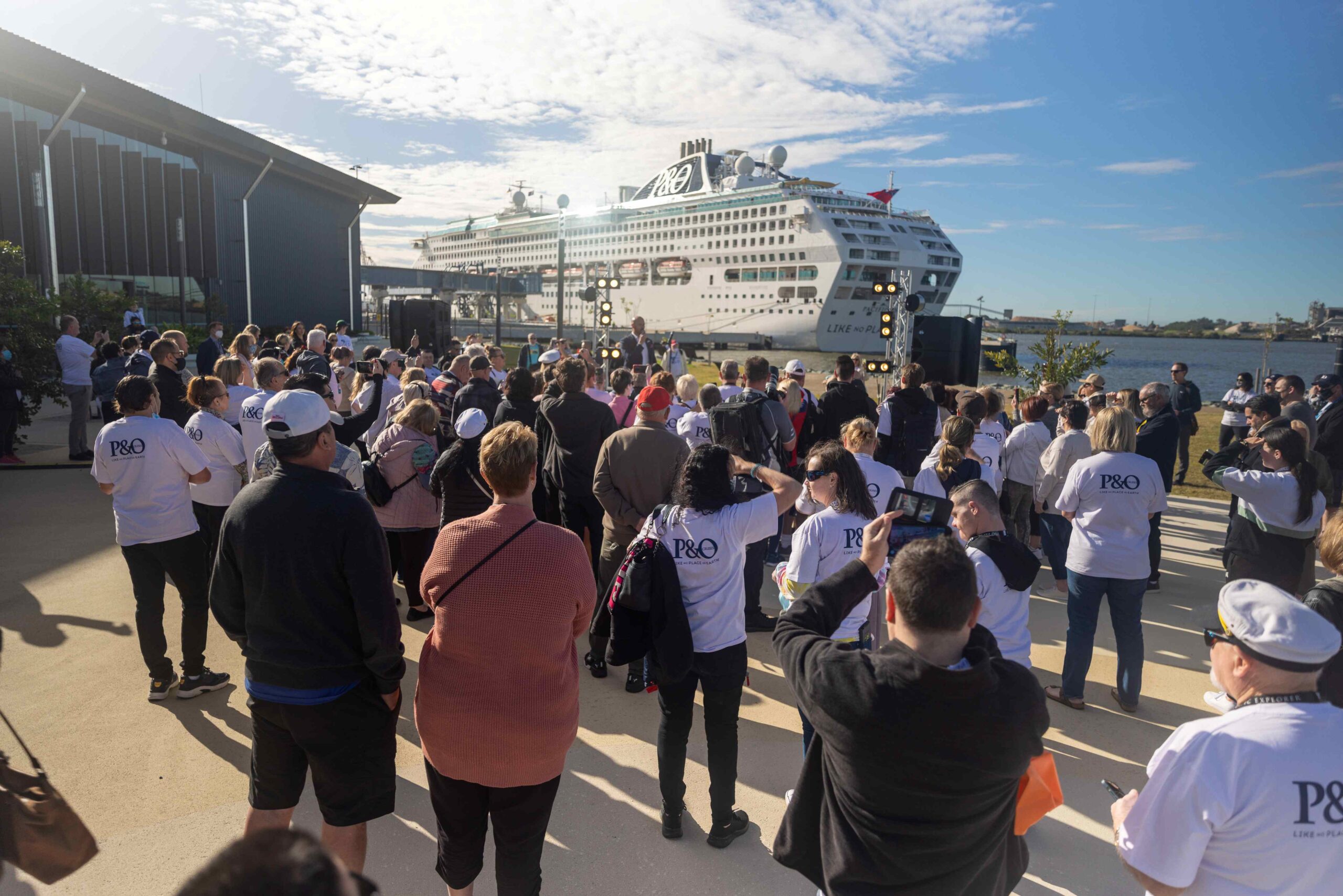
One of the big achievements on Mr Stephens’ watch has been the opening of the Brisbane International Cruise Terminal – a big success now after a false start during the COVID-19 pandemic.
The CEO sees the facility as “ultimately transformational” for Brisbane, and it is already handling 150 cruise ship visits per year.
As well as the ongoing tourism benefits, the terminal could be used as short-term accommodation during the 2032 Brisbane Olympic and Paralympic Games, something that worked for Barcelona in 1992.
“Rather than building thousands of permanent hotel rooms that may not be needed after 2032, cruise ships could provide temporary accommodation,” Mr Stephens says.
“Six cruise ships could provide about 18,000 five-star ensuite rooms.”
Taking pride in achievements
Like most of his workforce, Neil Stephens takes enormous satisfaction from the work he and his team are doing.
“We have an absolute inbuilt pride in working for the Port of Brisbane,” he says.
“I see a culture here where employees continuously improve outcomes for us and our customers simply because they care about the Port. But for the most part, they’re also quite humble – doing really innovative stuff and just considering it ‘business as usual’.
“During our 50th anniversary it is nice to be able to acknowledge some of their remarkable achievements.”
This is one of a series of Newsreel features showcasing the Port of Brisbane as part of its 50th anniversary celebrations.