One of the quiet achievers of Australia’s recycling sector is stalling, with infrastructure maxed out and millions of litres of untreated lubricant waste oil at risk of being dumped or burnt.
Australian Oil Recyclers Association (AORA) CEO Troy Collings said the oil recycling industry had successfully operated “out of sight” for more than 25 years.
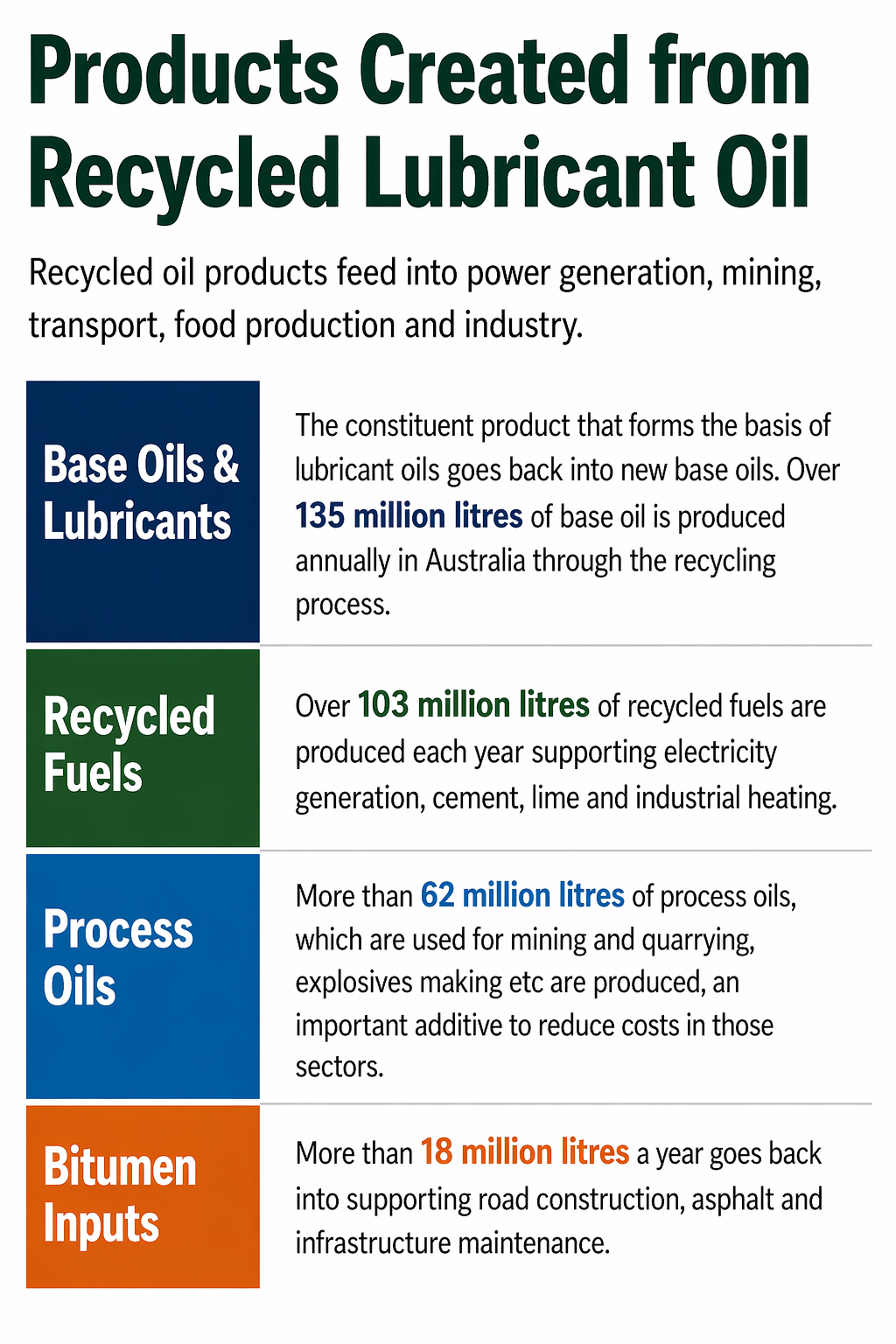
“Around 340 million litres of waste oil was collected and recycled in 2025-2026 producing 318 million litres of fuels, base oils and other valuable petroleum-derived products,” he said.
“That’s an incredible 93 percent recycling recovery rate – converting a hazardous waste stream into valuable industrial products.”
Federal Government levy has not kept up
Mr Collings said this success story had hit a wall two years ago due to capacity constraints that had been building for decades.
The industry has been supported by levy benefits of up to 50 cents per litre, set up under the Federal Government’s Product Stewardship for Oil Scheme in 2001. A 14.2 cents per litre levy on new lubricants funds the scheme.
This supports industrial scale collections and refining infrastructure across the country. But the headline benefit has not increased in 25 years and no longer provides the incentive needed for new investment.
“For more than two years now, infrastructure across the country has repeatedly reached capacity,” Mr Collings said.
“We can’t collect and store any more waste lube oil and we can’t refine any more. And it’s regional Australia that is hardest hit.”
A great circular economy example
Mr Collings said lubricant waste oil was a working example of the circular economy in practice, and it reduced Australia’s over-reliance on imported fuel and petroleum derived products.
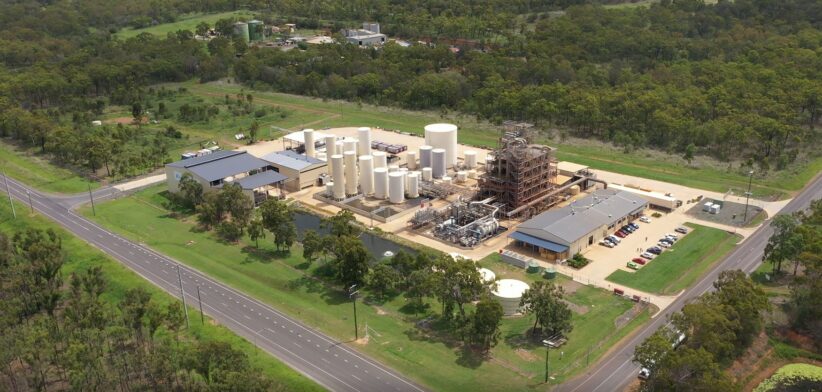
The recycling system relies on a national network of collection points, transport logistics and processing facilities, many of them located in regional areas.
“The products created support regional Australia in particular through power generation, bitumen and asphalt production, mining food processing and manufacturing,” he said.
“This is yesterday’s waste oil becoming today’s industrial input.”
The independent review findings
Mr Collings said the Federal Government’s Product Stewardship for Oil Scheme was effective for some years to encourage investment in oil recycling infrastructure, but it was no longer a sufficient incentive to lift capacity.
This fact was highlighted in the University of Technology Sydney’s (UTS) independent review of the oil scheme provided to the Federal Government in February 2025.
“The UTS report provides a number of unequivocal recommendations,” Mr Collings said.
“They acknowledge the scheme’s strong environmental credentials, but they have told the government in no uncertain terms that wages, transport, energy, construction costs – everything needed to invest in new infrastructure – have risen significantly since 2001, while the current financial settings that underpin waste oil recycling have not kept up with cost of business.”
The Federal Government is yet to act on the report’s recommendations.
The industry’s ask
The industry is asking the Federal Government to implement the review findings, including the recommendation that the headline levy benefit be indexed to inflation.
Mr Collings said if you applied full indexation of the Product Stewardship for Oil Scheme back to 2001, the Category 1 levy benefit would be over 95 cents per litre.
During the COVID pandemic, the levy was temporarily increased to 62 cents per litre to keep refineries operating.
“With the learnings through COVID and indexed from that point, the headline benefit rate would now be around 76.5 cents per litre,” Mr Collings said.
“That would be a workable and fair outcome that would see immediate investment in new infrastructure.”
Oil recycling in the context of fuel security
In the current global environment, the industry argues its role extends beyond waste management into national resilience.
“At the moment, we also have a fuel security issue. The smartest litre of fuel is the one you don’t have to import,” Mr Collings said. “Our sector helps Australia make more use of what it already has.”
Mr Collings described the sector as a “domestic buffer” against global supply disruptions, particularly as geopolitical instability and supply chain risks continued to shape fuel markets.
The risks without action
The industry estimates that, unless the government acts, more than half a billion litres of waste oil will not be recycled into fuels and other oil products over the next decade.
This would be particularly the case in in regional and remote Australia where dumping and burning of oil lubricant would inevitably rise.
“Waste oil collections have been refused around the country,” Mr Collings said.
“We are talking from Cairns to Canberra, the Pilbara, Western Australian Wheatbelt, Darwin, and regional Victoria, New South Wales and Queensland.
“As well as dumping and burning concerns, there is a real risk untreated lubricant oil will be exported overseas in lower-value forms which may breach international agreements like the Basel Convention.”
Investment will happen with the right incentives
Mr Collings said the industry would commit to the required infrastructure with the right incentives.
“Based on the strong recommendations from the independent review, there’s been planning underway and sites identified,” he said.
“Significant new infrastructure could be built relatively quickly, if the economic signal is there.”