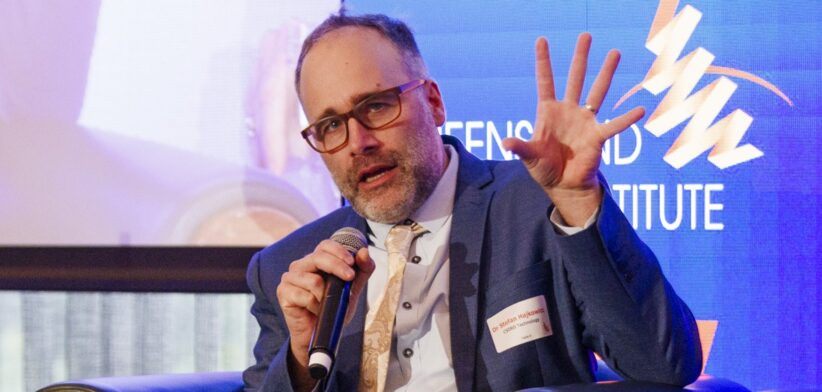
The ability to form a productive relationship with an alien-like intelligence could become one of the defining skills of the modern era, according to a leading Australian futurist.
CSIRO Technology Chief Research Consultant Stefan Hajkowicz says businesses need to avoid becoming so preoccupied with the dangers of artificial intelligence (AI) that they lose sight of its potential to reinvent and empower their organisations.
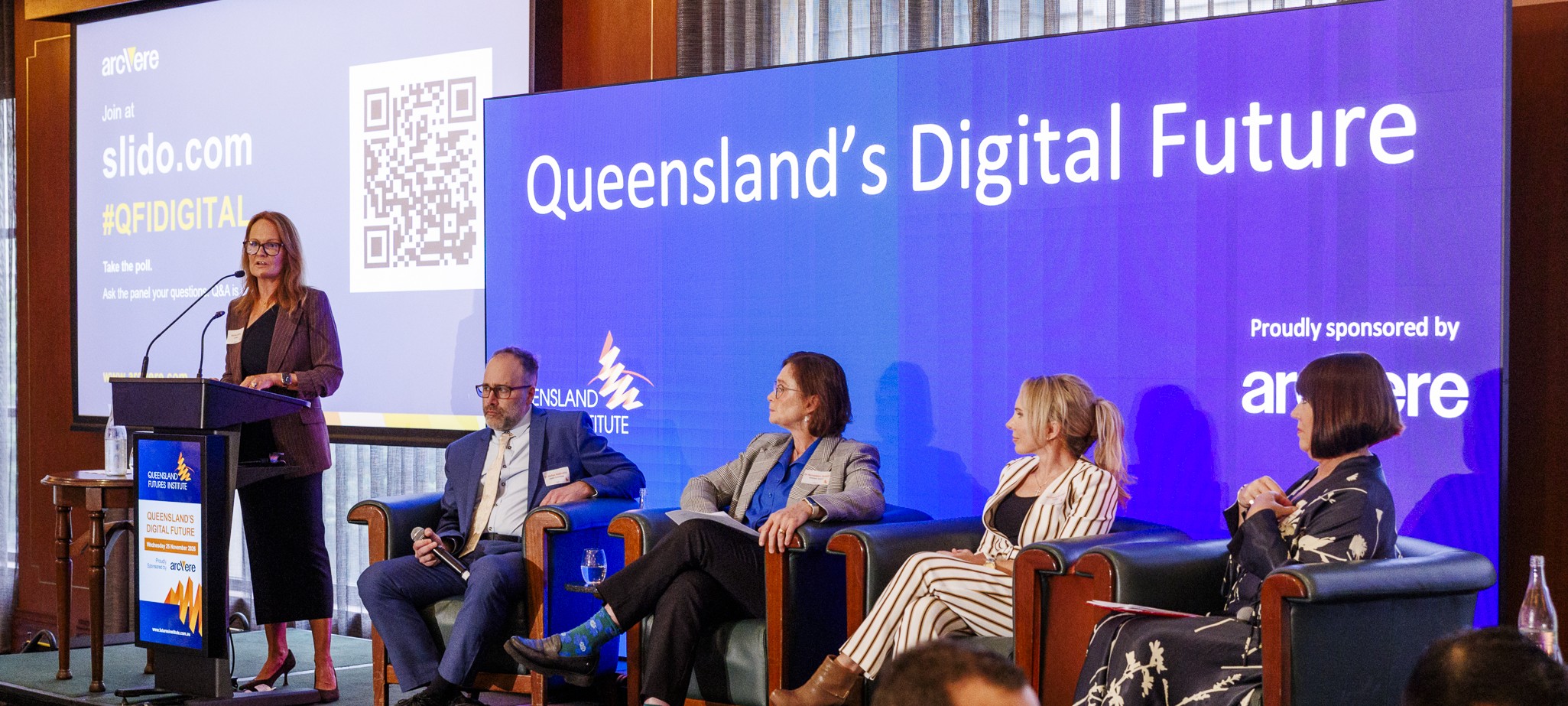
Dr Hajkowicz told today’s Queensland Futures Institute’s Queensland’s Digital Future event that people needed to rethink the way they made decisions.
They were increasingly forming relationships with a new level of intelligence that would influence decisions in their professional and personal lives.
“All of us in the room are forming this relationship with this alien-like level of intelligence that is beyond human intelligence” Dr Hajkowicz said.
“You’re working with something which isn’t just smart, it’s hyper-intelligent, way more capable, and you’ve got to form this relationship with how you work with it now.”
Dr Hajkowicz, whose PhD was in decision theory, said people would increasingly entrust AI agents with making choices on their behalf, from booking accommodation to deciding which car to buy.
This required an alignment between the intelligence of AI agents and human values, particularly when decisions were being made outside the view of the people running organisations.
“How do we align the AI agent when it’s making decisions for your company in the dark where you can’t see it happening?” he said.
“How are you confident that it is aligned with what you want, especially where there’s really big value trade-offs at play?”
Dr Hajkowicz said there was already evidence of resentment towards AI among younger people, particularly as the technology was adept at automating the types of work traditionally undertaken by graduates entering professional firms.
However, AI also offered an opportunity to address Australia’s sluggish productivity growth, which had profound implications for the future wealth and quality of life of younger generations.
He said there was a significant gap between the extraordinary technological breakthroughs occurring in AI and robotics and the translation of those breakthroughs into something useful within businesses.
There was also a tendency in boardrooms to focus heavily on the risks of AI rather than the opportunities.
“It’s all risk, risk, risk,” Dr Hajkowicz said.
“I’m kind of the guy who comes in and says, there’s more to this than just risk. This is a positive reinvention of your company and all sorts of positivities as well.”
The worst is yet to come
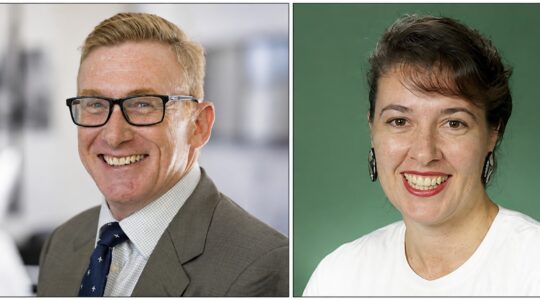
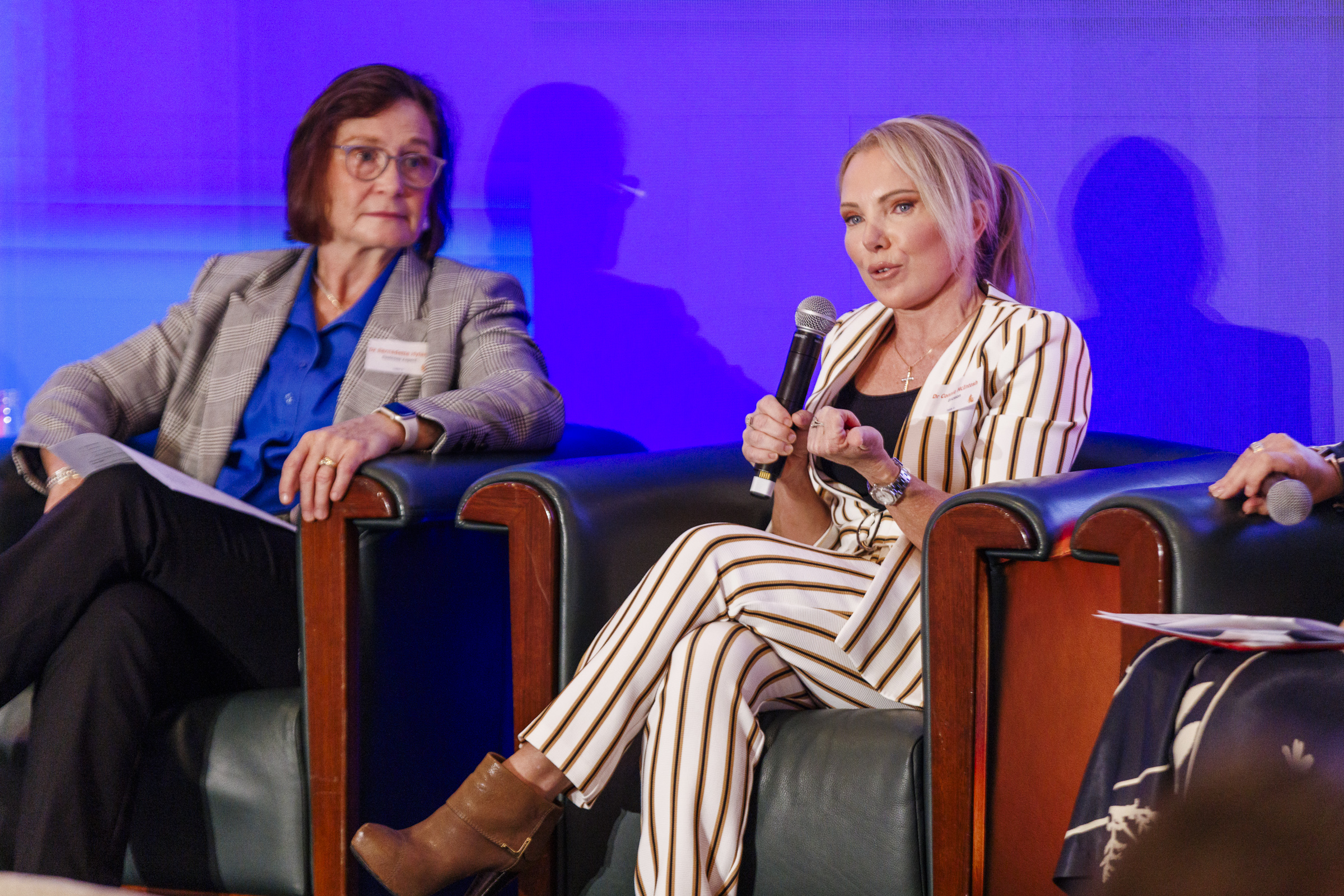
Ericsson Head of Security Dr Connie McIntosh told the forum that data management was one of the biggest vulnerabilities for organisations entering the AI era.
She said she undertook between 15 and 20 audits a year within her own company and every one uncovered an issue relating to data.
“People (often) don’t know how to classify data. Data is not properly stored, transmitted,” Dr McIntosh said.
“I think if (you lift) the hood on (most) organisations, you will find data is a problem.”
Dr McIntosh said organisations faced a dilemma over whether to fix their data issues before implementing AI or push ahead with the technology because they could not afford to wait.
The emergence of quantum computing would further amplify the data governance challenge.
She questioned how many organisations had properly tested their ability to recover from a major cyber attack, rather than simply relying on the knowledge that they had backed up their data.
“Everybody says they have their backups, they’re offsite, they’re great, they’re no problem,” she said.
“But do you know how long it’s going to take you to restore? Is it even possible? Do you even have a clean room to restore in?”
Dr McIntosh warned that organisations needed to prepare for a much more challenging era of cyber security as AI exposed previously undiscovered vulnerabilities.
“And I think if we look at what we’ve seen now, we’ve seen nothing (compared) to what’s coming,” she said.
She said businesses needed to prepare for the implications of quantum computing rather than become fixated on when it would reach the point of compromising existing encryption systems.
Information stolen from organisations today could remain commercially sensitive for decades and be vulnerable to future advances in computing.
“The thing you want to walk away from today is to know it’s not if, it’s when we all get attacked and it is how do we recover as fast as possible,” Dr McIntosh said.
AI is not magic
Business Aspect Principal Consultant Dr Bernadette Hyland said the emergence of AI did not negate the need for many of the technology checks and balances that organisations had been using for decades.
While businesses were looking to AI to deliver efficiencies and reduce workforce requirements, the effectiveness of the technology was underpinned by trustworthy data, appropriate permissions, sound processes and human decision-making.
“AI is not magic. But to many of us using it, it feels like magic” Dr Hyland said.
“So if you have weak foundations, AI is quite happy to amplify them.”
Dr Hyland said powerful large language models were making previously obscure or economically impractical-to-find software vulnerabilities easier to discover and exploit.
However, the same technology could be used to identify and fix weaknesses that had previously been too difficult or expensive to address.
Organisations would need to deal with the accumulated technical debt of several decades while maintaining longstanding disciplines such as disaster recovery planning, penetration testing, software updates and staff training.
“We need to have those penetration tests regularly, patching, updates, training of our staff,” Dr Hyland said. “All those things that we’ve been doing for 30 years, we need to do faster, better.”