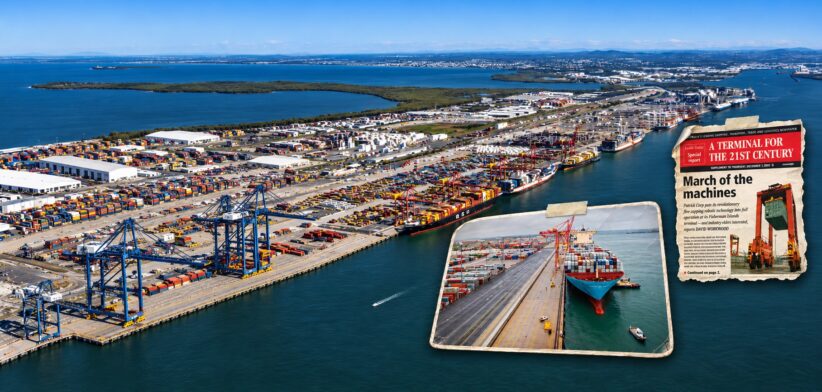
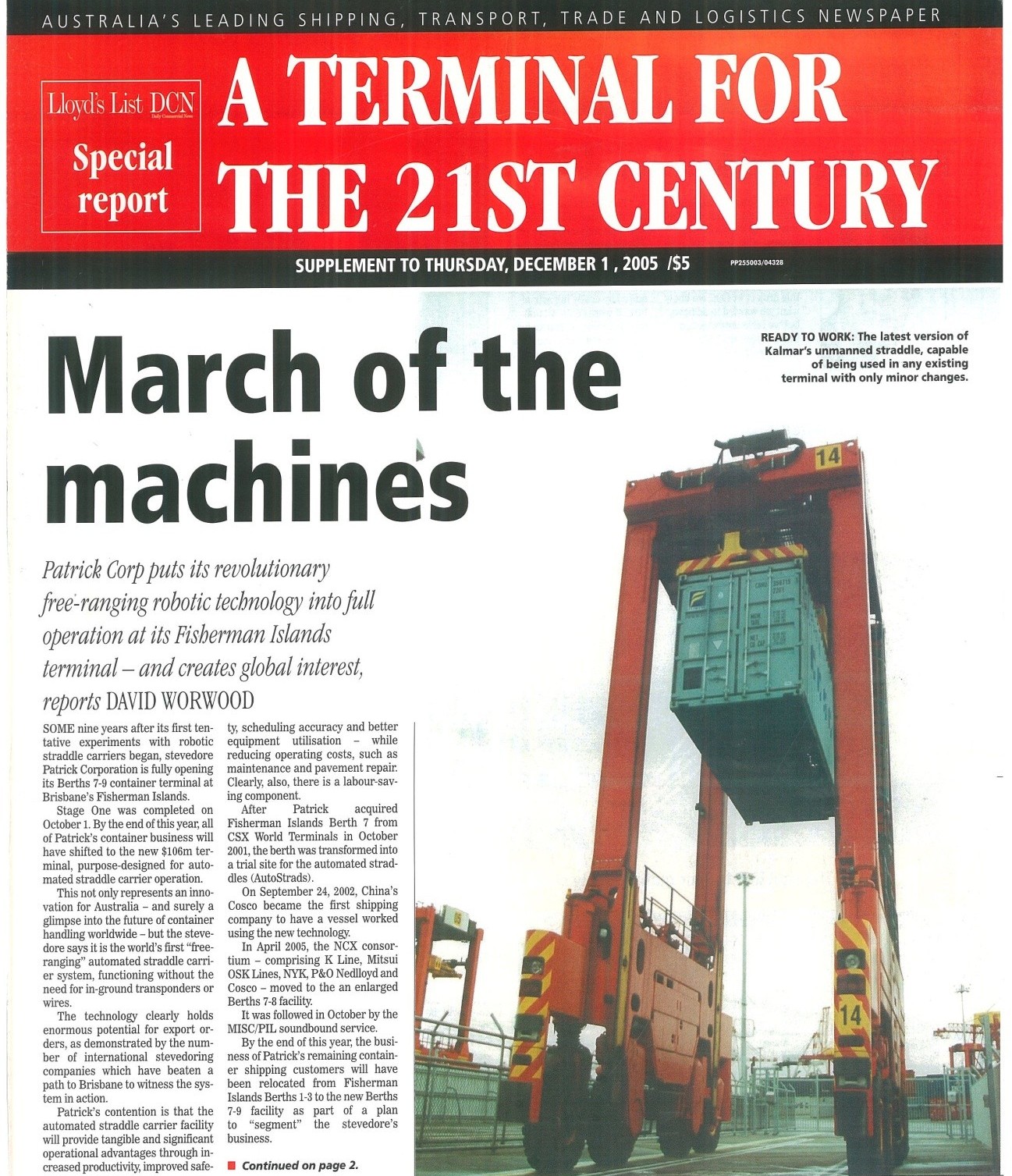
At the mouth of the Brisbane River a surreal scene unfolds as three-storey robots quietly go about the business of moving the multitude of containers that bond Queensland to the world.
This march-of-the-machines looks like something out of a science fiction movie. It typifies the future-focused mindset that has defined the Port of Brisbane over its 50-year life.
The world-class automated straddle carrier container system, pioneered by Patrick Terminals, is one of the many innovations and milestones clocked up since the audacious decision in the 1970s to build a new port facility at Fisherman Islands.
The Port’s early adoption of automation and advanced technology, and a willingness to think boldly, has allowed it to handle massive increases in trade volumes, ship sizes and changing cargo needs over the years.
In 1976-77, as development of Fisherman Islands was beginning, Brisbane’s existing port facilities along the river handled just 8.86 million tonnes of trade and just over 50,000 twenty-foot equivalent container units (TEU).
By 2025-26, total trade had increased to 38.64 million tonnes, international cargo was valued at $78.8 billion and the Port was handling a record 1.74 million TEU.
More than 450 commodities now pass through the Port, with more than 20 container shipping services per week connecting Brisbane with over 125 import origins and 140 export destinations.
The technology transformation
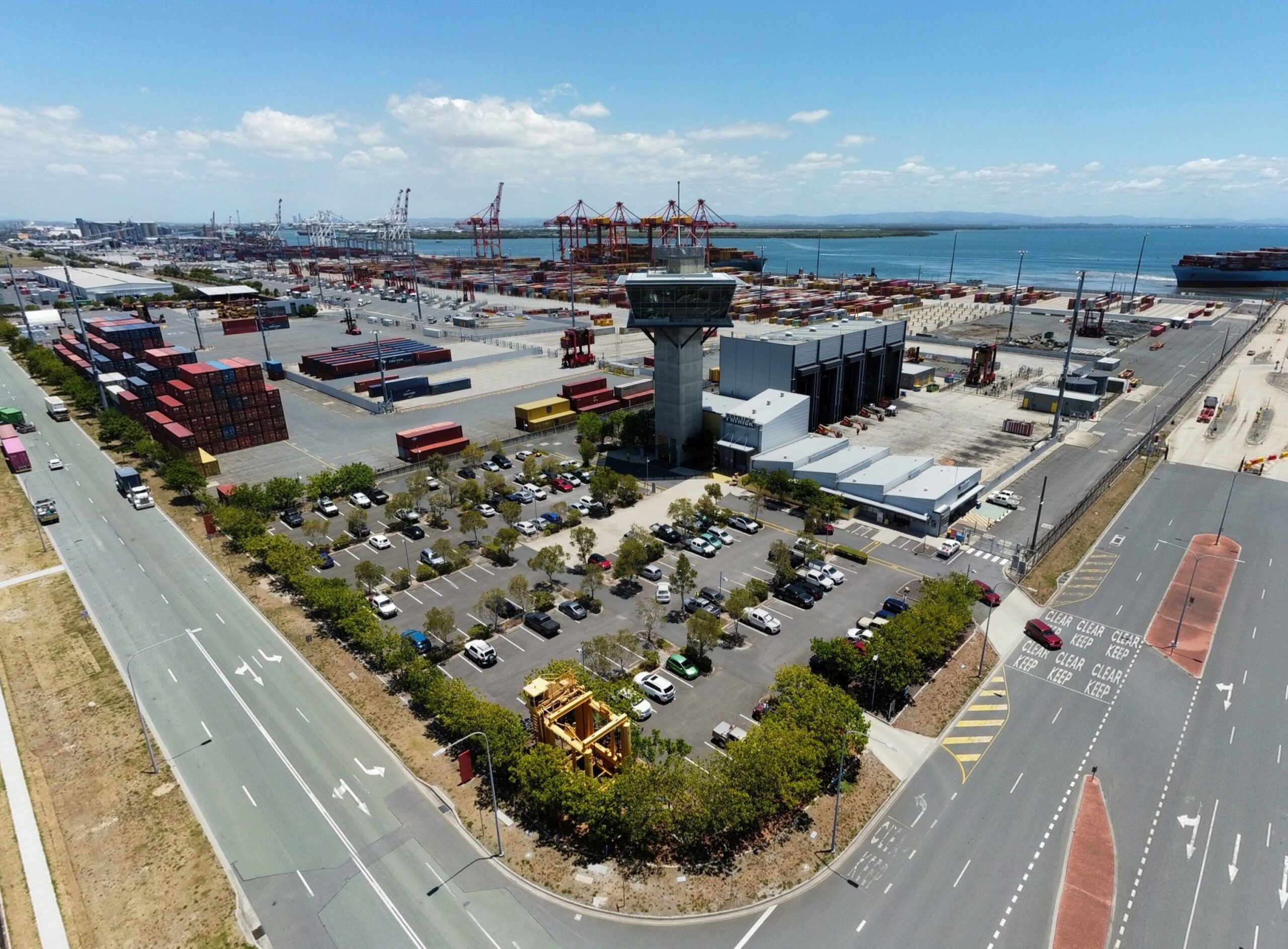
From automated straddle carriers and paperless truck processing software that allows larger ships to safely navigate the shipping channel, technology has transformed the Brisbane waterfront.
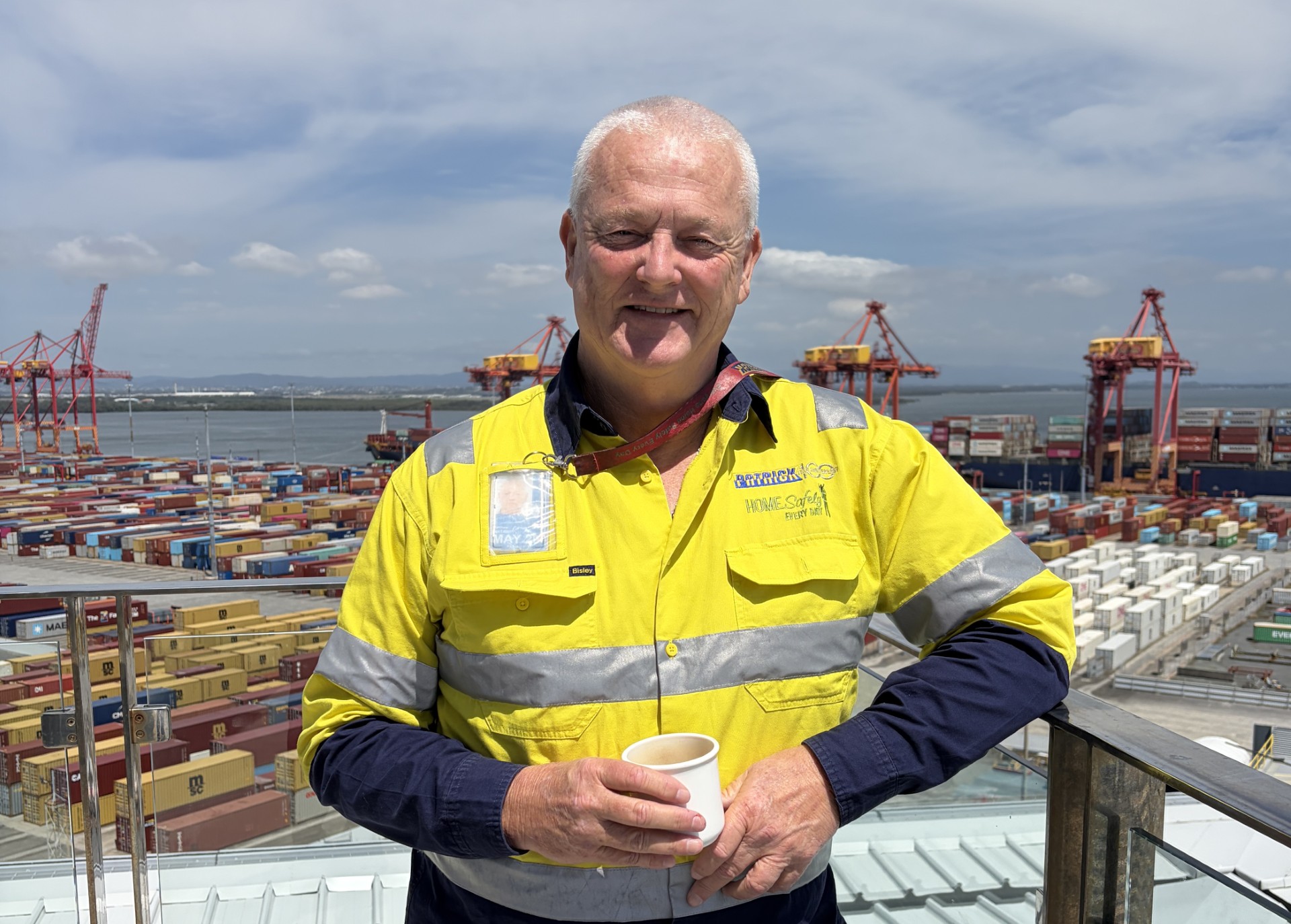
Patrick Terminals Brisbane Manager Matt Hollamby said Fisherman Islands had provided the space and operating environment to test ideas that would have been difficult to introduce elsewhere.
“Brisbane has really been something of a testing ground for Patrick,” he said. “Much of our innovative technology is deployed here because this port has a history of being able to facilitate that.”
A port that looked completely different
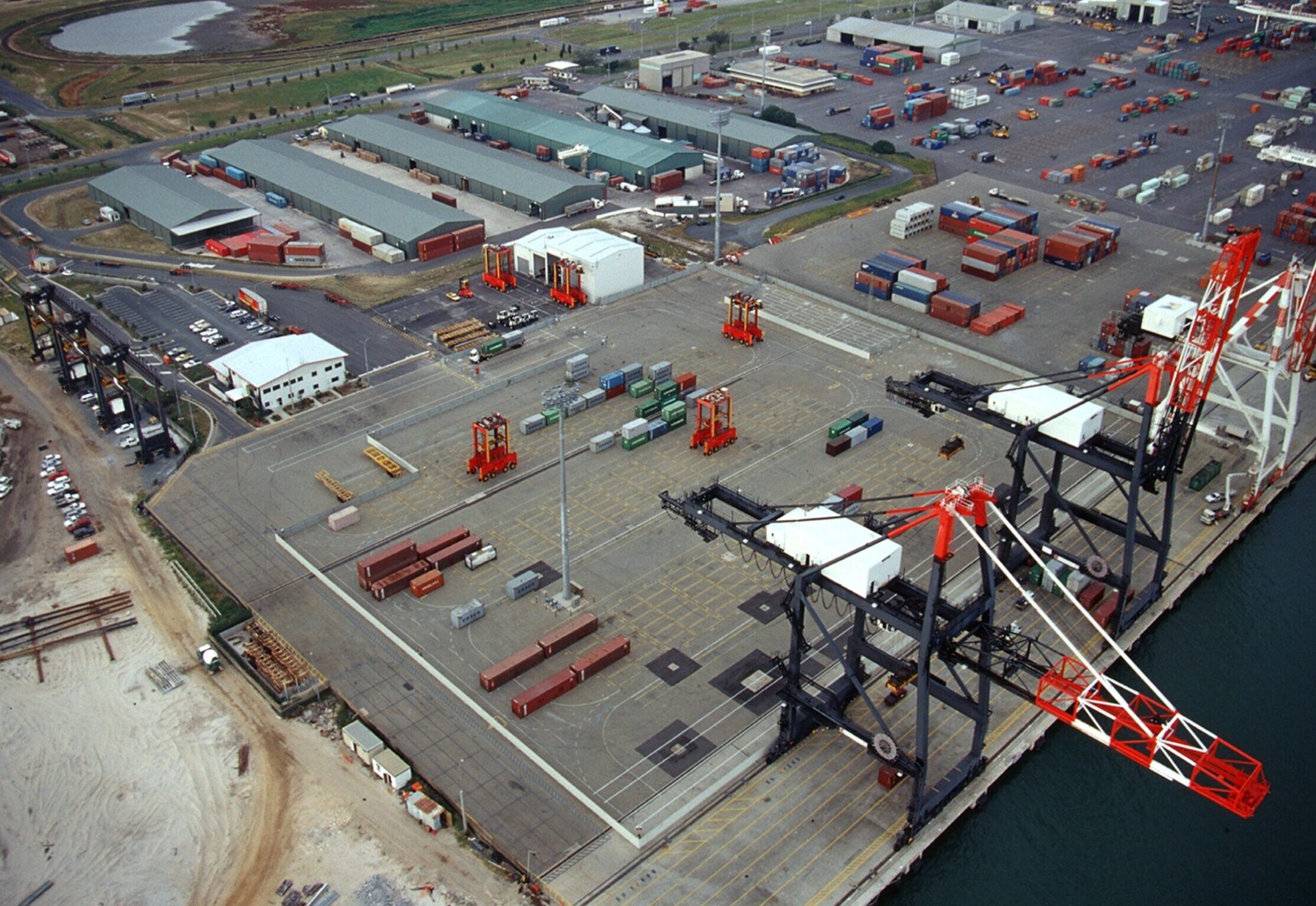
Mr Hollamby first became involved with the Brisbane waterfront in 1988, when much of the traditional general cargo activity was still conducted from older wharves further up the Brisbane River.
Fisherman Islands was far smaller then, but he said the contrast between the ageing river wharves and the newly developed port precinct was striking.
“When I first saw Fisherman Islands it was just so different to the upriver wharves,” he said. “There were concrete structures, and everything was new, pristine and carefully designed. You could tell, even at that point, that this place had a bright future.”
Mr Hollamby said Brisbane had effectively followed a global textbook model of port development by progressively moving operations from the inner river towards its mouth and creating increasingly specialised facilities.
The importance of that decision became clearer as trade grew and larger vessels entered service.
“The vision that went into creating Fisherman Islands has now set the port up phenomenally well,” he said. “In retrospect, it was a master-stoke”.
“I’ve worked in all eastern seaboard ports. This is unequivocally the best in Australia for its natural advantages.”
An economic enabler for SEQ
Mr Hollamby says that relocating the port was not simply an infrastructure project but an economic enabler for South-East Queensland.
“If we had kept trying to put the volume that moves through Fisherman Islands across a couple of wharves at Hamilton, the economy of South east Queensland would have been highly constrained,” he said.
“The Port has been enormous enabler for growth across this area and the regions.”
The trade mix has changed
Former Port of Brisbane chief operating officer Peter Keyte, who worked with the company for over two decades, said the Port had also adapted to a changing mix of trade and trading partners.
Containers, motor vehicles, fuel, grain and project cargo all grew or changed over time, while imports became increasingly dominant by volume as Australian manufacturing declined.
He said the Port had seen its major Asian markets evolve over decades, with Japan prominent earlier, followed by Korea and Vietnam, before China became the dominant trading player.
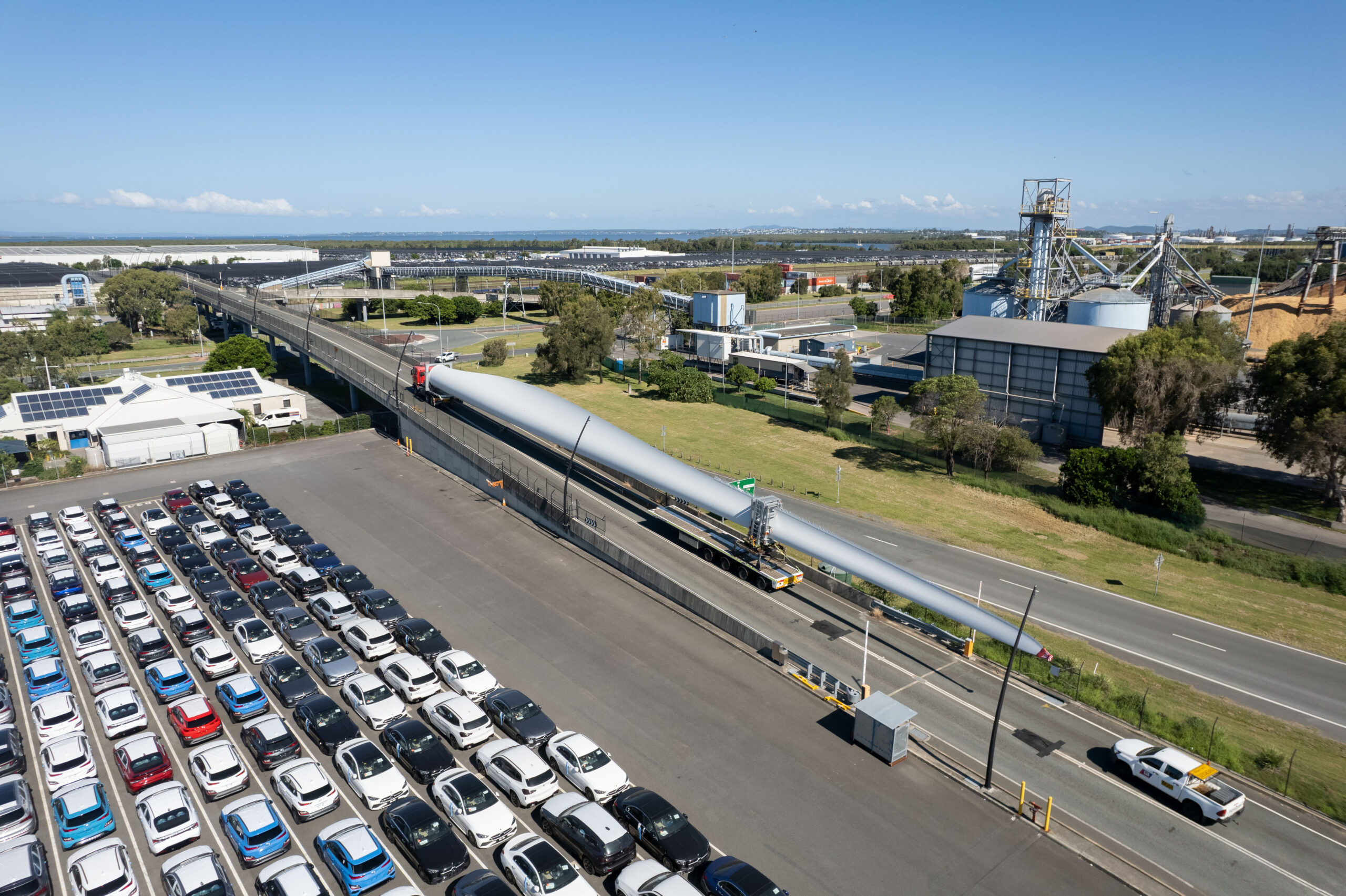
Mr Keyte said the changing cargo mix also included large project freight such as wind farm blades and turbines to support the state’s renewables transition, creating new engineering and transport challenges.
Brisbane becomes automation pioneer
One of the defining changes at the Port of Brisbane was automation.
Patrick Terminals welcomed the first ship using automated straddle carriers in September 2002, with successful trials eventually leading to the opening of its Brisbane AutoStrad terminal in December 2005; the first of its kind in the world.
Mr Hollamby said the willingness of Patrick to innovate and the support it had received from the Port had been central to that development.
“We’ve always had a good relationship with the Port,” he said. “The Port people are innovative people. They look to the future and that makes them natural allies of Patrick.”
Mr Keyte said Brisbane’s operators had embraced automation as part of a wider push to make better use of space and improve productivity.
“In 2014, Brisbane was the first port in Australia with all stevedores using (automation) technology,” he said.
“We fostered that type of thinking and also connectivity between the port and the industry it serves.”
Technology also supports the shipping process
Mr Keyte highlighted the development of channel optimisation technology using live data to calculate safe under-keel clearance for vessels.
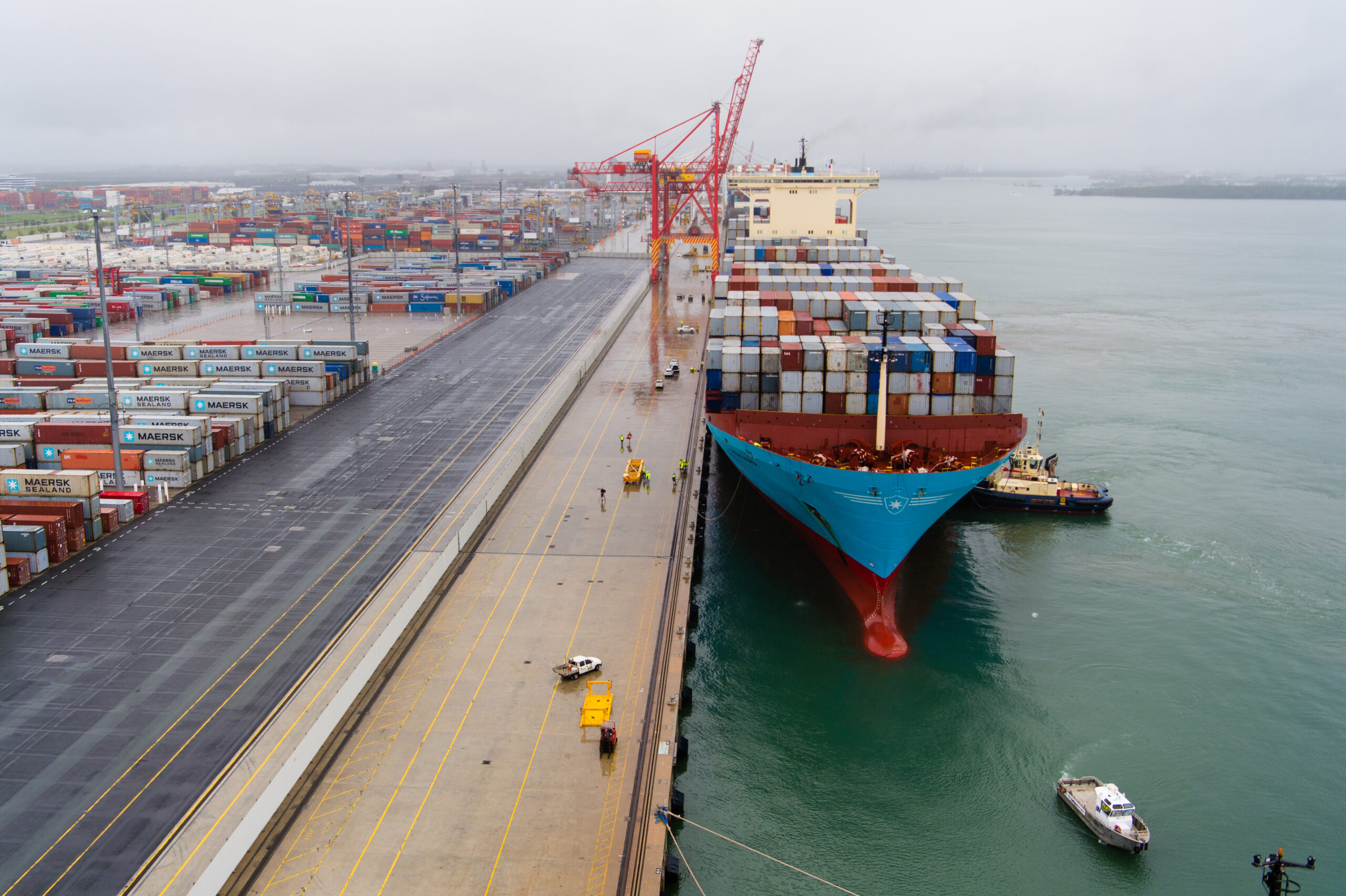
Called NCOS Online, the technology was first used at the Port almost 10 years ago when the largest vessel to call at the Port up to that time, the Maersk Susan (9,500 TEU), berthed at Patrick Terminals after a huge amount of coordination between the stevedore, port authority and others.
“So again, that’s a software solution to a hardware problem,” Mr Keyte said.
“At the time the ships were getting bigger, the port wasn’t easily going to get deeper. The technology saved us one and a half metres of dredging. So, it was really critical and forward thinking at the time.”
Mr Keyte said the system effectively turned the shipping channel into a live data environment, using real-time modelling of tides, vessel draft and conditions to identify safe windows for larger ships.
“The system does modelling but also runs live and gives the pilot feedback immediately,” Mr Keyte said. “It has proven over many years to be extremely accurate.”
Trade reaches deep into the regions
Every year, around 60 percent of Australia’s cotton crop and about half of refrigerated beef exports are handled through Brisbane, connecting regional producers with global markets.
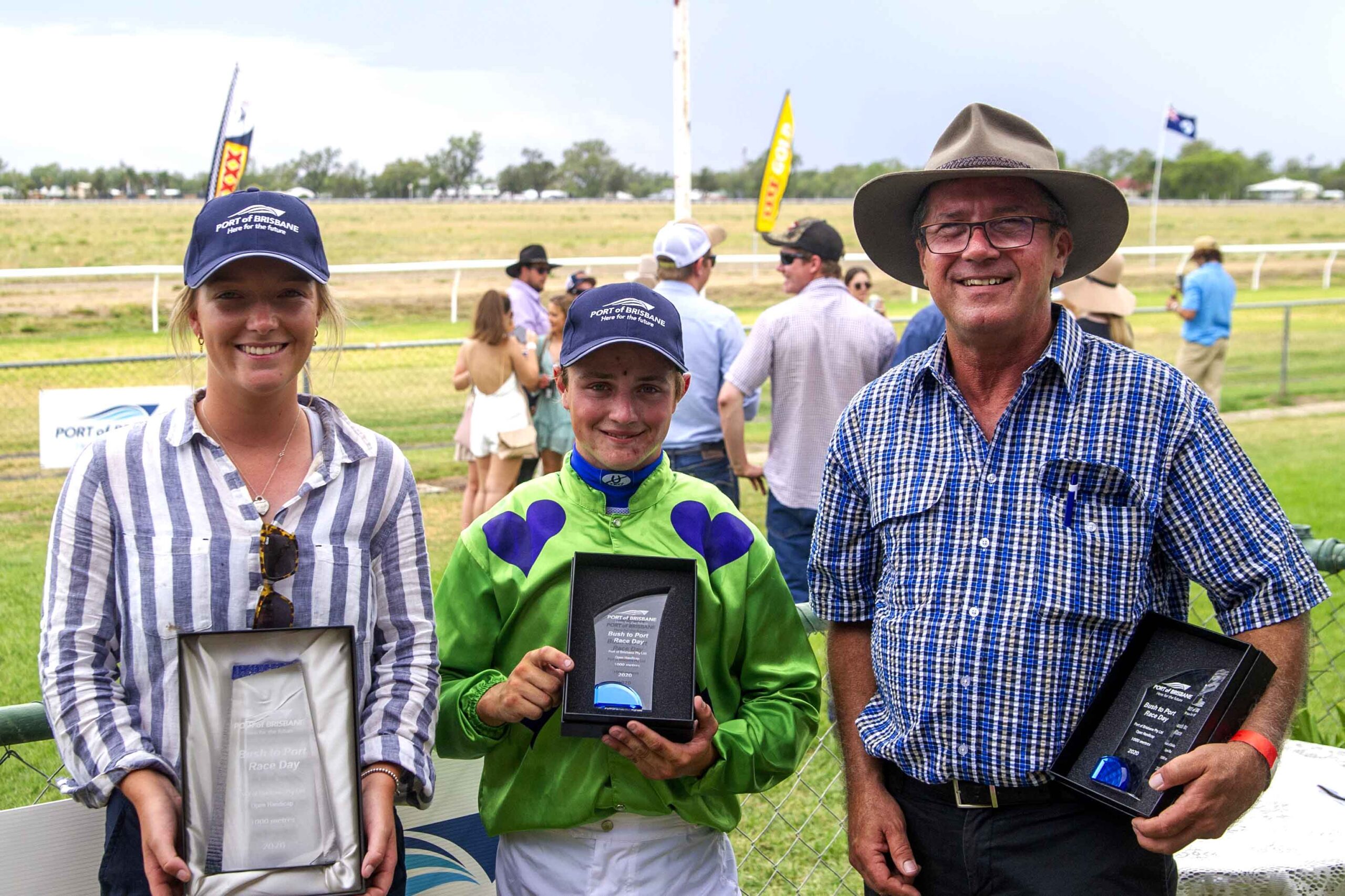
Mr Keyte said Port staff had regularly travelled to regional communities and exporters to understand where supply chains could be improved rather than simply waiting for cargo to arrive.
The aim, he said, was to move from “passive infrastructure” to “active infrastructure”.
That meant treating exporters, growers and regional businesses as partners in the supply chain. Port teams travelled west to centres including Toowoomba and Goondiwindi to understand bottlenecks and work through practical solutions with customers and government agencies.
“It was important to engage with the community, engage with the exporters, the growers, to ask them – What can we do to make sure you can efficiently export your goods through the Port of Brisbane,” Mr Keyte said.
Innovation as a working habit
For Mr Keyte, trade innovation is less about one breakthrough than a repeated willingness to solve operational problems – from extra wharf space and vehicle movements to software, automation and regional freight connections.
That willingness to experiment, combined with the physical advantages of Fisherman Islands, helped turn Brisbane from river wharves into a highly automated multi-cargo gateway.