By Shane Rodgers
Almost 150,000 hectares of farmland has been lost in South-East Queensland over the past 25 years, according to a new report on the region’s food security.
The report also reveals that one third of the SEQ population are “food insecure”, meaning they lack regular access to high quality food due to economic, geographical, environmental or social factors.
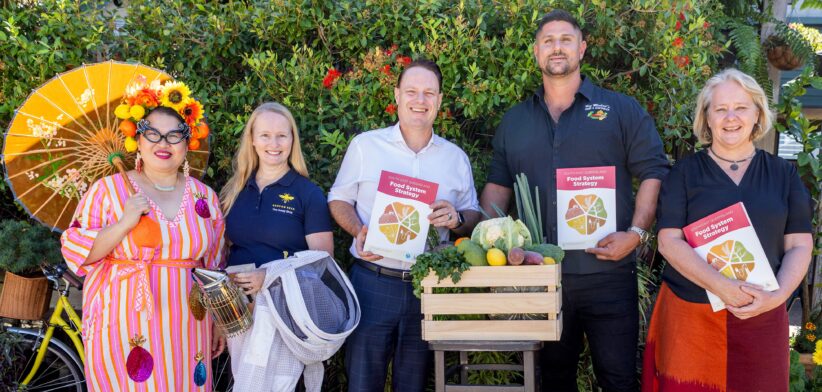
The SEQ Food System Strategy was developed by the CSIRO in partnership with the SEQ Council of Mayors and regional stakeholders.
It says that Brisbane food price increases had been consistently higher than the national average over the past decade. Diet risks were also evident in the study.
“Low vegetable intake and high overweight and obesity rates persist across Queensland,” the report said.
“Based on measured height and weight in 2022, 69 percent of Queensland adults were overweight or obese, implicating equity, nutrition, and procurement settings in the regional food environment.”
Food demand was increasingly being driver by cultural diversity with 32 percent of the Brisbane population born overseas. This group wanted “culturally appropriate” food from specialised supply chains.
The study found that retail food supply in the region was predominantly non‑local, with less than half of food sold in SEQ produced within it. Thirty-one percent came from interstate and 25 percent from overseas.
Over the past 25 years 149,354 hectares of agricultural land had been lost in SEQ to other land uses.
The report calls for a bold “food bowl” approach to safeguard the region’s food supply.
Lead author and CSIRO scientist Dr Cathy Robinson said the strategy marked a shift away from fragmented planning.
Instead it envisaged a coordinated, region-wide action that was vital to respond to climate volatility, rapid population growth and increasingly fragile supply chains.
“Achieving sustainable resilient food goals can’t be achieved with a piecemeal approach,” Dr Robinson said.
“If Australia is to achieve reliable, affordable and sustainable food in the decades ahead, we need systems thinking, where production, processing, transport, consumption and waste are planned together, not in isolation.”
Dr Robinson said that, with SEQ’s population projected to exceed six million by 2046, pressure on land, water, infrastructure and supply chains would intensify.
This would be compounded by global uncertainties and events such as the Olympic and Paralympic Games, which would place unprecedented demand on food supply and logistics.
The document focuses on 11 local government areas across SEQ – Brisbane, Ipswich, Lockyer Valley, Logan, Moreton Bay, Noosa, Redland, Scenic Rim, Somerset, Sunshine Coast and Toowoomba -while offering a model that could be replicated in regions across the country where food is produced or manufactured.
Council of Mayors (SEQ) Chair, Lord Mayor Adrian Schrinner said food and agriculture were part of SEQ’s identity, but local industries were under growing pressure.
“When people in South East Queensland can easily get fresh food, they’re not just eating well, they’re enjoying the health, jobs and economic benefits that come with it,” Cr Schrinner said.
“We have an incredible opportunity to serve up the best of south east Queensland to the world with Brisbane 2032 on our doorstep, but planning needs to start now to make it happen.”
Council of Mayors (SEQ) Leveraging 2032 Chair and Toowoomba Region Mayor Geoff McDonald said the Toowoomba Region already supplied around 90 percent of Queensland’s pork and 85 percent of its eggs, highlighting how critical regional producers were to food security.
“Brisbane 2032 is a once-in-a-generation chance to showcase our fresh local produce to the world, while unlocking food tourism, investment and innovation that lasts well beyond the Games,” he said.
You can read the full report here