“Anybody could be that guy. The night is young and the music’s high.’
By Shane Rodgers
Pretty much anybody who has been on a dance floor in the past five decades would have boogied to the beat of ABBA song Dancing Queen.
The catchy song about the release that comes from music, dance and the boundless freedom and energy of youth was number one in 16 countries (or “anywhere in the world where charts are compiled”) during its first run in 1976.
It has returned to the charts at various times during ABBA revivals and has passed two billion streams on Spotify during the digital era.
For children of the seventies, it conjures a time of simplicity, disco and unapologetic dag-dom.
The ultimate wedding song
In his 2018 book Nothing is Real, music journalist David Hepworth put Dancing Queen at the top of his list of five songs that always work at weddings.
Hepworth contends that rooms are always full of people who love the song and “it’s cheesy enough for the men to convince themselves they’re somehow dancing satirically”.
It remains geek chic. Too cool for school. A dag day-pass.
Disc Jockey Pete Waterman has said that whenever he “lost the floor” as a DJ, Dancing Queen was a sure-fire way to win it back.
Not bad for a song that began life with the working title Boogaloo and was born in Sweden, more renowned at the time for folk or traditional schlager music than pop.
Dancing Queen in 2026
This week marks exactly 50 years since Dancing Queen’s first release, and it shows no sign of fading away.
Today Dancing Queen still has the power to instantly transport anybody back to a moment when the exhilaration of life was unencumbered.
For just a few minutes, you can be entombed in a humming musical wall that infiltrates all of your senses and wills you to dance like nobody is watching.
Out of beat with disco
In his recent ABBA at 50 book, long-term ABBA historian Carl Magnus Palm says that the song’s cowriter, and ABBA member, Bjorn Ulvaeus was surprised the song was such a disco hit.
Its tempo is around 100 beats per minute while the “ideal” dance track is 110 bpm.
It seemed nobody cared. Dancing Queen was a contagious celebration of life that got feet moving and gave everyone a three-minute window to let loose and be uplifted.
For men, the line “anybody could be that guy” still serves as a brutal reminder that in the darkened, disco-ball, dancerooms of the 70s, men were largely an optional, generic accessory who provided most value holding bags.
The song’s long genesis
ABBA had enjoyed plenty of chart success before their quintessential hit, but Dancing Queen was the group’s first number one in the United States.
The music was written by Ulvaeus and Benny Andersson and the words were a collaboration between Ulvaeus and ABBA manager Stig Anderson (who came up with the title).
According to Palm’s book, the ABBA members knew the song was special and it took five months before they had a version they were happy to release.
“Even with the knowledge of ABBA’s ambitious standards, Dancing Queen was subject to an usual amount of reworking in the studio,” Palm writes.
“(The song) originally started with a verse that was completely deleted from the recording and the verse that we are used to hearing as the first verse – “Friday nights and the lights are low” – originally appeared much later in the recording.”
Before its official release the song had a live debut in June 1976 at a royal wedding gala for King Carl XVI Gustaf of Sweden and Silvia Sommerlath, at the personal request of the king.
A defining moment in culture
In many respects Dancing Queen was an inevitable climax of the 1970s disco era, also defined by the Bee Gees’ Saturday Night Fever soundtrack and the likes of Donna Summer and Gloria “I will survive” Gaynor.
Some social researchers have pointed to Dancing Queen as a celebration of inclusivity.
“The disco era was characterised by a sense of unity and acceptance, drawing people from diverse backgrounds together on the dance floor,” one report concluded.
“The song embodies this spirit, inviting everyone to join in the celebration of life through music and dance.”
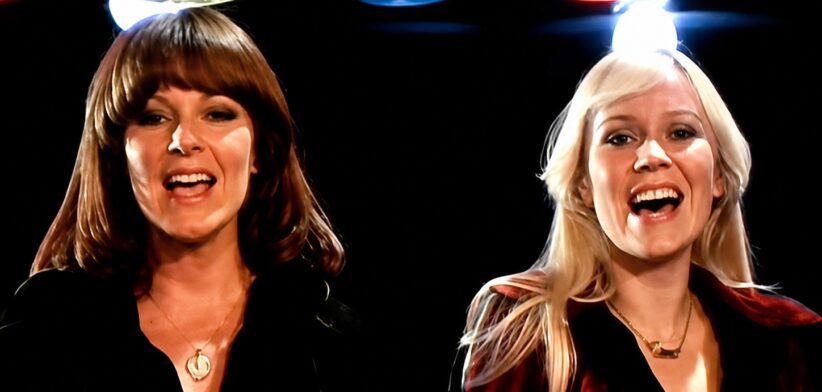
The song also marked a high point of the vocal power generated by ABBA’s frontwomen Agnetha Fältskog and Frida Lyngstad.
Each was a powerful solo singer but together their voices blended like a single, soaring instrument.
In his earlier ABBA book Bright Lights and Dark Shadows Carl Magnus Palm says that Agnetha and Frida’s voices “cut like laser through the soundscape” in Dancing Queen.
“It is perhaps the greatest party anthem every recorded,” Palm concludes.
“Today it is hard to understand that just a few years prior to its original release, the same group of people who created it devoted much of their time to bland schlager ditties.”
Some unexpected fans
Dancing Queen fans are an eclectic bunch. The frontman of grunge group Nirvana, the late Kurt Cobain, was famously an admirer of ABBA, singing along to Dancing Queen on the tour bus.
Foo Fighters leader Dave Grohl is also on record praising the song writing prowess that produced the hit.
Even the late Queen Elizabeth II was known to break out a few moves when the song was played on BBC radio.
Now that’s a dancing Queen.