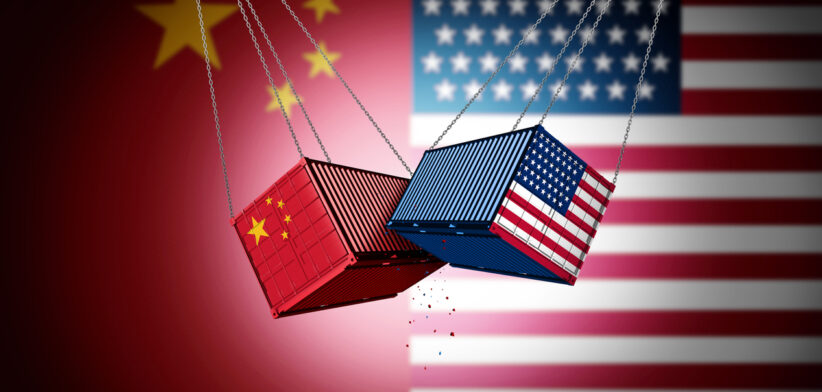
WASHINGTON – The Trump administration is expected to introduce new import duties on a wide range of goods after a probe reviewed “excess industrial capacity” in 16 major US trading partners.
Early reports did not name Australia as one of the 16 countries.
The results of the investigation under Section 301 of the Trade Act of 1974 are expected to be released this week.
As a result, the US Trade Representative’s office is expected to propose new duties that would stack on top of previous tariffs already imposed during Trump’s second term.
The duties would partly replace global import taxes struck down by the US Supreme Court in February.
The administration’s tariffs have in part contributed to higher prices on consumer goods in the United States, and a Reuters/Ipsos opinion poll following November’s midterm elections showed 62 percent of respondents would support efforts to repeal the tariffs.
USTR has been investigating what it called evidence of excess industrial capacity in most of the US’s largest trading partners.
They are China, the European Union, India, Japan, South Korea, Mexico, Vietnam, Taiwan, Thailand, Malaysia, Indonesia, Switzerland, Norway, Singapore, Bangladesh and Cambodia.
USTR launched the excess capacity probe in March, along with a separate probe into weak or lax enforcement of anti-forced labor laws in 59 countries and the European Union.
In July, the Trump administration imposed import duties of 10 percent or 12.5 percent on goods from those 60 trading partners.
The Trump administration has singled out China as the biggest source of excess industrial capacity, which it says is flooding global markets with steel, aluminum, electric vehicles, appliances, solar products and other goods. China has rejected the accusations, saying its exports reflect competitive advantages.
The probe is partly directed at Chinese investment into countries in Southeast Asia, including Vietnam, Indonesia and Cambodia, to manufacture goods for the US market and avoid tariffs.
Under a US-China trade truce due to expire on January 10, the Trump administration has capped second-term tariffs on Chinese goods at 20 percent, in addition to duties of about 25 percent imposed during Trump’s first term. The US has already imposed a 12.5 percent anti-forced labor duty on all Chinese imports, leaving only 7.5 percent to reach the 20 percent cap.
The US and China also are working to cut tariffs on $30 billion of non-strategic imports from each side under a process known as the “Board of Trade.”
David Lawder, Andrea Shalal, Reuters