The Port of Brisbane has long attracted dedicated people who have quietly shaped history, reclaiming land from the sea and keeping Queensland’s vital supply chains moving.
One of its long-term employees, Executive General Manager People, Steffany Sinclair, says the organisation has a family business feel to it – “like a small company that does a really big thing”.
The port’s history is tied together by moments, days and stories told by those who were there.
They speak of the emotion and gravitas of seeing the Fisherman Islands facility steadily rise from the mud and sand, forming a world-class deepwater port, and equally deep memories.
For those who spent decades at the Port of Brisbane, the story of its growth is also a story of careers, friendships and unusual experiences that could only happen at a working port.

Rosey’s story
Rosey Field joined in 1981 as a clerk in the library and remained for 30 years, moving through executive support, public relations, and corporate communications. The variety of the work gave her access to parts of port life few people ever saw.
“We did a lot of videos, which meant that you were out on the ground a lot,” she said.
“We got to go onto ships and did a lot of things with film people,” she said. “We did videos on quarantine with (television personality) Ranger Stacey. We did videos on how pilotage works, how the tugs work, how a ship comes in and how the cargo is handled.
“All that sort of stuff was really important to record – but really fun to do.”
Some assignments came with genuinely rare access. Rosey remembers boarding nuclear submarines and seeing the tall ships arrive for Australia’s bicentenary in 1988.
“With the nuclear subs that came in, I remember going down into some of the subs, which were really claustrophobic,” she said. “That was special access. Only a few people actually got to go on.”
There were also traditions that began in an earlier era of port life that still take place today. On a vessel’s inaugural visit, port representatives would present its captain with a plaque and often receive one in return.
Rosey also vividly remembers the organisation’s move to Fisherman Islands, long before it was a highly developed industrial site.
“When we first moved out, there was really only the wharves and our office, sitting in the middle of all this sand,” she said. “It was very different after working in the city for so long. There wasn’t much out there and no facilities, except for the canteen, which was pretty rough at the time.”
Peter’s story
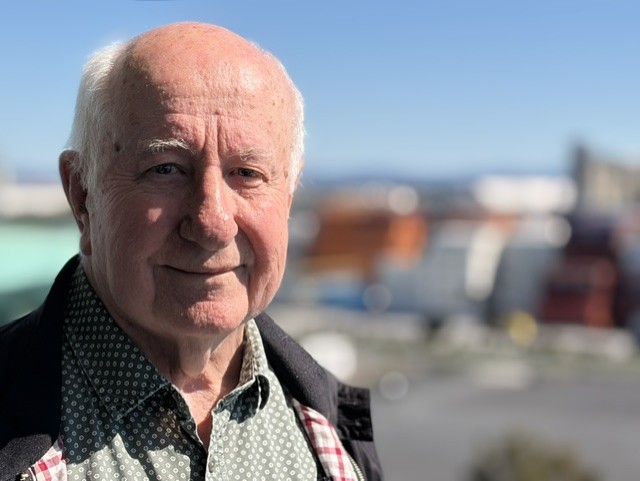
Historian Peter Ludlow encountered the port’s people from a different perspective. After decades recording Moreton Bay history, he was approached by Rosey to write a history of the Port of Brisbane, drawing heavily on oral accounts from people whose working lives had intersected with the river and bay.
The result was the 2008 book – The Port of Brisbane, its people, and its personalities.
“The aim was just to preserve the history of the Port of Brisbane through its people and personalities,” Peter recalls. “I’m actually more of an oral historian, really.”
The people he interviewed were not always senior figures. What interested him was the experience of ordinary people and the way the bay shaped their lives.
“A lot of the people I spoke to weren’t high-flyers or anything,” he said. “They were just average people. I was interested in what effect Moreton Bay and later the Port had on their lifestyle.”
Looking back, Peter believes the shared experience of creating a major port from scratch encouraged cooperation and a practical sense of common purpose.
“When everything was being done from scratch, I think people tended to cooperate a bit more,” he said. “It was more exciting because you were building it. It was just, ‘I’ve got a job to do, and we’ve all got to get in and do it.’”
Bill’s story
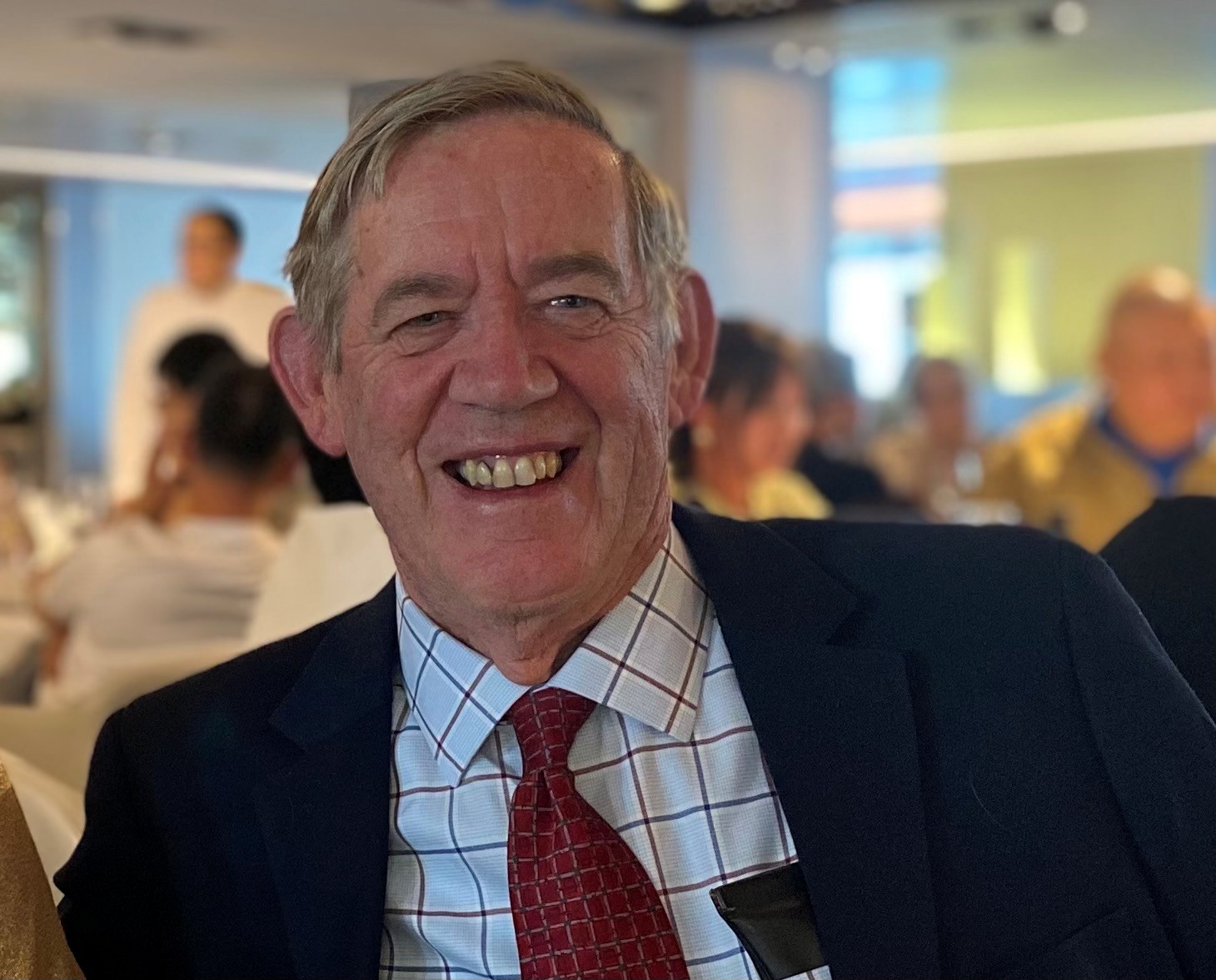
Engineer Bill Tranberg arrived in 1981, when the first Fisherman Islands container terminals had been completed but were not yet operating.
“When I arrived, the terminals were finished, but they weren’t actually in use,” Bill said. “There was a big stand-off about the move from Hamilton, because the guys who worked there were going to Fisherman Islands, which was a long way away, especially if you lived anywhere on the northside. There wasn’t even a Gateway Bridge at that time. It was only the ferry.”
Over the following decades, Bill, who held a variety of senior positions over his 30+ years with the port, helped deliver many notable projects, including those that extended the port further into the bay. One of his strongest memories is the moment the rock wall around the future port expansion area was finally joined.
“We started from each end, and the final joining up was quite an impressive thing to watch,” he said. “The rock wall encircled that whole area, and since then they’ve been progressively filling it.”
Despite the industrial scale of Fisherman Islands, Bill also remembers places where the industrial vista of the port almost disappears. A narrow waterway through nearby mangroves offered a striking contrast to the shipping activity only a few kilometres away.
“You would swear you weren’t anywhere near a port,” he said. “You’re on this narrow little waterway in a little boat, with mangroves hanging over both sides. It’s an interesting position when you think that only a couple of kilometres away is a whole port with lots of shipping coming and going.”
Steffany’s story
Steffany Sinclair began at the port at age 20, while she was still at university, working casually in food and beverage before moving into human resources.
“I joined the Port as a 20-year-old university student and never imagined I would build my career here,” she says.
“One of my earliest memories is attending the family Christmas events and seeing hundreds of employees and their families come together. Despite the scale and significance of what the Port does, there was a genuine sense of community, pride and connection.
“We still hold those events today and, when I look around, I’m reminded that while the Port has evolved enormously over the years, many of those qualities remain unchanged.
Steffany describes a culture that is “proud but rarely loud” about its contribution. The scale of the job is visible every day in the ships, trains and trucks moving through the precinct, but the people behind it tend to let the work speak for itself.
“People connect deeply to the purpose of what we do and take great pride in contributing to something that supports millions of Queenslanders.
“I feel incredibly privileged to have grown alongside the organisation and now play a role in helping shape its culture for future generations.
“It’s about building on those enduring strengths while continuing to evolve, so future employees feel the same sense of pride, purpose and belonging that has kept so many people connected to this place over the years.”
When she looks across tenure in the business, Steffany says there are a lot of people who have been there for “a really long time” but also new people coming in.
“This is great from an innovation viewpoint,” she says. “So many amazing things are happening – there’s a richness every day.
“That is what draws us in and keeps us really engaged – whatever you’re facing in the day.”