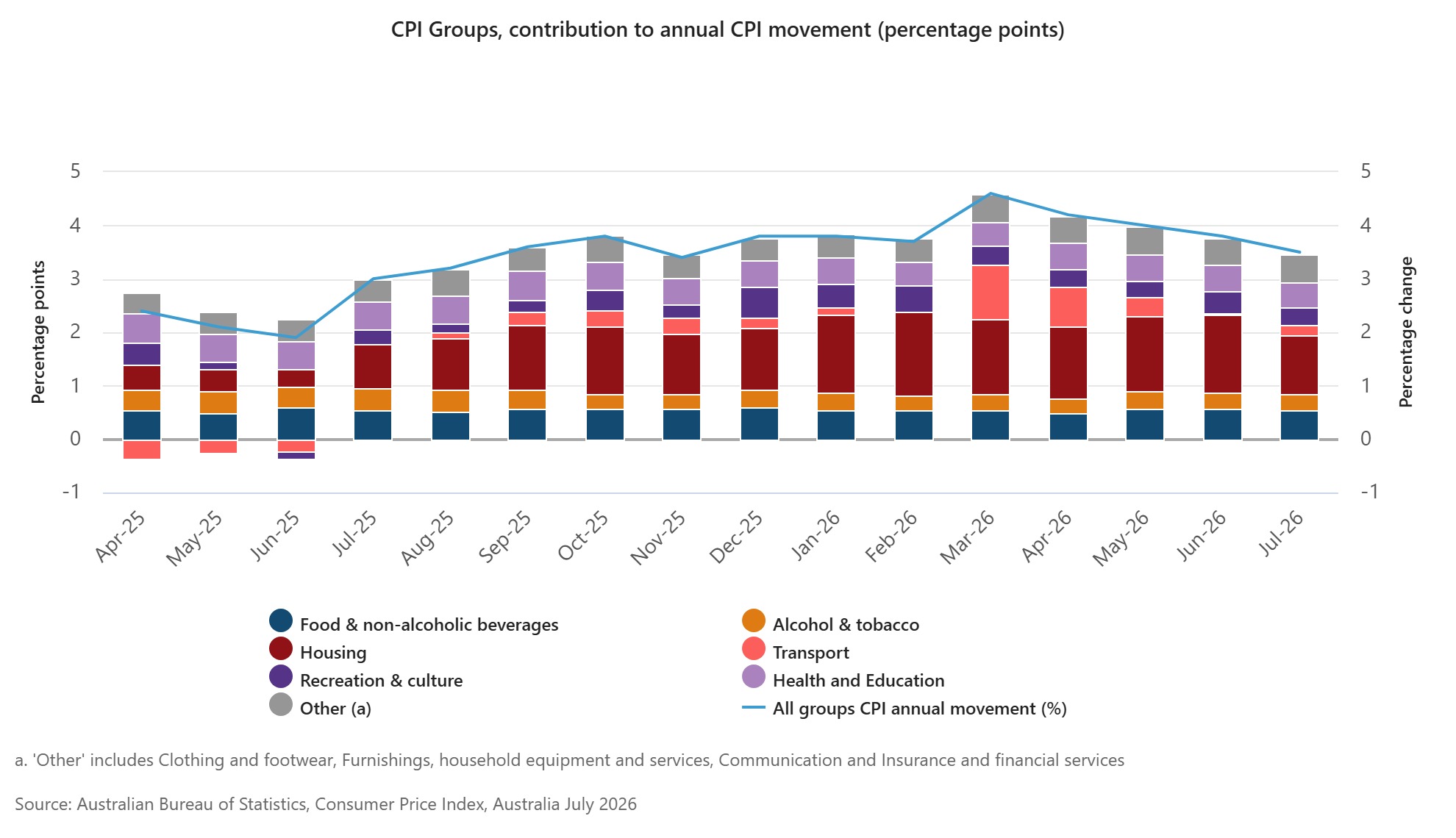
The annual inflation rate was at 3.5 percent in July, a slight drop from the previous month.
The “trimmed” Consumer Price Index figure, which strips out temporary shocks, was stable at 3.6 percent, unchanged from June 2026.
The rate is still outside of the Reserve Bank’s 2-3 percent target zone for inflation but the CPI data, released today by the Australian Bureau of Statistics, will help justify the bank’s “wait and see” approach to interest rates over the past couple of month.
The ABS said the largest contributor to annual inflation in July was housing, which rose by five percent.
This was followed by food and non-alcoholic beverages, rising 3.2 percent, and recreation and culture, up 2.6 percent.
ABS head of price statistics Rachael McCririck said the increase in housing inflation was due to rising costs for new dwellings.
“New dwellings prices rose 5.7 percent in the 12 months to July as builders passed on higher costs for materials and labour,” she said.
“Food inflation was driven by higher prices for meals out and takeaway, which rose by 4.5 percent in the 12 months to July 2026. “
“On a monthly basis, automotive fuel prices rose 7.5 percent in July after falling for three months in a row. This was driven by higher world oil prices and the partial unwinding of the federal government’s fuel excise relief measures in July.”
The full report is here