Queensland researchers have created a highly detailed map of the chemical signals that control heart function.
They say this will open “new avenues” for the diagnosis, treatment and prevention of heart disease.
QIMR Berghofer announced the launch of the heart atlas, known as Cardiopedia-Ligand, today.
It is an online resource that catalogues how human heart tissue responds to more than 80 biological signals.
It took five years to develop and will be made freely available for everyone in an effort to speed up cardiac research discoveries.
Head of QIMR Berghofer’s Cardiac Bioengineering Laboratory Professor James Hudson said the atlas filled a major gap in the understanding of how the heart works.
“Before this project, no one had mapped and comprehensively compared each single signalling molecule and its effects on the heart,” Professor Hudson said.
“For the first time, we’ve brought all that information together into a single resource that researchers can use to better understand heart disease.”
Professor Hudson said the long-term goal was to help support more personalised treatment for heart disease.
“Most current heart medications don’t directly affect the heart muscle; they affect things like blood pressure and fluid loading,” he said.
“The goal is to increase the number of drugs that are effective for heart failure that actually act on the heart tissue.”
A study published in Cell Stem Cell this week outlined the use of miniature human heart tissues grown in a laboratory to test 87 signalling molecules that interact with receptors found on heart cells.
“For each treatment, researchers measured how strongly the tissue contracted and which genes were switched on or off,” QIMR Berghofer said in a statement
“(This generated) a comprehensive dataset that links biological signalling with heart function and gene activity.”
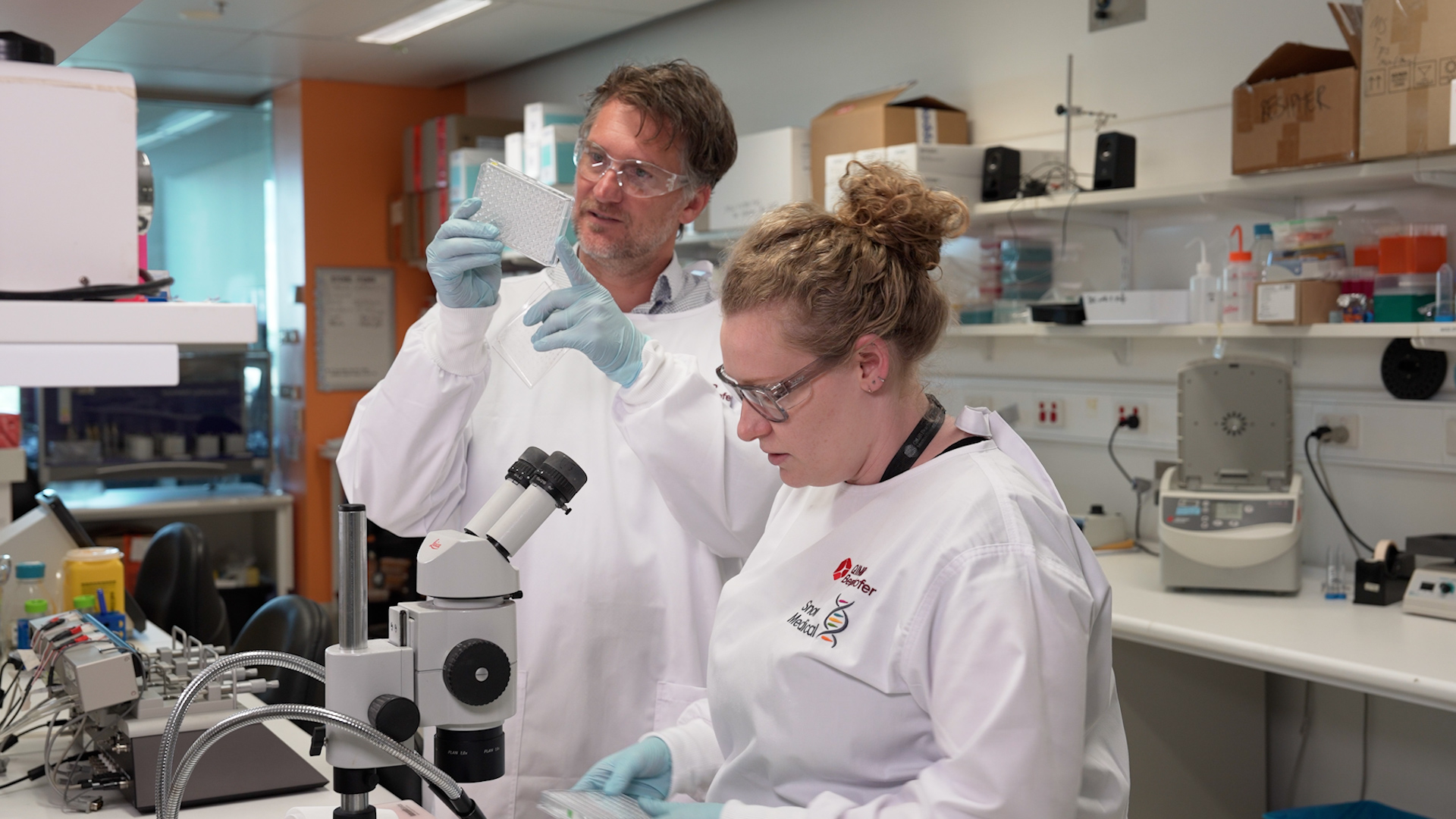
Research officer Janice Reid said the project was made possible by the team’s human cardiac organoid platform.
“We can produce more than a thousand organoids each week, which allows us to perform studies at a much bigger scale than what has previously been possible,” Dr Reid said.
“The cells in the heart are constantly talking to each other using chemical signals known as ligands. These ligands have been explored before, but mostly individually and in very different models. What we’ve done in this study is compare them all in one go, allowing us to directly compare their similarities and differences.”
The work represents the first phase of a broader initiative supported by the Snow Medical Foundation.
The next stage will screen around 2000 drug compounds to build an even more comprehensive map of heart biology and responses to potential therapies.