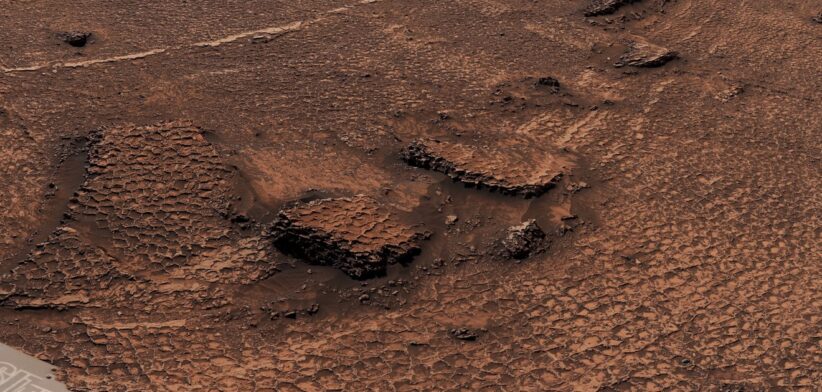
NASA’s Curiosity rover has stumbled across an unusual “honeycomb” landscape on the red planet.
The rover was operating in an area known as “Valle Grande” when it came across the features.
NASA scientists had seen small patches of these shapes before, but nothing of this size.
The ground has textures called polygonal fractures, which are about four to eight centimetres across.
“The polygonal shapes spread in all directions for as far as the rover can see,” NASA’s Jet Propulsion Laboratory said in a statement.
“They even wrap around the sides of a nearby butte nicknamed ‘Miraflores,’ which stands six metres tall and is topped with a thick cap of sand.”
Mission’s project scientist Ashwin Vasavada said the “sea of polygons” took the researchers’ breath away.
“We measured their shapes and chemistry carefully and are hopeful there are clues in the data as to how these features formed,” he said.
Curiosity has been exploring Mars since 2012.
“Besides sulfur crystals, shiny meteorites, and other interesting geologic features, the rover has made major discoveries about the ancient Martian environment,” NASA said.
“Most importantly, that it had the water, chemistry, and nutrients to support microbial life.”
The full NASA report is here