Fewer people are changing jobs regularly but the days of spending most of your career with a single organisation appear to be over.
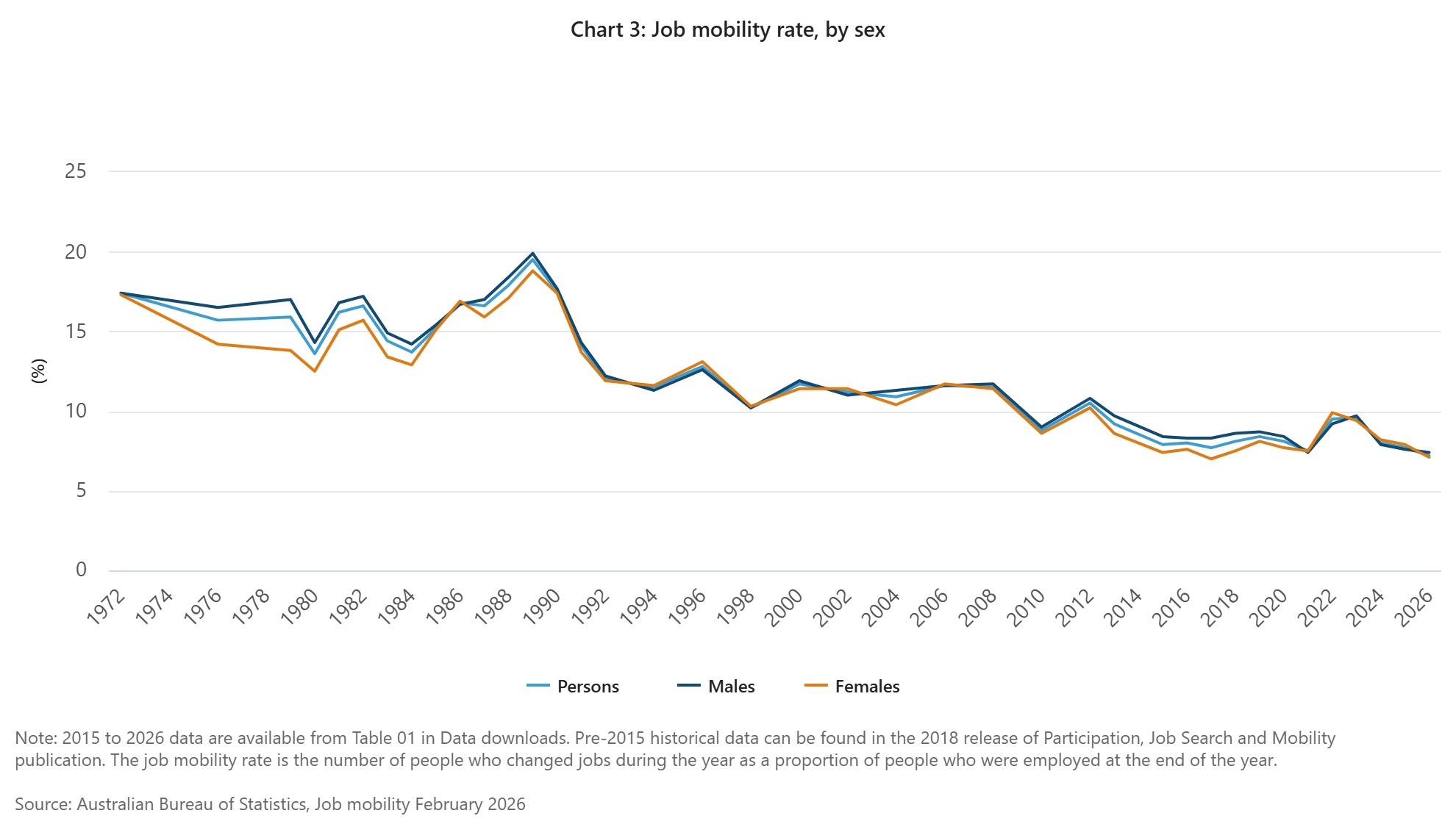
The latest Australian Bureau of Statistics figures show the job mobility rate continued to decline into 2026.
Around one million people (7.2 percent of the workforce) changed their employer or business in the year to February 2026, compared with 7.7 percent over the previous year.
This reflected a trend decline in mobility that has been evident since the early 1970s.
Despite the slowdown in job movements, workers are still becoming less inclined to spend their whole career with one employer and retire with the proverbial gold watch.
The figures suggest these so-called company “lifers” are becoming exceedingly rare.
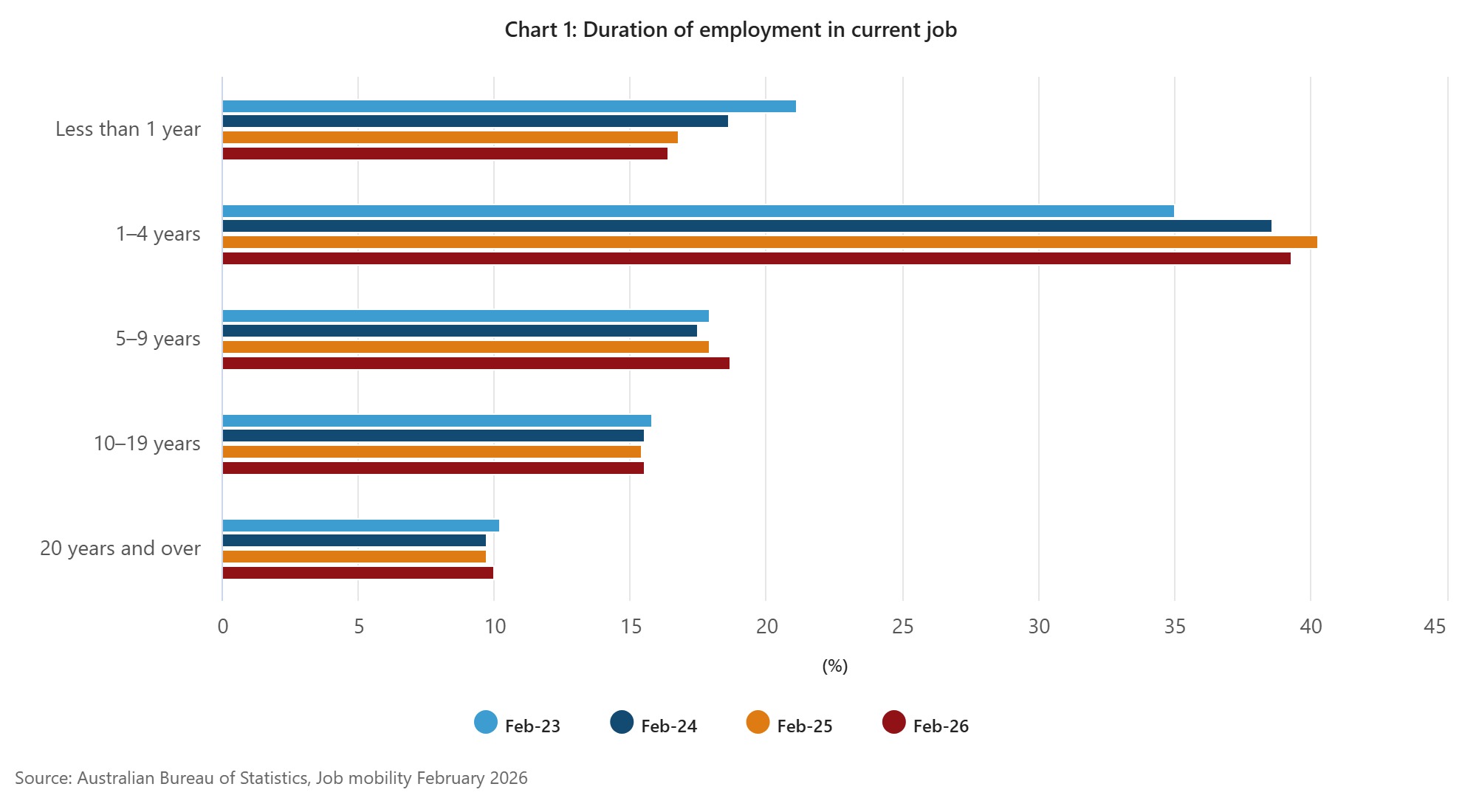
Only 10 percent of the current workforce have been in the same job (working for the same employer) for more than 20 years.
And, of the 14.5 million people employed in February 2026, 56 percent had been employed in their current job for less than five years.
About 16 percent had been in their current job for less than one year.
Job mobility tends to decrease with age, with people aged 15 to 24 most likely to change jobs (job mobility rate of 12.0 percent).
Only 1.2 percent of employed people aged 65 years and over changed jobs in the year to February 2026.
Of the million people who changed jobs in the last year, 62 percent (649,000) were working in the same major occupation group as they were at the start of the year.
“All occupation groups except for sales workers had a higher proportion of people who changed jobs within the same occupation group than into a different major occupation group,” the ABS report said.
“While this decreasing job mobility is a continuation of a long-term trend since the 1970s, there have been some notable peaks in job mobility over this period.
“These have generally occurred around times of economic uncertainty, such as leading into the recessions in the early 1980s and early 1990s, and during the COVID-19 pandemic.”
Employees (eight percent) continued to have a higher job mobility rate than self-employed people (3 percent).
The full report is here.