Dementia has passed heart disease as the leading cause of Australian deaths – the first change in this measure for more than 100 years.
The change reflects different patterns of illness and death as Australians live longer.
The latest Australian Institute of Health and Welfare (AIHW) national health snapshot, released today, also shows a worrying rise in cancer and mental illness among young people.
Between 2000 and 2025, cancer diagnoses among people in their 30s increased from 121 cases per 100,000 people to an estimated 135 cases.
For people in their 40s, there was an increase from 280 to an estimated 313 cases per 100,000 people.
Over the past decade, the proportion of women 25–34 seeking mental health support has risen by 26 percent compared with nine percent for the total population.
On the upside, the proportion of people diagnosed with cancer who live longer than five years has jumped from 50 percent to 72 percent over the past three decades.
The Australia’s Health 2026 report said the cancer survival rate depended a lot on the cancer type.
More than 95 percent of diagnosed testicular, thyroid and prostate cancer patients lived at least another five years after diagnosis but the rate was less than 15 percent for pancreatic cancer and mesothelioma.
Overall, the AIHW said health outcomes in Australia had continued to improve and remained high by global standards.
However, chronic conditions and mental health conditions were increasingly impacting Australians.
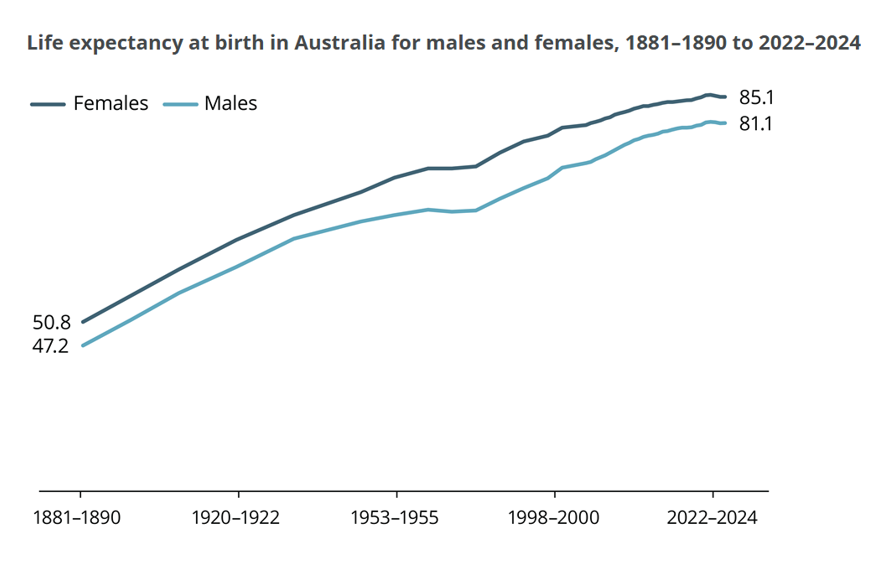
Life expectancy declined slightly during the COVID pandemic years but was still at 81.1 years for men and 85.1 years for women.
This compared with life expectancies of around 50 years of age in the late 1800s.
Over 60 percent of Australians were living with at least one chronic condition and around 38 percent had two or more.
These conditions were dominated by cancer, mental health conditions and substance use disorders, musculoskeletal conditions, cardiovascular disease and neurological conditions.
“Dementia is now the leading cause of death in Australia, accounting for almost 1 in 10 deaths,” the report said.
“Over the past decade, the number of deaths caused by dementia has risen by 39 percent. Meanwhile, the number of deaths caused by coronary heart disease, the previous leading cause of death, has decreased by 18 percent.
“This marks the first change in Australia’s leading cause of death since the early 20th century, reflecting a change in patterns of illness and death as Australians live longer.”
Coronary heart disease remains the leading cause of death for people living outside of major cities and inner regional areas.
Around 22 percent of Australians aged 16–85 experienced a mental health condition (such as anxiety or depression) in the 2020–2022 period.
“While the overall proportion of people experiencing a mental disorder has remained relatively stable over time, young people aged 16–24 have experienced a large increase,” the report said.
“Prevalence rates increased from 26 percent to 39 percent between 2007 and 2020–2022 for young people.”
The AIHW estimated that around 36 percent of Australia’s total disease burden in 2024 could have been prevented or reduced by addressing risk and environmental factors.
Being overweight and obese was increasingly impacting the health of Australians and is now the leading risk factor contributing to ill health and death, overtaking tobacco smoking for the first time.
Around 13.2 million adults (67 percent) and 1.4 million children and adolescents (27 percent) were living with overweight or obesity in 2022–24.
Australians born more recently were more likely to be living with obesity than those born in earlier birth cohorts.
The full report is here