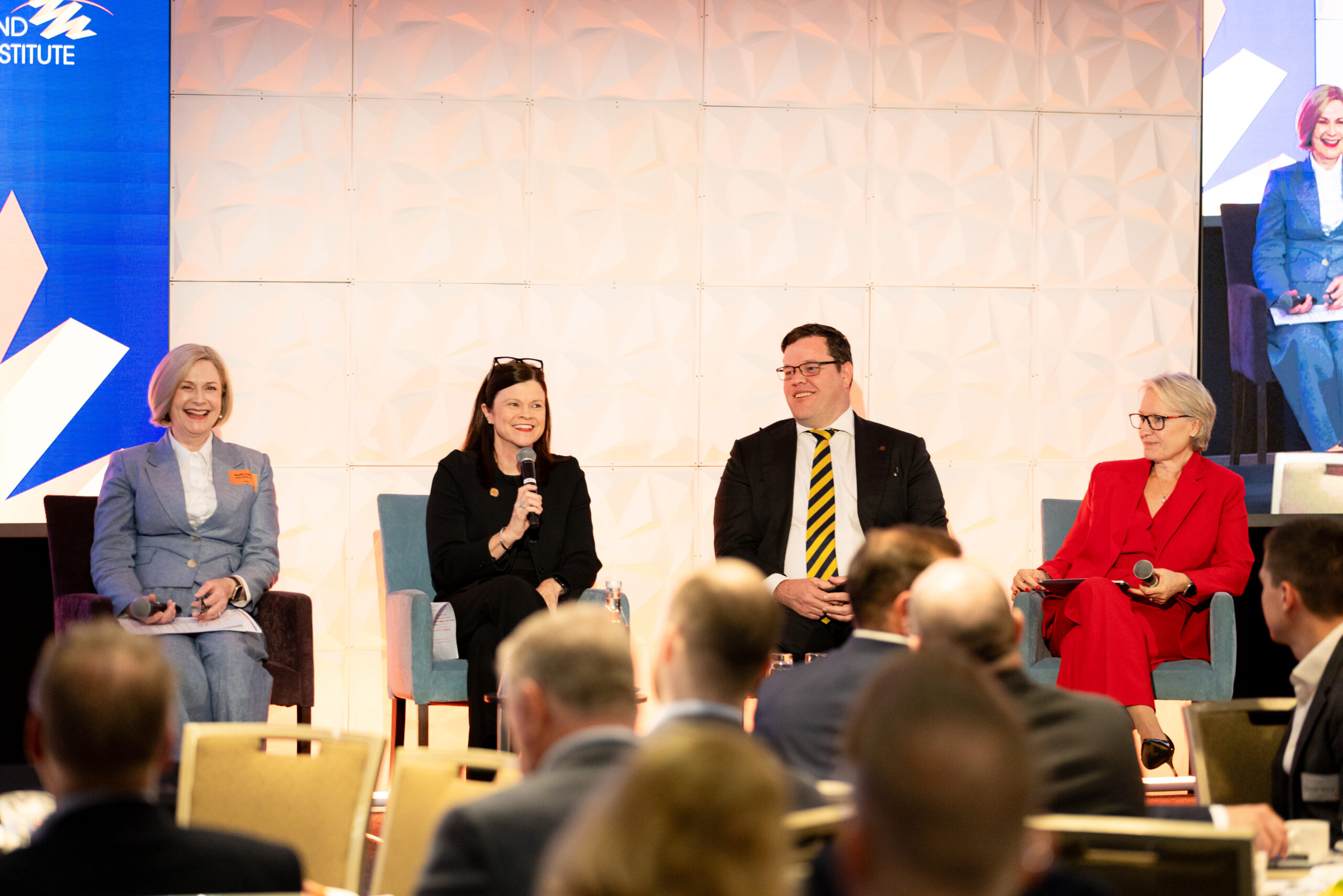
Hundreds of beds are being taken up in Queensland’s hospitals by older patients who should ideally be in aged care, according to one of the state’s most senior health executives.
Metro South Health CEO Noelle Cridland said many older people were spending their last days of life in a hospital.
“For the system, what that means is that we’ve got hundreds of beds occupied by people who should be in a home or aged-care environment,” Ms Cridland told the Queensland Futures Institute Health Future forum this morning.
“Instead of being in a really suitable environment that’s built for their needs, they might be in a hospital bed in a busy acute hospital.”
“It (the hospital) is not really suited for their needs, which aren’t acute needs anymore. They are residential aged care needs.”
Ms Cridland said the last audit showed that in Metro South alone there were more than 300 people occupying beds who did not need to be in a hospital.
“But we’ve got people at our front door in our emergency department who do need hospital beds,” she said.
“If we had those beds available for those people, that would make acute care, emergency department care, surgery and medical care easier to provide.”
Ms Cridland said it was important to not treat older patients as a problem.
“They are people, they’re our parents…first and foremost,” she said. “So we really have to think about how we deal with this humanely.”
Ms Cridland said the sort of people with the greatest needs were the ones most likely to get “caught in the system”.
Many had dementia and their behaviour could be challenging to manage in a clinical setting.
Aged care was a better environment to deal with these patients but may not be set up to care for them in sufficient quantities.
Ms Cridland said the health system had “bucket loads of problem-solvers” seeking solutions to the issue.
This included trying to find ways to get people safely home as quickly as possible.
“People want (to be in) their own home,” she said. “So we have that mindset and ask what we need for those people to be safe in their own home.”
Ms Cridland said research showed a significant majority of people who entered the aged care system re-presented at emergency departments.
Teams were now exploring what aged care needed so people could be safely treated inside that system.
Health and Wellbeing Queensland CEO Robyn Littlewood said great progress was being made in helping people to be healthier but there were still some sobering statistics.
These included:
- The median age of death in parts of Brisbane is 82 but in the western town of Roma it is 74 and in parts of the north it is 52.
- One in three homes in the far north don’t have enough food to last the same day.
- Kids born from 2023 in Queensland will probably live a shorter life than their parents.
- Fresh food in the north can take up to eight days to arrive and often has to travel 4000km to reach towns.
These issues were being addressed through programs like Pick of the Crop which was showing students how to plant, pick and cook vegetables.
This program was being used in 287 schools across 54,000 kids.
“The data shows they eat more (vegetables) as a result,” Dr Littlewood said. “Kids have forgotten that their veggies don’t come from Coles. They come from the ground.”
Another partnership with Community Enterprise Queensland in 21 remote sites was encouraging stores to change food displays to promote healthy alternatives.
Pharmacy Guild of Australia Queensland Branch President Chris Owen said pharmacists had an increasing role to play in trying to keep people out of hospital.
He said Queensland was a world leader in extending the scope of pharmacists to help deal with capacity issues in the health system.
“There is a supply problem across healthcare,” Mr Owen told the forum. “Unfortunately, GPs are retiring faster than they’re coming through.
“There is going to be a point where we don’t have enough access to primary care. This is not just a pharmacy issue. It’s an advocacy issue for all health professions.
“People should be able to practice to their full scope once they are trained and competent.”
Mr Owen said that, despite some commentary to the contrary, pharmacists worked very well with doctors.
“I’ve never had one doctor tell me that their waiting rooms aren’t full because of scope of practice,” he said.