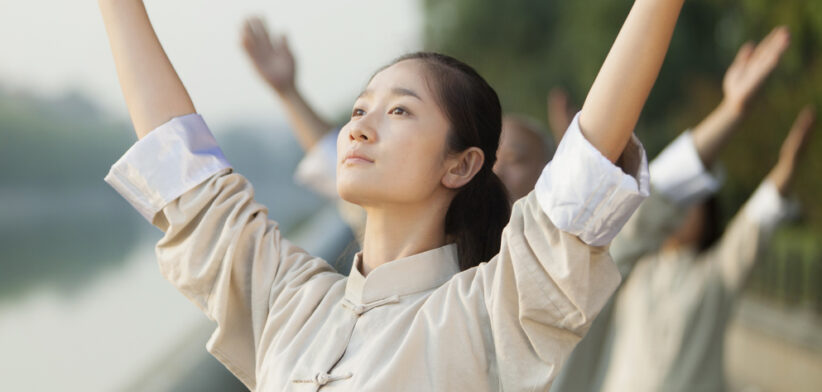
An 800-year-old Chinese exercise routine has been found to be almost as effective as medication in bringing down blood pressure.
A new study found adults with stage 1 hypertension who practiced Baduanjin experienced meaningful drops in blood pressure within three months that lasted a full year.
Baduanjin is a mind-body exercise that combines slow movements, breathing and meditation.
The findings were published this week in JACC, the journal of the American College of Cardiology.
The study report said high blood pressure was one of the biggest preventable contributors to heart disease.
Doctors often recommended regular physical activity to help manage it.
However many people struggled to maintain long-term exercise habits, especially when this required gym memberships, special equipment, dedicated spaces or ongoing coaching.
Senior Study Author Jing Li, from the National Center for Cardiovascular Diseases in China, said Baduanjin was a simple, accessible and scalable “lifestyle intervention” for people trying to reduce their blood pressure.
Baduanjin comprised eight structured movements that combined aerobic activity, flexibility training, isometric exercise and mindfulness.
It has been practiced for centuries in China and is commonly performed in parks and community settings.
A typical session lasts about 10-15 minutes and does not require equipment or extensive training.
The study followed 216 adults across seven communities and tracked changes in 24-hour systolic blood pressure at 12 weeks and again at 52 weeks.
Harlan Krumholz, from the Yale School of Medicine, said the blood pressure effect from Baduanjin was similar to that seen in landmark drug trials but achieved without medication, cost or side effects.
“This makes it highly scalable for community-based prevention, including in resource-limited settings,” Professor Krumholz said.
The full study is available here.