Guidance counsellors are playing an increasing role in schools as students grapple with complex issues that are about more than getting good grades.
Guidance counsellors are employed in every Brisbane Catholic Education school to work with students, families and staff to promote mental health and wellbeing, so that students can fully engage in learning.
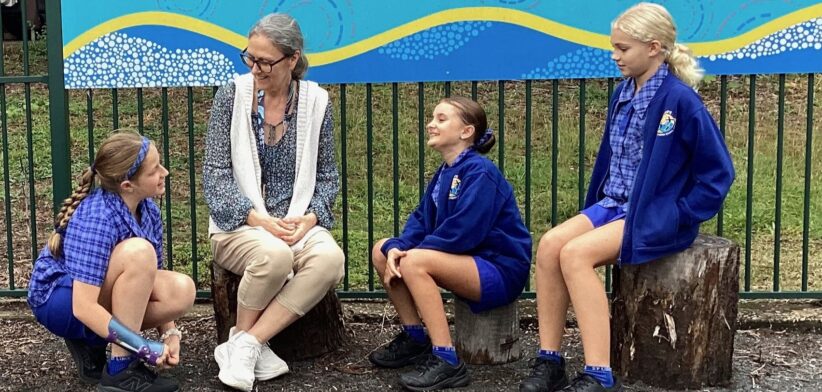
For Kate Mason, a Guidance Counsellor working across St Rita’s Primary School Victoria Point and St Luke’s Primary School Capalaba, the role is about being a steady, safe point of connection in the school community.
“For students, I’m someone who listens without judgement, helps them understand their big feelings, and supports them to build the skills they need to cope, grow and engage more confidently at school,” Ms Mason said.
She works closely with teachers and families, offering another perspective and helping staff navigate complex situations.
“School is about so much more than academics,” she said.
“It’s where students learn how to manage emotions, build relationships and develop a sense of belonging.
“Because we know our students and communities well, we can respond early, work preventatively and offer support that is both professional and personal.
“Seeing a child feel safer, more confident, or more understood is incredibly meaningful, and knowing I can help make school a place of safety and hope is a real privilege.”
In a secondary school setting, the role of the Guidance Counsellor continues to be just as critical, as students navigate increasingly complex social, emotional and personal challenges.
St Francis College Crestmead Guidance Counsellor Lisa Gabai supports students with short- and long-term counselling, while also connecting families with external services when needed.
“A lot of what affects a young person’s learning isn’t always visible in the classroom,” Ms Gabai said.
“From Prep through to Year 12, students may be carrying challenges that make it harder for them to engage, and they often need extra support to be able to learn.
“For parents, it helps to have someone within the school whose sole focus is mental health and wellbeing.
“That includes understanding disabilities, NDIS pathways, and connecting families with local services, which all plays a part in supporting students at school.”
Ms Gabai said one of the most rewarding aspects of her role was building trust with students over time, often through informal spaces such as lunchtime wellbeing programs.
“Our students self-refer, they decide how much they want to share, and that sense of agency is incredibly important,” she said.