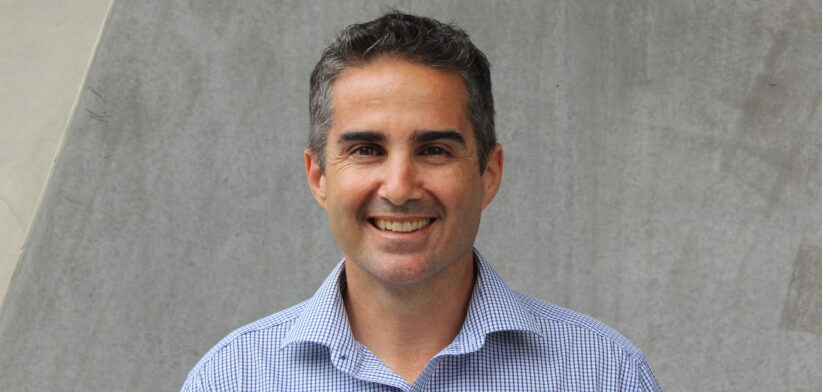
By Luke Traini, CEO, Trilogy Care
Hundreds of thousands of older Australians on the waiting list for home care packages were justifiably hopeful when Support at Home launched on November 1, 2025.
Prior to this, only 300,000 funding packages were available to keep older Australians in their own homes and out of the overwhelmed residential aged care system.
The 83,000 new Support at Home packages released this financial year were a vital step, even though this was, disappointingly, less than half of the demand at the time.
Several missteps have shaken public confidence in the entire system in the six months since Support at Home arrived. Some issues are finally being addressed, while others still require urgent attention.
Dramatic price rises were predictable
From day one of Support at Home, providers were limited to charging a maximum of 10 percent of a person’s package for administration and care management. Previously, some providers had charged up to 35 percent.
That change sounded consumer‑friendly. However, this government-directed recalibration of pricing saw costs absorbed into hourly rates for services such as cleaning and health services. Some fully-managed home care providers began charging as much as $130 per hour for a service like cleaning, which would cost closer to $60 outside the Support at Home system.
Making things worse, the market was left to set prices until mid‑2026, with no temporary caps or guardrails.
Older Australians were left to absorb the shock while the system found its feet.
Price caps are coming
The Independent Health and Aged Care Pricing Authority is expected to introduce price caps around the end of this financial year.
For those receiving ‘fully-managed’ care, it may be the only protection against the oppressive hourly rates we have witnessed. (Fully-managed care is the model in which traditional providers organise all services on the client’s behalf).
However, there is a risk that the implementation of fixed pricing caps may see providers’ pricing jump to the maximum allowed by the pricing regulator. We have witnessed this “race to the top” occur within the NDIS, so this phenomenon bears close observation.
The introduction of these caps isn’t likely to affect prices for people procuring care services directly from their local communities under a ‘self-managed’ aged care model, due to the substantially lower cost of these services. (Self-managed care is an emerging model which allows people to book their own service providers and negotiate their own prices, still covered by government funding).
The quiet crisis of unused funding
Across the system, people aren’t actually using their full Support at Home budgets. Not because they don’t need the care, but because they can’t afford the contribution payments attached to it.
Even full pensioners must contribute a percentage of the cost for non-clinical services.
The result we have seen is perverse: people rationing care.
It’s important to note that contributions are not a bad idea per se. They are an effective mechanism for keeping systems like Support at Home viable. But the details deserve examination.
Under Support at Home, showering, continence support and dressing were initially categorised as non-clinical supports – meaning older people were required to contribute from their own pocket.
Last week, the Government acknowledged it got this wrong and moved to reclassify these services. That’s extremely welcome. But it shouldn’t have taken six months of distress (and an outcry by almost half of the Parliament led by Senator David Pocock) to correct something so intuitive. Aged care advocates warned politicians of this exact issue prior to November 1.
The rollout exposed deep system fragility
For weeks after November 1, providers could not reliably access accurate account statements from Services Australia – the documents that show how much funding a person has and what they’ve spent.
Families were asked to pay more for care, monitor contribution payments, and make choices without access to the equivalent of a bank statement.
For older Australians already anxious about the reform, this created a lot of unnecessary stress.
Although government systems have improved since November, there are still some errors obstructing aged care providers from communicating effectively about client balances.
A continuing issue is contradicting information between government sources My Aged Care (MAC) and Services Australia. One might indicate a client’s funding is approved while the other says it’s not. As a provider in this space, we cannot commence care services for an individual until those alignment issues are solved.
Algorithms replacing judgement
There is another structural flaw having a profound impact: the way eligibility and funding decisions are determined through the Integrated Assessment Tool (IAT).
Under Support at Home, assessors are required to funnel complex, highly individual circumstances into a rigid digital tool that feeds an algorithm. Unlike the previous system, personalised context no longer matters. The result is a process that feels eerily familiar to anyone who remembers Robodebt: automation overriding common sense.
I have seen families bewildered by outcomes that don’t align with their lived reality. People with clear functional decline receiving funding that bears little resemblance to their actual needs. Others waiting months for reassessments while bureaucracy grinds on, sometimes with tragic consequences. If Support at Home is to regain trust, the process must allow for discretion, transparency and genuine human oversight before automated decisions are dealt out.
What now?
While the 83,000 new packages were very much needed, the government still needs to live up to its promise of a further 217,000 places. For those thousands of Australians on the waiting list, it’s disheartening to see that this funding isn’t set to be released any time soon, based on the government’s mid-year and Economic Fiscal Outlook.
After six months working inside this system, three things are clear:
- Contribution payments need further examination, particularly where they actively deter people from using care that keeps them safe and healthy at home
- Information flow matters just as much as funding
- Caring for an older person is inherently a human endeavour, and we must retain human involvement and oversight in the assessment process.
Older Australians, aged care providers, and the government itself need to keep an open mind and a humble posture so we can continue to refine this system into the future to take care of all our vulnerable and older Australians.
Luke Traini is CEO of Trilogy Care, Australia