Postcodes are now more culturally significant than the city, state or country in which Australians live, with nearly two-thirds identifying most strongly with the four numbers on their address.
Originally introduced by Australia Post in 1967 as an administrative tool, postcode pride was shown by 57 percent of Aussies, who identified more strongly with the four numbers than their city (55 percent), state (39 percent), or nation (44 percent).
The Australia Post survey of 2,080 people in January, 2026 found 75 percent take a level of pride in their suburb.
Australia Post Executive General Manager Retail, Brand & Marketing, Josh Bannister said postcodes had taken on a meaning far beyond their original purpose.
“Postcodes may have started as a practical tool for delivering mail, but today they represent something far more personal, for many their postcode represents identity, belonging and community,” Mr Bannister said.
“I’ve lived in multiple postcodes, and each one holds memories of neighbours, local shops and the constant connections that make a place feel like home.
“These local connections bring people together and strengthen communities across the country.”
Suburbs vs cities vs states vs country
In most of the states and territories, people are most likely to identify first with their postcode or suburb.
For Victorians (63 percent) and South Australians (67 percent), it’s their cities that resonate for them the most.
This is in contrast with Queensland and Western Australia where state pride is the strongest.
Half of Queenslanders (50 percent) say their state is their strongest identity marker, above the national average (39 percent). In WA well over half (66 percent) of Western Australians identified the most with their state.
When it comes to identifying with the nation, those in regional Australia appear to be more patriotic, with 50 percent identifying the most with their country, compared to 41 percent for metro areas.
Polished suburbs vs rough ‘hoods
How we describe our suburbs varies, 46 percent of Australians said their suburb felt “laid-back”, rising to 52 percent for those living in regional areas.
Metro suburbs were described as “polished” by 42 percent of respondents, while 20 percent felt their area was a bit “rough around the edges.”
Perceptions of change were generally positive, with 34 percent saying their suburb has improved over the past five to 10 years.
When asked what they would miss the most if they had to move postcodes, neighbours (27 percent) and local parks (25 percent) came out on top, with Queenslanders stating they’d miss their parks the most (32 percent).
Everybody needs good neighbours
- Suburb connection is driven primarily by human interaction, with the strongest sense of connection coming from chatting with neighbours (33 percent).
- 71 percent of Australians interact with their neighbours on a regular basis, averaging about 13 days per month (that’s every 2-3 days).
- Older Australians interact with neighbours more frequently, averaging 15 days a month compared to 11 days for younger Australians.
- And while we might not always chat about the weather, 80 percent of us think our neighbours are friendly.
- Community spirit shines through, with 66 percent of Australians stating a strong willingness to volunteer and help those in their community.
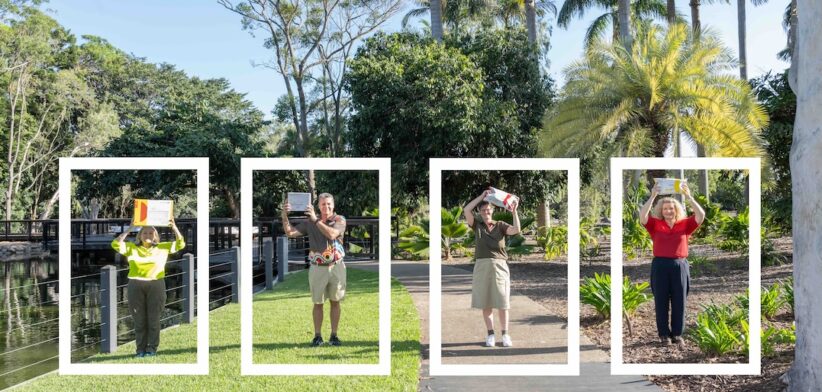
To celebrate the uniqueness of Australia’s 2,655 postcodes, Australia Post has launched a brand campaign that highlights the role the organisation plays in keeping Australians connected, wherever they are.
With thousands of individual executions, each showcasing a different postcode, the campaign aims to capture the sights, sounds, residents and rhythms of local life in Australian communities.