A dinosaur fossil found in Brisbane in the 1950s has been found to be Australia’s oldest at 230 million years.
University of Queensland research has confirmed the fossil dates back to the earliest part of the Late Triassic period.
The 18.5-centimetre footprint was discovered by a teenager at Petrie’s Quarry at Albion in 1958 but was not dated until recently.
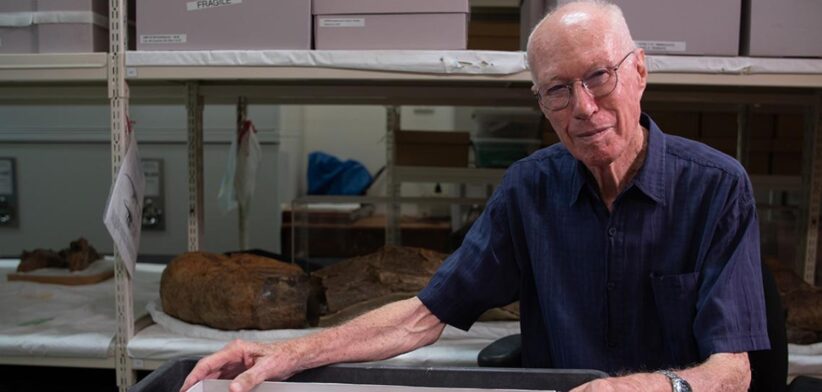
That teenager – Bruce Runnegar – later did a PhD at UQ, and is now an Honorary Professor at the university.
Dr Anthony Romilio from UQ’s Dinosaur Lab said the footprint proved dinosaurs were in Australia a lot earlier than previously believed.
“This is the only dinosaur fossil to be found in an Australia capital city and shows how globally significant discoveries can remain hidden in plain sight,” Dr Romilio said.
“Subsequent urban development has made the original site inaccessible, leaving this footprint as the only surviving dinosaur evidence from the area.
“It’s likely the dinosaur was walking through or alongside a waterway when it left the footprint before it was then preserved in sandstone, which was cut millions of years later to construct buildings across Brisbane.”
The footprint was made by a small, two-legged dinosaur, most likely an early sauropodomorph, which is a primitive relative of later long‑necked dinosaurs.
Dr Romilio said, based on its size, the animal stood roughly 75 to 80 centimetres tall at the hip and weighed about 140 kilograms.
Professor Bruce Runnegar collected the fossil during a visit to the Albion quarry with school friends and has kept it since.
“At the time, we suspected the marks might be dinosaur tracks, but we couldn’t have imagined their national significance,” he said.
“When I saw Dr Romilio’s ability to reconstruct, analyse and map dinosaur footprints, I decided to reach out to have the fossil formally documented.”
The fossil is now housed at the Queensland Museum where it will be available for ongoing research.
The research is published in Alcheringa.