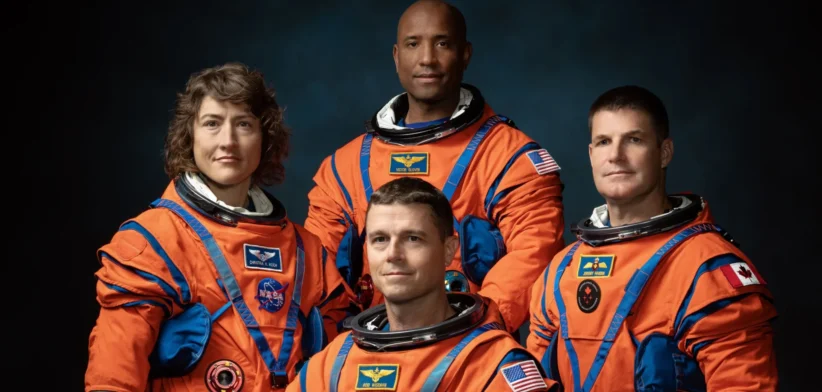
More than 50 years after NASA abandoned manned missions to the Moon, humans are again headed back to the lunar zone.
Later this year, the space agency is sending astronauts farther than any crew has travelled before.
The Artemis II mission is part of a four-stage operation to set up a permanent manned station on the lunar surface.
NASA Administrator Jared Isaacman said Artemis II would be a “momentous” step forward for human spaceflight.
“This historic mission will send humans farther from Earth than ever before and deliver the insights needed for us to return to the Moon,” he said.
“Artemis II represents progress toward establishing a lasting lunar presence and sending Americans to Mars. I could not be more impressed by our NASA team and the Artemis II crew, and wish them well. Boldly forward.”
The Artemis campaign is aimed at returning humans to the Moon for “economic benefits, scientific discovery, and to prepare for crewed missions to Mars”.
After the unmanned Artemis mission in 2022, the following three stages will come next.
Artemis II (2026) builds on the success of the uncrewed Artemis I in 2022, and will demonstrate a broad range of capabilities needed on deep space missions. The Artemis II test flight will be NASA’s first mission with crew aboard the SLS (Space Launch System) rocket and Orion spacecraft.
By 2028 Artemis III will build on the crewed Artemis II flight test, adding new capabilities with the human landing system and advanced spacesuits to send the first humans to explore the lunar South Pole region.
Through Artemis IV (date to be finalized) NASA and its partners are developing the foundational systems needed for long-term exploration at the Moon for the benefit of all with NASA’s Artemis campaign. Following the Artemis III mission that will land the first people near the Moon’s South Pole, astronauts on Artemis IV will live and work in humanity’s first lunar space station, Gateway, which will enable new opportunities for science and preparation for human missions to Mars.
More information is available on the NASA website.